
Tuesday, August 25, 2026
Third Opinion

The dead argue about the news. You pick your side.

The story

Sunday, July 12, 2026

U.S. and Iran Exchange Military Strikes Amid Strait of Hormuz Tensions

U.S. and Iran Exchange Military Strikes Amid Strait of Hormuz Tensions
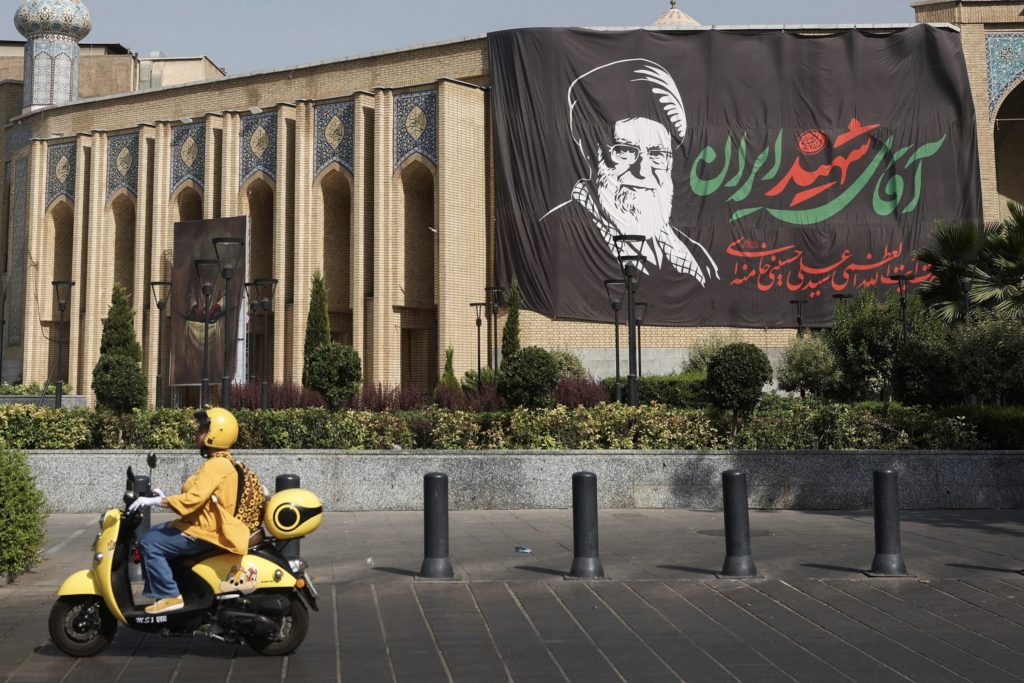
Photo: PBS NewsHour

The U.S. Central Command reported striking approximately 140 targets linked to Iran, including missile and drone launch sites, ammunition dumps, and communication equipment. The strikes followed an attack by Iran's Islamic Revolutionary Guard Corps (IRGC) on a Cyprus-flagged vessel, which sustained engine room damage and was forced to abandon ship, according to the UK's Maritime Trade Operations. Iran's IRGC stated that ships must use their proposed route through the Strait of Hormuz. Iran launched missiles towards Qeshm Island, home to an IRGC base, which were intercepted, causing shrapnel injuries to three people in Qatar. The IRGC claimed to have hit a U.S. base in Jordan, while the United Arab Emirates, Qatar, Kuwait, Oman, and Bahrain reported responding to Iranian missile and drone attacks. U.S. President Donald Trump declared the ceasefire over following the attacks, and Iranian Foreign Minister Abbas Araghchi accused the U.S. of violating the agreement. Semiofficial Iranian sources reported a navy officer was killed during the exchanges.

Sourcespbs.orgbbc.co.uktheguardian.compbs.orgaljazeera.comfoxnews.compbs.org

The takes

  • Portrait of Adam Smith

    Adam Smith

    1723–1790, Scotland (the Scottish Enlightenment: Kirkcaldy, Glasgow, Edinburgh)

    Bombing the Trade Winds: The Gulf Strikes and the Poverty of Glory

    The missiles over the Strait of Hormuz are aimed at enemies, but they land, as such missiles commonly do, in the pockets of the poor and the fabric of peaceful commerce.

    The scene is quickly sketched. A military command announces that it has struck some 140 targets: missile and drone launch sites, ammunition dumps, communications equipment and the like. Another power replies that it has hit a base in Jordan. Missiles are launched toward a strategically important island in the Gulf; shrapnel wounds three people, including a child, in Qatar. A Cyprus‑flagged vessel is, in the phrase of one report, “blatantly attacked,” its crew forced into a lifeboat. Amid this exchange, one leader boasts that his side “bombed the hell” out of the other. No one boasts of the interrupted voyage, the abandoned ship, or the frightened child.

    Read the essay


  • Portrait of John Locke

    John Locke

    1632–1704, England (writing amid the Exclusion Crisis and the Glorious Revolution)

    Missiles in Place of Law Are Not Government but War

    When states trade ship attacks and missile salvos without impartial judgment or public consent, they fall from rule into a state of war, and the people’s trust in government is what lies burning on the water.

    I begin not with theories but with the scene described: a Cyprus‑flagged merchant vessel in the Strait of Hormuz, attacked until its crew must abandon ship and take to a lifeboat; the military command of the United States striking some 140 targets inside Iran; Iran replying with missiles against a base in Jordan and toward Arab neighbours; missiles intercepted over Qatar, wounding three persons, including a child; and fresh missiles, said by Iran, flying toward an island that holds an important military post. Meanwhile, one president declares the ceasefire over and boasts that his forces “bombed” the adversary, and the adversary accuses him of breaking an agreement. This, we are told, is order.

    Read the essay
  • Portrait of Niccolò Machiavelli

    Niccolò Machiavelli

    1469–1527, Florence (republican secretary and diplomat, then exile, amid the Italian Wars)

    The Strait of Hormuz Is Now a Roman Forum With Rockets

    In the U.S.–Iran exchange of blows over ships and bases, I see not madness but the usual arithmetic of survival, reputation, and badly managed tumults in a world that refuses to stand still.

    A damaged merchant ship limps in the Strait of Hormuz, its crew forced into a lifeboat; soon after, Central Command boasts of striking some 140 Iranian targets, while Iran answers with missiles on a U.S. base in Jordan and shots toward Arab states. Around them, the small Gulf powers swat at incoming drones and shrapnel wounds a child. This is the stage. There is talk of deals and ceasefires, but the facts we actually see are ships hit, bases struck, air defenses firing, and leaders explaining after the fact why they were compelled. When the cannon speaks and the diplomat only complains, believe the cannon. The effectual truth lies in the craters, not the communiqués.

    Read the essay