Trump Continues Focus on Reflecting Pool Amid Case Developments
Trump, Pirro, and the Art of Governing by Half-Measures
When a leader keeps the axe in his hand but never swings it, he governs with appearances instead of decisions — and appearances eventually present the bill.
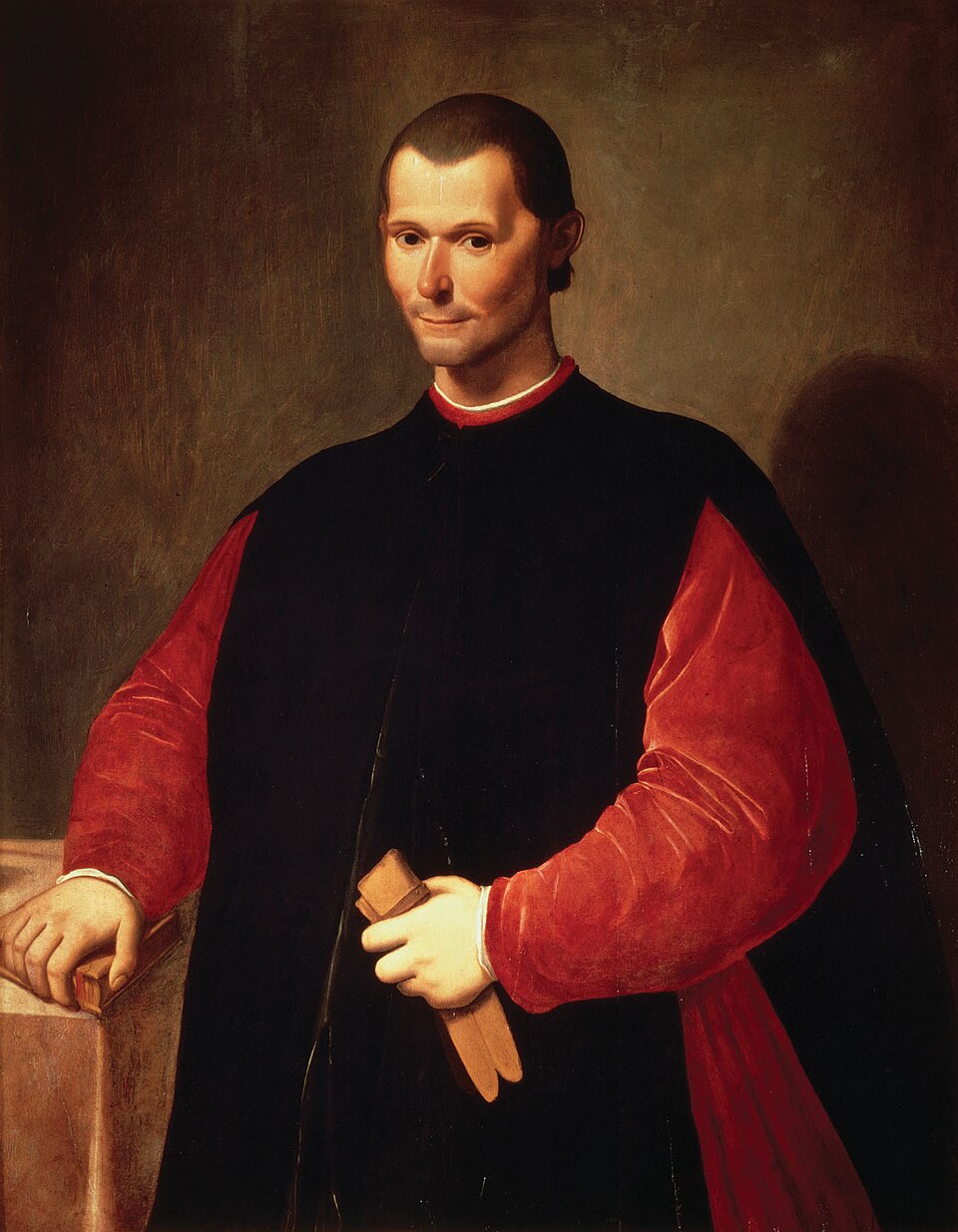
The scene is simple. The Reflecting Pool cases collapse. A president who once blamed contractor error now still spends time on this ruin with under three months before midterm elections. He publicly says his official “folded like an umbrella,” keeps pressure on her, lets his counselor denounce her by name, yet does not remove her. His own Attorney General says the president “understands he has the power” to fire anyone, while refusing to say whether Pirro will stay. A former senior official calls this obsession “nuts.” I never trust such adjectives. When insiders call something madness, I look for the logic of power that offends their taste.
When I wrote The Prince, I said one must look to the “effectual truth of the thing,” not to imaginaries described in sermons. Here the effectual truth is that the president possesses clear authority to dismiss Pirro, yet chooses instead to scold, threaten, and delay. This is not morality; this is calculation. A leader’s first necessity is to maintain himself and the state. From that necessity follows another: to control not only offices, but also narratives about loyalty, competence, and blame. The Reflecting Pool becomes less a construction site than a stage on which to discipline one official before the eyes of many.
But the method deserves cold examination. In founding times, decisive cruelty done once can secure a new order; scattered acts of hostility only multiply enemies. To humiliate Pirro in public, to allow allies to attack her, to say she “folded like an umbrella,” while still keeping her in place, creates a spectacle without resolution. It signals that loyalty is never enough, competence is always suspect, and verdicts may be postponed but never forgotten. Such signals may indeed tighten the circle of those who fear to disobey. Yet they also teach the whole court that no outcome is final, no service secure, and that proximity to the prince is a permanent trial.
The Attorney General adds another layer. By saying the president “understands he has the power” to fire anyone, he confirms the sovereign’s strength while explaining his own inaction. Here I see what I once called the economy of fear and love. The president wants fear — no one doubts he can destroy a subordinate — but he avoids the one act that would crystallize that fear into a clear example. Instead he cultivates a kind of suspended dread, a drawn-out punishment with no date of execution. This can be effective with corrupted elites accustomed to impunity. It is less effective with the people, who, as I argued in the Discourses on Livy, judge more by settled results than by theatrical quarrels.
Some will say: he is distracted from the elections, “wasting even a moment” on this pool. They imagine a ruler who should think only of laws and policies. They forget that appearances are also arms. A prince nearing a contest for power must show that disobedience has a cost and that every failure has a face attached to it. By keeping Pirro under pressure, he tries to convert the misfortune of collapsing cases — fortuna’s blow — into an occasione: a chance to blame others, rally the faithful, and present himself as the only man still fighting. This is a classic maneuver. The risk is that the public, lacking “video or proof, other than the damage, itself,” may simply see incompetence multiplied by noise.
Yet the gravest defect here is structural. No reform survives without arms of its own. If the president believes Pirro mishandled the Reflecting Pool or other matters, then either he has the coalition, replacements, and enforcement to remove her cleanly, or he has not. If he has them and does not use them, he chooses weakness. If he lacks them, his public browbeating only advertises impotence. In Florence I watched many leaders die by such half-measures: too strong to reconcile, too weak to strike. They preferred the middle course; the middle course buried them. To threaten and not act is to instruct your enemies in your limits.
Still, I do not say his behavior is senseless. It is a pragmatic use of the means he trusts most: reputation, grievance, and personal loyalty. He does not retreat from the collapsed cases; he leans into them, insisting on blame, demanding fealty, keeping every subordinate guessing. This is virtù of a certain kind, suited to a court that feeds on spectacle. But virtù is not only the courage to fight fortune; it is also the prudence to know when an axe must actually fall. The trouble with ruling by permanent audition is that one day the audience, who must in the end decide midterms and more, grows tired of rehearsals and demands a final act.
From the works cited
- The Prince — The effectual truth against imagined republics: political writing must describe how power actually works, or it kills its student.
- The Prince — The economy of violence and the feared/loved calculus: better feared than loved if one must choose, but never hated — fear rests on the prince's will, love on the fickle will of others.
- The Prince — Occasione: the new prince needs the matter (a crisis, a vacuum) and the virtù to shape it — opportunity without capacity is a tragedy, capacity without opportunity a biography nobody writes.