
Sunday, October 18, 2026
Third Opinion

The dead argue about the news. You pick your side.

The story

Tuesday, September 1, 2026

Supreme Court Allows Construction on Trump's White House Ballroom to Proceed

Supreme Court Allows Construction on Trump's White House Ballroom to Proceed
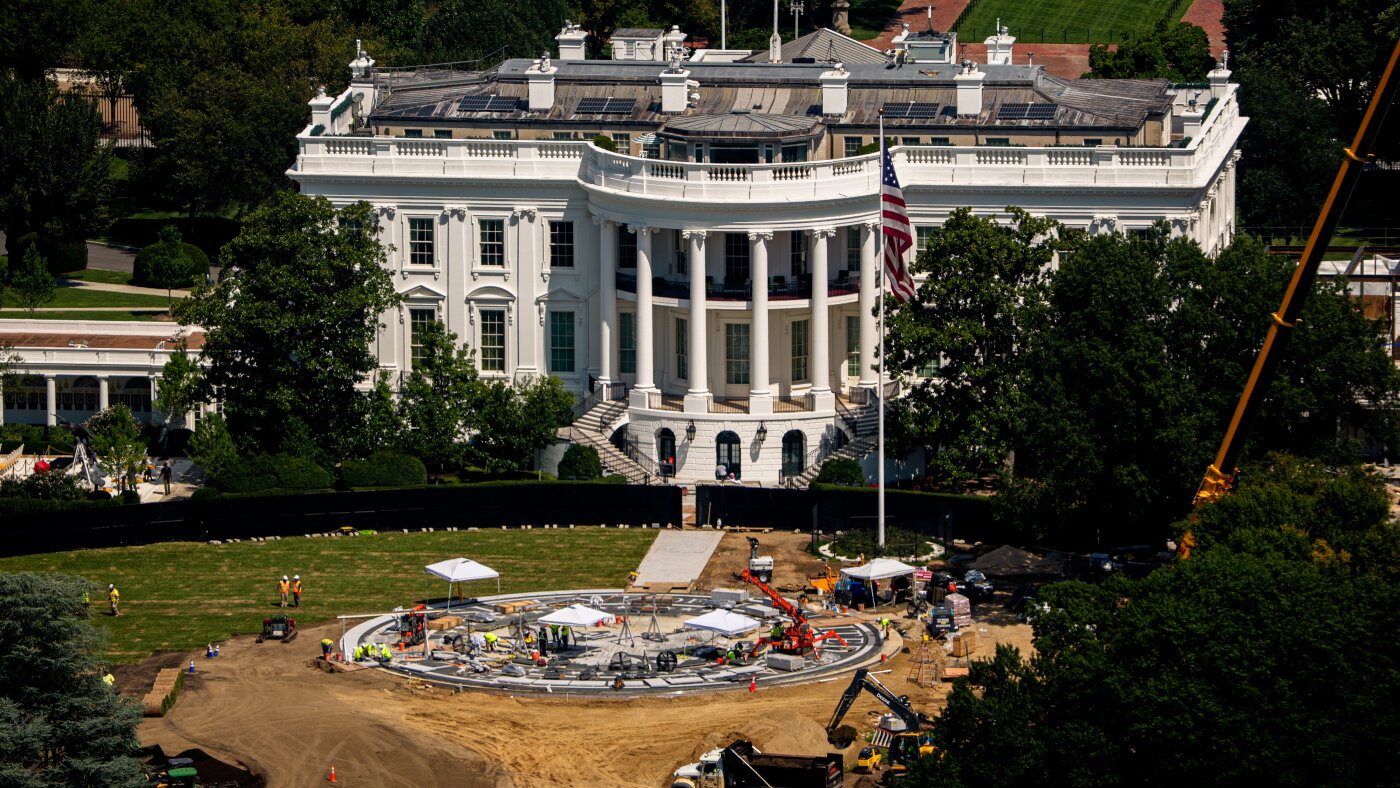
Photo: NPR News

The Supreme Court has permitted construction to continue on President Trump's White House ballroom project while legal challenges are ongoing. The court did not rule on the legality of demolishing the East Wing or building the ballroom but determined that the National Trust for Historic Preservation lacked standing to sue, as it likely did not suffer any concrete injury. This decision allows the project to proceed despite ongoing disputes.

Sourcesnpr.orgtheguardian.comreason.compbs.orgnpr.org

The takes

  • Portrait of Adam Smith

    Adam Smith

    1723–1790, Scotland (the Scottish Enlightenment: Kirkcaldy, Glasgow, Edinburgh)

    A $300 Million Ballroom and the Vile Maxim of the Masters of Mankind

    When public money builds private splendour, the price is paid not only in dollars but in the quiet corruption of our standards of justice and government.

    That a court of last resort should busy itself with ballrooms might, at first glance, seem a comic detail in the annals of jurisprudence. Yet we are told that the highest tribunal has allowed the demolition of a wing of the chief magistrate’s residence and the construction of a grand hall to proceed, not by pronouncing it lawful, but by declaring that a society charged with preserving historic buildings has suffered no injury sufficiently concrete to complain. The stones may fall, the scaffolds may rise, but the question who is wronged, and how, remains delicately set aside. When magnificence advances under the shelter of procedure, prudence requires us to look more closely at the bill.

    Read the essay


  • Portrait of John Locke

    John Locke

    1632–1704, England (writing amid the Exclusion Crisis and the Glorious Revolution)

    A Ballroom on Trust: When Public Power Builds Private Grandeur

    Allowing a contested White House ballroom to rise while questions of law, consent, and cost remain unresolved puts the people’s trust at hazard long before the plaster dries.

    I learn that the highest court in this country has allowed construction of a new ballroom at the people’s chief executive residence to go forward, even as legal challenges continue, and without deciding whether demolishing an existing wing and raising this new edifice are lawful at all. I am further told that the cost is projected at some three hundred million dollars of public money, notwithstanding prior assurances that taxpayers would not be burdened. The court has, for the moment, spoken only to standing, not to substance. Yet power is being exercised, stone is being laid, and the relation between ruler and ruled is altered all the same.

    Read the essay
  • Portrait of Niccolò Machiavelli

    Niccolò Machiavelli

    1469–1527, Florence (republican secretary and diplomat, then exile, amid the Italian Wars)

    A Ballroom, a Lawsuit, and the Arms of Power

    When a court lets the cranes keep moving while the law catches up, you are watching not procedure but a contest of arms fought with marble and precedent instead of steel.

    The scene is almost comic: a ruler wants a new ballroom at his residence; the plan requires demolishing an existing wing; lawsuits fly; the highest court shrugs and the construction crews keep working. Yet in these details there is the whole anatomy of modern power. The court has not said the demolition and new hall are lawful; it has only said that one set of accusers, a historic preservation trust, has no standing, no wound the law recognizes. So the law speaks in a negative voice, not “this is just” but “these complainants do not count.” In politics, who may complain is already half the battle.

    Read the essay