Sunday, October 18, 2026
Third Opinion

The dead argue about the news. You pick your side.

The story

Friday, September 4, 2026

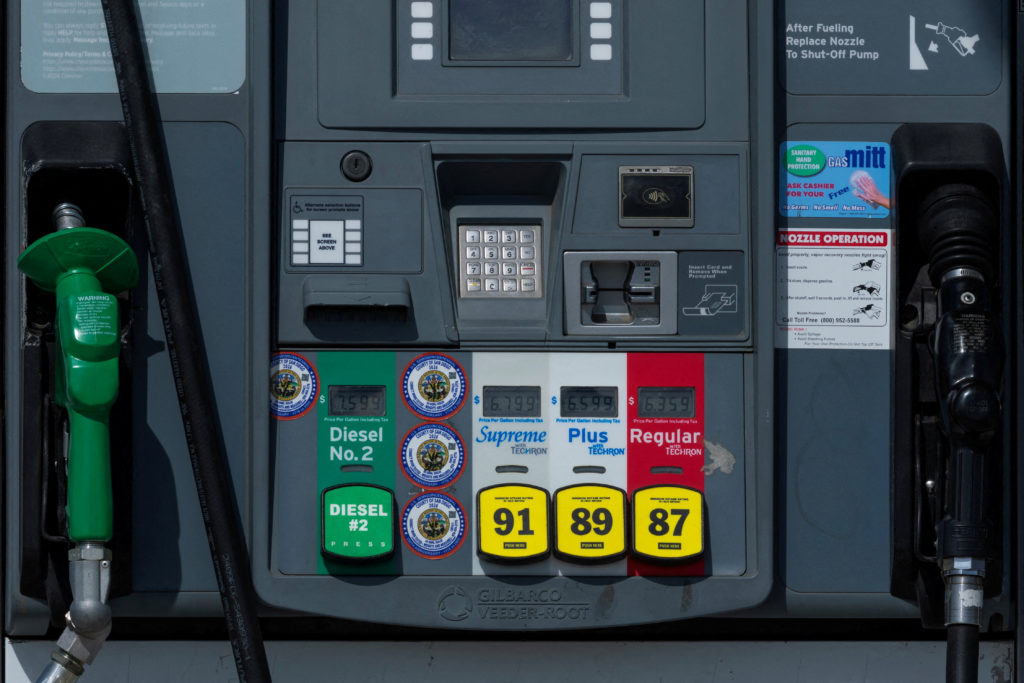
U.S. Diesel Prices Reach Record High Amid Global Conflicts and Weather Concerns

U.S. Diesel Prices Reach Record High Amid Global Conflicts and Weather Concerns
Photo: PBS NewsHour

The average price of diesel in the United States reached an all-time high of $4.15 per gallon, surpassing last year's $3.20 and marking the first time prices have exceeded $4 on Labor Day, according to AAA. This increase is linked to the ongoing conflict with Iran, which began in late February, adding pressure to the global energy supply and pushing fuel prices upward alongside wholesale oil costs. The rise in diesel prices follows previous records set in 2022 after Russia's invasion of Ukraine. Concurrently, the World Food Programme has warned that extreme weather events could drive an additional 50 million people into acute hunger by the end of next year, highlighting broader concerns about global food prices influenced by conflicts and environmental factors.

Sourcesaljazeera.commotherjones.compbs.orgnpr.orgnytimes.combbc.co.ukthehill.combbc.co.uk

The takes

  • Portrait of Adam Smith

    Adam Smith

    1723–1790, Scotland (the Scottish Enlightenment: Kirkcaldy, Glasgow, Edinburgh)

    Record Diesel, Empty Tables

    When the price of the haulier’s fuel breaks records, it is not the haulier but the hungry child who pays the bill.

    The news that diesel in the United States has reached an all‑time high, climbing sharply since the war in Iran and now surpassing even the peaks reached after the invasion of Ukraine, is not merely a curiosity of trade, like the rise of the price of claret. It is a signal which runs along every road and rail, through every warehouse and market stall. Diesel is not bought only by truckers and parcel carriers; it is bought, in effect, by anyone who eats bread that travelled, vegetables that were cooled, or medicine that was moved in haste. The visible buyer is the transporter; the invisible payer is the consumer, and among consumers, the labouring poor pay most.

    Read the essay


  • Portrait of John Locke

    John Locke

    1632–1704, England (writing amid the Exclusion Crisis and the Glorious Revolution)

    Record Diesel Prices Are a Test of the Trust We Place in Power

    When the cost of fuel climbs beyond precedent and food follows it upward, the question is no longer merely economic but whether rulers and merchants still govern for the preservation of our lives, liberties, and estates—or for something else.

    On a recent Friday in your year, I am told, the average price of diesel in the United States reached an all‑time high, around $5.85 a gallon, after fuel prices had already soared since a new conflict with Iran began at the end of February. The narrow Strait of Hormuz, through which much of the world’s fertiliser and oil trade passes, is reported to be blockaded by both the United States and Iran. The same accounts speak of tanker traffic bottlenecked, of crude oil dearer, and of diesel and gasoline now above $4 at a holiday when, in former years, they had not crossed that mark. These are hard numbers, not speculative fears, and they fall first on those least able to bear them.

    Read the essay
  • Portrait of Niccolò Machiavelli

    Niccolò Machiavelli

    1469–1527, Florence (republican secretary and diplomat, then exile, amid the Italian Wars)

    The Diesel Shock Is Not an Accident; It Is a Failure of Rule

    When fuel passes $4 a gallon on a holiday and 50 million more risk hunger, the storm is not fortune’s alone but the bill for princes who built no dykes in fair weather.

    Diesel at a record high, more than $4 a gallon when it has never crossed that line on Labor Day, tells you more about government than about geology. A war in Iran, like the earlier war involving Russia in Ukraine, has pushed prices beyond the last peak. Fuel has surged since this latest conflict began in February, and now every refrigerated cart of food and every truck bears the cost. At the same time, the World Food Programme warns that a weather pattern may throw another 50 million into acute hunger. Here you see fortune as I described her: a raging river. But only the negligent blame the river for flooding fields where no dykes were built.

    Read the essay