
Sunday, October 18, 2026
Third Opinion

The dead argue about the news. You pick your side.

The story

Sunday, September 20, 2026

Saudi Arabia confirms ballistic missile attack on Riyadh by Yemen's Houthis

Saudi Arabia confirms ballistic missile attack on Riyadh by Yemen's Houthis
Photo: PBS NewsHour

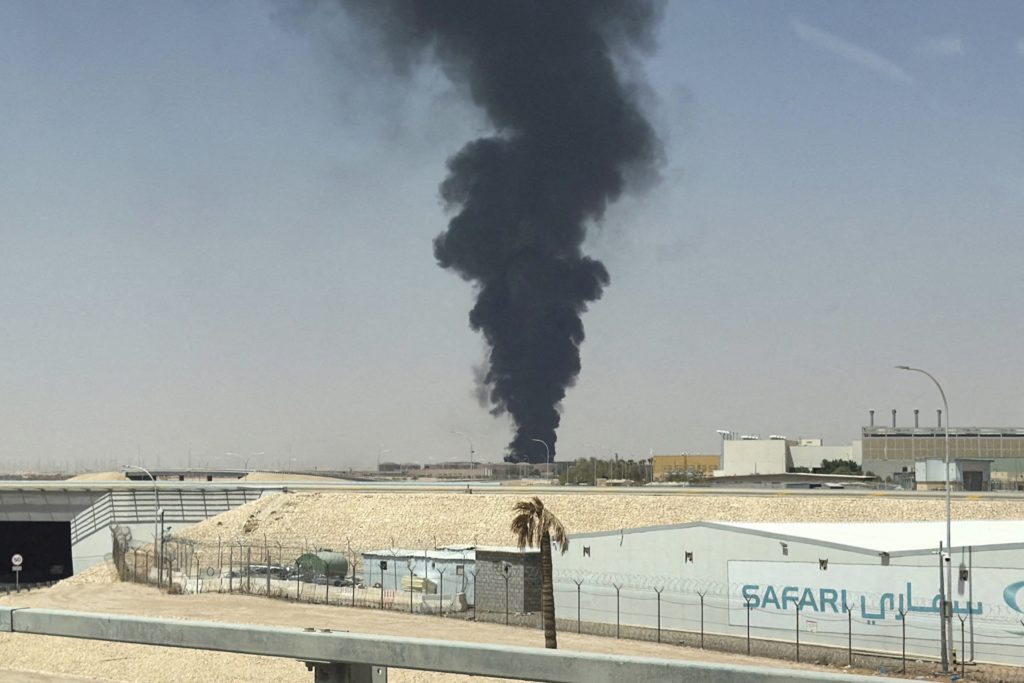
Saudi Arabia confirmed on Saturday that Yemen's Houthi rebels attempted to attack its capital, Riyadh, with a ballistic missile. This marks the first targeting of Riyadh since the escalation of fighting involving the Tehran-backed rebels, which has opened a new front in the Iran conflict. On Thursday, Saudi civil defense reported the first civilian casualty when debris from an intercepted Houthi drone killed a Yemeni resident in Saudi Arabia. Saudi authorities stated they had attempted to target the rebel-held city of Sanaa in Yemen but did not provide further details. The Houthis claimed, without evidence, that they targeted sensitive sites in Riyadh and facilities of Saudi oil company Aramco in Yanbu, alleging massive fires. Aramco did not respond to requests for comment.

Sourcespbs.orgbbc.co.uk

The takes

  • Portrait of Adam Smith

    Adam Smith

    1723–1790, Scotland (the Scottish Enlightenment: Kirkcaldy, Glasgow, Edinburgh)

    Missiles Over Riyadh, Ruins Underfoot

    When factions trade rockets across a border, they do not only wound each other; they shatter the quiet fabric of markets, morals, and the lives of the labouring poor who never chose this quarrel.

    Rockets over a capital are a very theatrical way of announcing what men too rarely confess: that they would rather rule ruins than share prosperity. We are told that Yemen’s Houthi rebels have attempted to strike Riyadh with a ballistic missile, that drones have been intercepted, that debris has killed a Yemeni resident in Saudi Arabia, and that Saudi forces have in turn sought to hit the rebel-held city of Sanaa. Each side proclaims security, dignity, or some higher cause; the plain fact is that a man going peaceably to work has been torn to pieces by fragments of a machine he did not launch, in a quarrel he did not design.

    Read the essay


  • Portrait of John Locke

    John Locke

    1632–1704, England (writing amid the Exclusion Crisis and the Glorious Revolution)

    Missiles Over Riyadh and the Limits of Legitimate War

    When rulers rain steel toward capitals and cities, the question is not who fires first, but who still remembers that power is held only on trust for the lives and estates of ordinary men.

    A ballistic missile launched toward a capital city is a very plain sort of argument. When Yemen’s Houthi forces attempt to strike Riyadh, and then claim to have hit “sensitive sites” and oil facilities, they do not write a treatise; they publish their doctrine in fire over a great town. Saudi authorities answer that they intercepted these attacks, that civilian infrastructure in Yanbu and other places was also threatened, and that they in turn have sought to strike the rebel-held city of Sanaa. One Yemeni resident in Saudi Arabia is already reported dead, not by a direct blow, but by debris from an intercepted drone. So the circle closes: a war between powers, and a corpse that belongs to neither.

    Read the essay
  • Portrait of Niccolò Machiavelli

    Niccolò Machiavelli

    1469–1527, Florence (republican secretary and diplomat, then exile, amid the Italian Wars)

    Missiles Over Riyadh: When Reputation Becomes a Theater of War

    A failed strike on a capital still lands with force, because in modern war the key target is not stone or steel but the belief in who is rising and who is falling.

    Riyadh hears explosions, flights are delayed, and the prince’s first duty is suddenly visible to every subject: keep the capital standing. Yemen’s Houthi rebels try to hit it with a ballistic missile; they also boast of striking “sensitive sites” and oil facilities, though without proof. Saudi Arabia says it intercepts, confirms the attempt, and points to other thwarted attacks on cities and infrastructure, including Mecca, which it calls a red line. Even when the missile fails, the act succeeds in one thing: it puts before the world the simple question every rival loves to ask—can this state defend its own sky?

    Read the essay