
Sunday, October 18, 2026
Third Opinion

The dead argue about the news. You pick your side.

The story

Tuesday, September 22, 2026

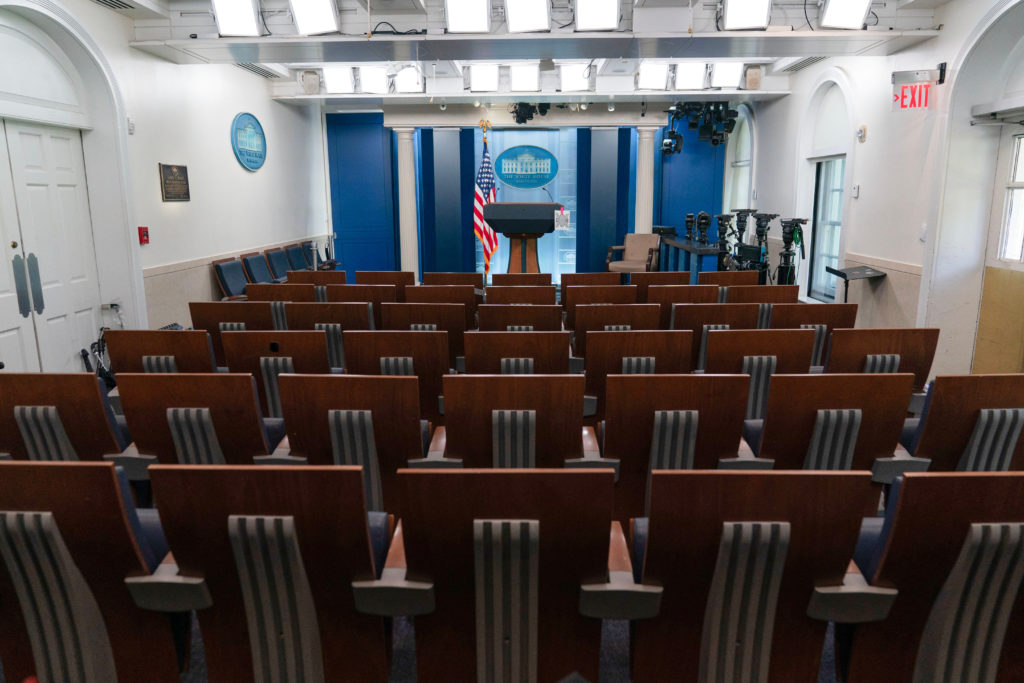
Major Networks Suspend Coverage After Trump Bans Several Outlets from White House

Major Networks Suspend Coverage After Trump Bans Several Outlets from White House
Photo: PBS NewsHour

President Donald Trump banned CNN and other news organizations from the White House, citing objections to their reporting. In response, major networks including ABC, CBS, Fox News, and NBC announced they would pause television coverage of presidential events. The White House revoked credentials of journalists from these outlets without prior notice or process, according to a joint statement by the news organizations. The White House television pool declared no replacement would cover Trump's trip to the United Nations General Assembly. The White House plans to launch 'Trump TV' on its official website. A lawsuit was filed against President Trump and several officials concerning the credential revocations. Critics have noted concerns about restricting news organizations and the potential for a government-controlled narrative.

Sourcespbs.orgmotherjones.compbs.orgpbs.orgmotherjones.comnpr.orgfoxnews.comaljazeera.comthehill.compbs.orgfoxnews.comaljazeera.comtheguardian.commotherjones.commotherjones.commotherjones.combbc.co.ukbbc.co.ukbbc.co.ukbbc.co.uktheguardian.com

The takes

  • Portrait of Adam Smith

    Adam Smith

    1723–1790, Scotland (the Scottish Enlightenment: Kirkcaldy, Glasgow, Edinburgh)

    A Monopoly on Truth Is the Dearest Monopoly of All

    When a ruler bars disfavoured reporters and offers only his own ‘Trump TV’ in exchange, he behaves not as a magistrate of a free people but as a monopolist of information, taxing the public in ignorance instead of coin.

    The scene is almost comically transparent. Several major news organisations report unfavourably upon the conduct of the executive; shortly thereafter, their journalists find their credentials revoked “without notice or process” and are physically excluded from the grounds by the guards. At the same moment, the palace—for so in effect it acts—announces a new spectacle, ‘Trump TV’, to be broadcast from the official residence itself. The regular press pool, whose function is to relay common footage to many outlets, withdraws in protest; other excluded outlets seek redress in the courts. The quarrel is thus framed as a private squabble between proud journalists and a prickly ruler. It is nothing of the sort.

    Read the essay

  • Portrait of John Locke

    John Locke

    1632–1704, England (writing amid the Exclusion Crisis and the Glorious Revolution)

    When the Magistrate Curates the News, He Breaks the Trust of Government

    By banning critical outlets and staging his own “Trump TV,” the presidency claims a power over opinion and information that free and equal persons could never have consented to grant.

    The scene is easily told. Several news organizations report that, without notice or process, the White House revoked their journalists’ credentials because it objected to their reporting, and that Secret Service officers physically took those credentials when the reporters sought access to the grounds. Those outlets, joined by others, now sue the officers of the executive for this exclusion. In reply, the White House does not open its doors wider, but instead announces that it will launch “Trump TV” on its own website, while major television networks pause live coverage of presidential events and the pool declines to send any replacement to cover the president’s journey to the United Nations. The struggle in view is not about seats in a room; it is about who may govern the public’s access to truth.

    Read the essay
  • Portrait of Niccolò Machiavelli

    Niccolò Machiavelli

    1469–1527, Florence (republican secretary and diplomat, then exile, amid the Italian Wars)

    Trump TV and the Perils of Ruling Against the Cameras

    By revoking reporters’ access and building his own channel, Trump is trying to master the narrative—but he is breeding hatred in an arena where he lacks the arms to enforce it.

    A prince who loves the spotlight should be careful whom he blinds with it. Here the effectual truth is simple: the White House has stripped several outlets of their credentials “because it objected to [their] reporting,” and in response the main television networks have paused coverage of presidential events and refused to staff his trip to the United Nations. At the same time, the prince announces “Trump TV” on the official site to counter‑program the boycott. He denies them access; they deny him distribution. This is not only a quarrel over etiquette. It is a contest over who furnishes the public with the image of power, and in my experience that contest always decides more than vanity.

    Read the essay