
Sunday, October 18, 2026
Third Opinion

The dead argue about the news. You pick your side.

The story

Sunday, September 27, 2026

White House Announces Debt Deal and Nuclear Investment Plan with Delayed Returns

White House Announces Debt Deal and Nuclear Investment Plan with Delayed Returns
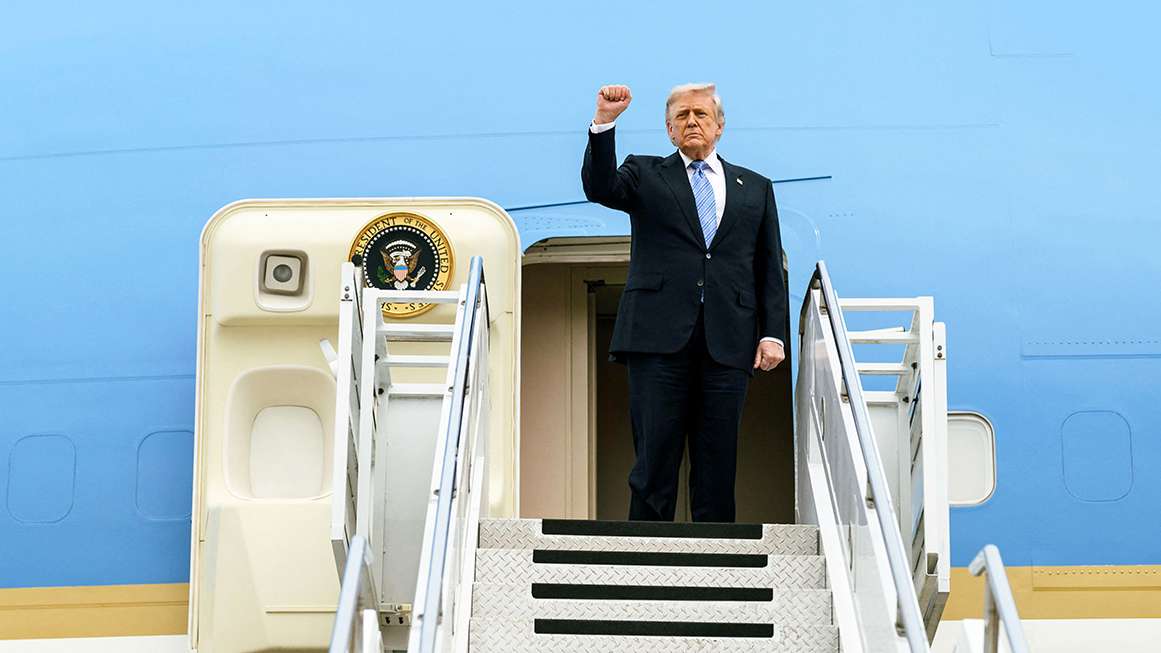
Photo: Reason

White House press secretary Karoline Leavitt described a recent debt agreement as "a creative solution" to the nation's debt crisis. Subsequently, the administration proposed another "creative solution" involving government underwriting for the expansion of nuclear reactors operated by Westinghouse Electric Company. Under this arrangement, the government would receive 20 percent of dividends exceeding $17.5 billion. However, as of June, the government had not received the expected payments, estimated at about $63 million between August and December 2025, due to the administration not issuing necessary regulations to formalize the profit-sharing agreement amid legal concerns. The administration retains the option to adjust its approach before additional agreements encounter similar issues. Earlier, on June 26, former President Trump commented on a series of democratic socialist primary election victories in several cities.

Sourcesreason.combbc.co.ukmotherjones.commotherjones.compbs.org

The takes

  • Portrait of Adam Smith

    Adam Smith

    1723–1790, Scotland (the Scottish Enlightenment: Kirkcaldy, Glasgow, Edinburgh)

    Equity Socialism for the Few, Taxation for the Many

    When governments buy slices of mines, reactors, and chip sales in the name of creativity, they quietly turn taxpayers into unwilling speculators and fragment the very markets on which prosperity rests.

    The jest that one might be “the greatest communist in history” has been followed, we are told, by a very serious kind of public investment. The administration has underwritten nuclear reactors in return for a share of dividends above a lofty threshold; it has taken small ownership stakes in a foreign mining firm and its American project; it has even claimed a percentage of the sales of advanced chips exported abroad. All this is commended to the public as a “creative solution” to a crippling debt. The language is fresh, the devices are novel, yet the substance is familiar: the state is becoming a sleeping partner in particular businesses, with other people’s money on the line.

    Read the essay


  • Portrait of John Locke

    John Locke

    1632–1704, England (writing amid the Exclusion Crisis and the Glorious Revolution)

    When the State Turns Investor, The People Become the Collateral

    Government ownership of private ventures, struck on dubious legal footing and justified as a ‘creative’ fix for public debts, looks less like prudent stewardship and more like usurpation in slow motion.

    I begin where your own reports begin: with a jest. The head of your executive, answering a wave of democratic socialist victories, boasts that he would be “the greatest communist in history,” and soon after, his administration contrives deals by which the government takes a cut of chip sales, a share of mining ventures, and a claim on the dividends of nuclear reactors. A press secretary calls these arrangements “creative solutions” to a crippling debt. Jokes are cheap, but institutions are not. When the same hand that wields the sword begins to reach for an equity stake, wise men ask whether what is called creativity is in truth an enlargement of power under another name.

    Read the essay
  • Portrait of Niccolò Machiavelli

    Niccolò Machiavelli

    1469–1527, Florence (republican secretary and diplomat, then exile, amid the Italian Wars)

    How to Botch Becoming “the Greatest Communist in History”

    Government equity stakes without laws, arms, or follow‑through are not cunning socialism but bad statecraft that offends both liberty and prudence.

    When a ruler jokes that he would be “the greatest communist in history” while the treasury buys into mines, reactors, and chip sales, I do not hear a joke. I hear a man testing how much new power the times will bear. The effectual truth is simple: the government has taken a 5 percent stake in a mining firm and its Nevada project, promised itself 20 percent of certain nuclear dividends, and even bargained for 15 percent of chip sales to China. All this is presented, through a press secretary, as a “creative solution” to a “crippling debt crisis.” Debt is the pretext; expanded dominion over wealth is the substance.

    Read the essay