Yemen Faces Health System Strain Amid Funding Shortfall, WHO Reports
When a State Lets Its Hospitals Fail, It Dissolves Itself
Yemen’s looming health-system collapse is not a mere policy error but a breach of the very trust on which political authority rests.
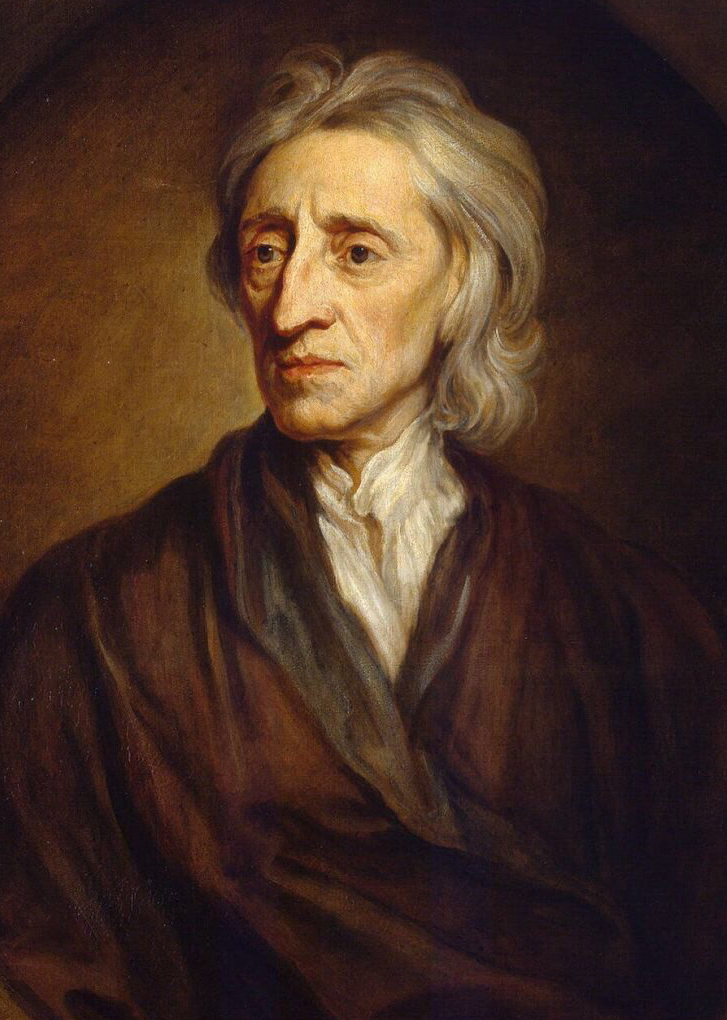
The report is stark enough that even at a distance it arrests the understanding. A minister of public health in Yemen warns that the country’s health system may collapse in some areas; that less than half of health facilities now operate at full capacity; that closures for want of medicines, supplies, and fuel are already under way. I read that health data to June 2026 shows 19.3 million persons requiring health assistance, while funding for the response has reached only 17 percent of what is said to be needed. In such a case, the question is not first about budgets or international charity. It is whether there remains, in truth, a functioning government at all.
When I wrote of government in the Second Treatise, I defined political power as a right to make laws, with penalties of death and lesser penalties, only for the public good. I had in mind chiefly the protection of every man’s property, in the broad sense of lives, liberties, and estates. To leave the state of nature, where each is free and equal under the law of nature, and enter civil society, is to entrust to a legislative and an executive a power over one’s person, on condition that they preserve it better than one could alone. If instead that power is used, by action or by neglect, such that multitudes are left without care in time of disease, something much more serious than mismanagement has occurred.
The law of nature, which is reason, teaches that no one ought to harm another in his life, health, liberty, or possessions. This rule binds rulers as strictly as subjects. War, I know, dislodges populations; the report speaks of some 130,000 people displaced in a short span, of many thousands of children suffering chronic malnutrition, of tens of thousands of measles cases. Such evils may not all be laid at the door of one authority in a contested land. Yet whatever party claims to be government must be judged by this simple measure: are they, as far as lies in their power, protecting life and health, or by their choices abandoning it? To plead difficulty is one thing; to accept, as a settled course, that basic health services may simply vanish in whole regions is another.
I am struck by the number that funding for the health response has reached only 17 percent of what is said to be required. The sums themselves I cannot verify; the cause of this shortfall I do not know. But I know this: where rulers are ready enough to levy obedience, yet cannot or will not secure the means for preserving the lives of those who obey, they fail in the first article of the trust reposed in them. Power is not given to engross titles, flags, or diplomatic recognition; it is given that husbands, wives, and children may be preserved from famine and pestilence. If a government can find resources for arms and not for hospitals, it does not need a philosopher to tell it which choice betrays its commission.
Some will say that in emergencies rulers may exercise a large prerogative, acting beyond standing rules for the public good. I have conceded as much, where the end is truly the safety of the people and the power remains answerable and revocable. But prerogative that hardens into a settled condition, where whole provinces live in perpetual want of medicine and care, is no longer prerogative; it is arbitrary power by omission. Whether one is killed by a soldier’s bullet or by a preventable disease for want of ordinary precautions, the effect upon one’s life and family is much the same. A magistrate who would be horrified at ordering direct executions, yet tolerates the quiet wasting of his people for lack of care, has only changed the manner, not the substance, of violating the law of nature.
In the Treatise I argued that when those who hold authority invade the people’s property or subject them to arbitrary power, they thereby put themselves in a state of war with the people and dissolve the government. This is no encouragement to sedition upon every grievance; it is a recognition that a long train of abuses, all tending one way, shows the design. In Yemen, if over years the inhabitants observe that their pleas for the most basic health protection are unanswered, that facilities close, that children die of diseases long preventable elsewhere, and that this misery is treated as the common course of things, they may reasonably judge that the trust is broken. To withhold obedience from such a failed authority, and to combine with neighbours to set up another more faithful to the end of preservation, is not rebellion. It is the resumption of a right never forfeited.
I do not pretend, from scattered accounts, to discern every cause or assign every blame in that afflicted country. I know only this much with certainty: a government that sees its health system on the brink of collapse, while nearly twenty million souls stand in need of aid, and yet does not bend every nerve, court every lawful assistance, and sacrifice every lesser interest to avert that ruin, has forgotten why it exists. Where there is no effective provision for life and health, there is, in the strictest sense, no commonwealth; there are only men thrown back toward the state of nature, looking around for some new form of union that will at last treat their lives as something more than expendable.
From the works cited
- Second Treatise of Government — Political power defined narrowly as the right to make laws, with penalties, only for the public good — anything beyond that definition must justify itself or stand condemned.
- Second Treatise of Government — The state of nature as analytic baseline: perfect freedom and equality under the law of nature, so that government must be shown to improve on that baseline for everyone who leaves it.
- Second Treatise of Government — Dissolution of government and the right of resistance: when legislators invade property or set up arbitrary power, they rebel against the people, not the people against them.