Trump Declines US-China Collaboration on Artificial Intelligence
Blocking a Technological Entente Is Protectionism in a New Disguise
Calling cooperation with a rival “giving away secrets” may flatter patriotic fears, but it risks carving the future’s great industry into hostile camps and taxing the labouring poor for the comfort of their own producers.
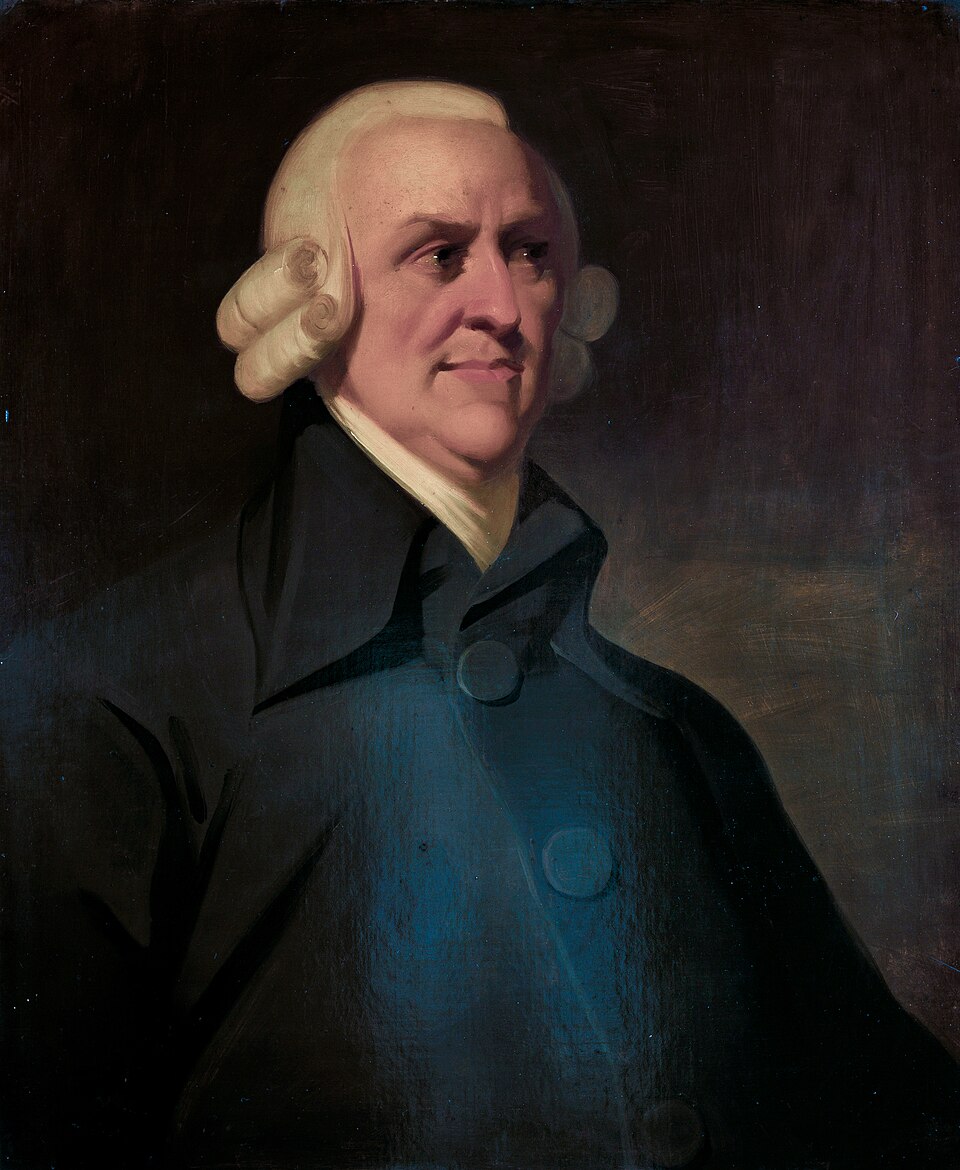
The president of a great commercial republic has lately proclaimed that there shall be no joint venture in the new science of mechanical reasoning with its principal economic rival, for such a partnership would be, he says, to give away secrets. Here is a useful spectacle. A statesman launches a new algorithmic portal to ease the citizen’s dealings with his own government, and in the same breath vows never to share in the wider development of that very art with others. The same innovation is thus treated as harmless when it cuts red tape at home, but as mortal danger when it might enlarge the market abroad. It is always instructive to observe when prudence becomes a little too convenient.
When I wrote of the pin manufactory in An Inquiry into the Nature and Causes of the Wealth of Nations, I observed that it was the division of labour which performed wonders, and that this division was every where limited by the extent of the market. The art now in question appears to be a pin factory of the mind itself, multiplying the power of thought as machinery once multiplied the power of the hand. If ever there were a case where widening the market—by exchanging methods, data, and standards across borders—might deepen specialization and lower costs for all, surely this is it. To refuse any such enlargement is not merely to affront cosmopolitan sentiment; it is to accept smaller powers at higher prices.
The reason publicly assigned is national security. No prudent people can treat lightly the possibility that these new instruments of calculation may become instruments of coercion, that engines which answer questions may one day select the questions men are permitted to ask. In The Wealth of Nations I allowed that defence is of much more importance than opulence; it is not unreasonable that a wise magistrate should guard against teaching a potential adversary how best to overawe him. But every plea of security deserves the most suspicious attention, for there is no tax, no monopoly, no prohibition which may not be painted in those colours. The same pretext which sometimes saves a nation will, more frequently, serve a faction.
For who gains when the leading country in a new art says it will not “mix it up” with competitors? The consumers of its services, who might have enjoyed cheaper and better devices had engineers bargained freely across frontiers? Or the incumbent producers, who, being already “ahead,” are charmed to see political authority declare that there shall be no troublesome partnership in which a foreign associate might demand terms, information, or a share of the profit? In my time I observed that the policy of nations was too often nothing but the policy of merchants and manufacturers, who sought by tariffs and prohibitions to raise their own rate of profit at the expense of the public. The form alters; the substance remains.
Trace the effects of this refusal through the price system and the matter becomes plainer. To bar a whole class of cooperative ventures is to shrink the relevant market. Shrink the market and you restrict the division of labour; restrict the division of labour and you forgo those ingenious specializations that arise only when many minds and many uses are in play. The visible beneficiaries are a narrow circle of domestic firms, who enjoy a more captive demand. The invisible payers are the multitude who must accept slower improvements, dearer services, and the postponed relief of their daily labour. The labouring poor do not march in deputations to demand cheaper algorithms; they simply toil a little longer at wages that might, under broader competition, have commanded more.
The impartial spectator, whose judgment I sought to describe in The Theory of Moral Sentiments, would not, I think, condemn all caution. He would allow that there are secrets which no prudent state ought to proclaim to a suspicious rival. Yet he would also remark how easily a necessary reserve hardens into a general maxim of exclusion, how readily the honest desire to protect one’s citizens is harnessed to the less honest desire to protect one’s producers. Self-love, properly restrained by justice, can promote public ends which it never intended; but self-love armed with political favour tends rather to that vile maxim of the masters of mankind— all for ourselves, and nothing for other people.
It may be objected that any joint venture between rival powers would demand an unusual degree of trust, candour, and forbearance, and that institutions which presume such virtues are commonly disappointed. I agree. Grand schemes for a single, benevolent world laboratory of the human mind are fit amusements for the man of system, who arranges nations like chessmen and forgets that each has a principle of motion of its own. But between naive amalgamation and sullen refusal lies a broad field of limited, well-guarded cooperation: projects bounded to civilian uses, standards that reduce mutual danger, channels where suspicion may be disciplined by repeated dealings. To forbid the entire species of partnership is not prudence; it is policy drawn with a broom where a finer brush is required.
You are entering an age in which, it seems, the instruments of thought will themselves be the great objects of trade and power. Whether they are fashioned in common workshops or in hostile camps will matter enormously to the annual produce of your land and labour, and most of all to what that produce purchases for the poorest. To multiply barricades in the name of safety, without asking who will quietly pay their cost and who will loudly pocket their rents, is to mistake the splendour of predominance for the substance of prosperity. A wise people will insist that, even in the realm of thinking engines, the true end of policy remains the same: not the glory of being ahead, but the decent livelihood of those who walk behind.
From the works cited
- An Inquiry into the Nature and Causes of the Wealth of Nations — The division of labour (the pin factory) as the engine of opulence, limited by the extent of the market.
- An Inquiry into the Nature and Causes of the Wealth of Nations — The critique of mercantilism: wealth is not money; policies rigged by merchants and manufacturers sacrifice the consumer to the producer.
- The Theory of Moral Sentiments — Judge conduct by the impartial spectator: what would a well-informed, disinterested observer feel about this action? Praise-worthiness matters more than praise; to be loved without being lovely is worth nothing, and to be blamed unjustly stings less than to deserve blame.