

Sunday, October 18, 2026
Third Opinion

The dead argue about the news. You pick your side.

The story

Friday, October 9, 2026

Navi Pillay Awarded 2026 Nobel Peace Prize for Legal and Human Rights Work

Navi Pillay Awarded 2026 Nobel Peace Prize for Legal and Human Rights Work
Photo: The Guardian World

Navi Pillay, former UN human rights chief and International Court of Justice judge, has been awarded the 2026 Nobel Peace Prize. The Norwegian Nobel Committee highlighted her commitment to universal legal principles and her career defending Nelson Mandela, serving on international tribunals, and chairing the UN Independent International Commission of Inquiry on the Occupied Palestinian Territory from 2021 to 2025. The commission concluded that Israel committed genocidal acts in Gaza, implicating senior Israeli officials. South African President Cyril Ramaphosa and other leaders praised Pillay's contributions to peace and human dignity globally. UN human rights chief Volker Turk stated that the award reaffirms the importance of human rights, rule of law, justice, and accountability for peace and security. The prize underscores the role of national and international law in resolving conflicts non-violently.

Sourcestheguardian.combbc.co.ukmotherjones.comnpr.orgbbc.co.uknytimes.com

The takes

  • Portrait of Adam Smith

    Adam Smith

    1723–1790, Scotland (the Scottish Enlightenment: Kirkcaldy, Glasgow, Edinburgh)

    Justice, Prizes and the Great Chess-Board of Human Society

    Honouring Navi Pillay for her devotion to law is praiseworthy; expecting a medal to settle a brutal conflict is the old folly of arranging living pieces as if they were wooden pawns.

    The scene is almost comic, were the subject not so grave. A jurist is sitting in the palace where the victors once judged the crimes of a world war, when she is told that a committee in a distant northern capital has crowned her life’s work with a peace prize. In the same hour, one great power announces sweeping punishments upon an international court to which she once belonged, and the government of a state accused by a commission she chaired denounces the award as a grotesque weapon. The laurel that pretends to unite mankind in admiration thus serves first as a mirror, revealing how violently divided that admiration remains.

    Read the essay

  • Portrait of John Locke

    John Locke

    1632–1704, England (writing amid the Exclusion Crisis and the Glorious Revolution)

    Calling Genocide by Its Name Is Not a Weaponization of Peace

    When judges who answer to law, not faction, find that a state has destroyed lives in defiance of reason and right, it is not the prize but the power thus judged that stands on trial.

    I find it telling that, upon the announcement of a peace prize for a jurist long employed in courts of justice, the loudest cry is that the award is a “grotesque weaponization.” The woman so honoured, Navi Pillay, is praised by the committee for a career spent in defence of human dignity, for sitting in international criminal tribunals, for serving as the United Nations high commissioner for human rights, and for chairing a commission of inquiry into the occupied Palestinian territory. That commission has concluded that the state of Israel has committed genocidal acts in Gaza, with a specific intent to destroy the people there. The response from some quarters has not been to answer the charge, but to curse the judge.

    Read the essay
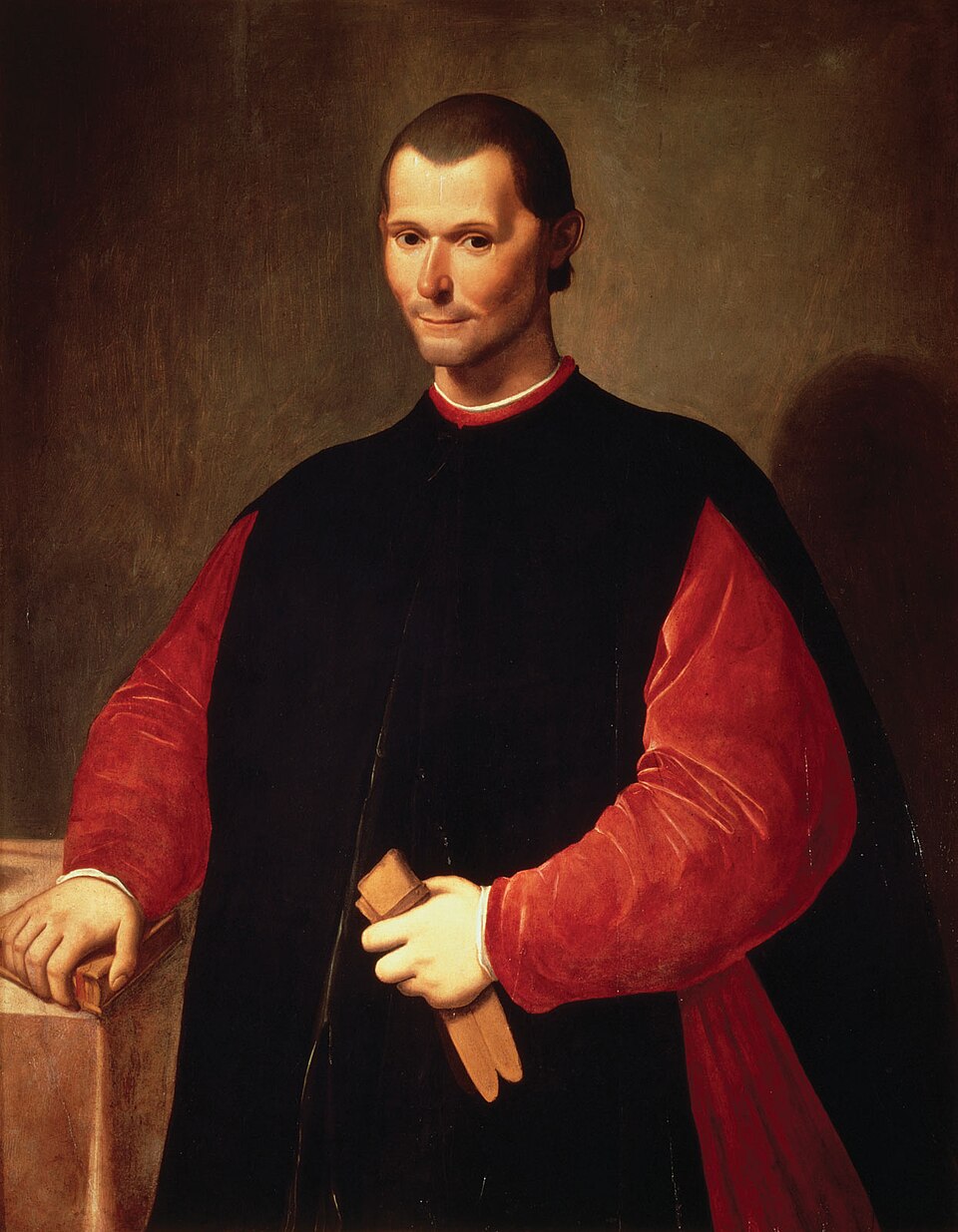
  • Portrait of Niccolò Machiavelli

    Niccolò Machiavelli

    1469–1527, Florence (republican secretary and diplomat, then exile, amid the Italian Wars)

    A Nobel Prize Without Arms

    By crowning Navi Pillay, the Nobel committee has declared for a new legal order, but it has not yet given that order the arms it must have to survive the counter‑attack of states that feel accused of the crime of crimes.

    The scene is almost theatrical: a former UN human rights chief, now a judge, sits in Nuremberg’s Palace of Justice and learns she has won the Nobel Peace Prize; hours later, Israel denounces the award as a “grotesque weaponization,” and the United States announces sanctions against the International Criminal Court. One ceremony, two punishments. The committee praises Navi Pillay’s “firm moral compass” and her work, including chairing a commission that concluded Israel was guilty of genocidal acts in Gaza and that its leaders had incited genocide. Israel replies with accusations of lies and blood libel. This is not a dispute over facts alone. It is a clash of survival narratives, fought with law on one side and raison d’état on the other.

    Read the essay