
Sunday, October 18, 2026
Third Opinion

The dead argue about the news. You pick your side.

The story

Tuesday, October 13, 2026

Russia Reports Air Defense Successes Amid Strikes; Ukraine Cites Lack of Early Warning

Russia Reports Air Defense Successes Amid Strikes; Ukraine Cites Lack of Early Warning
Photo: PBS NewsHour

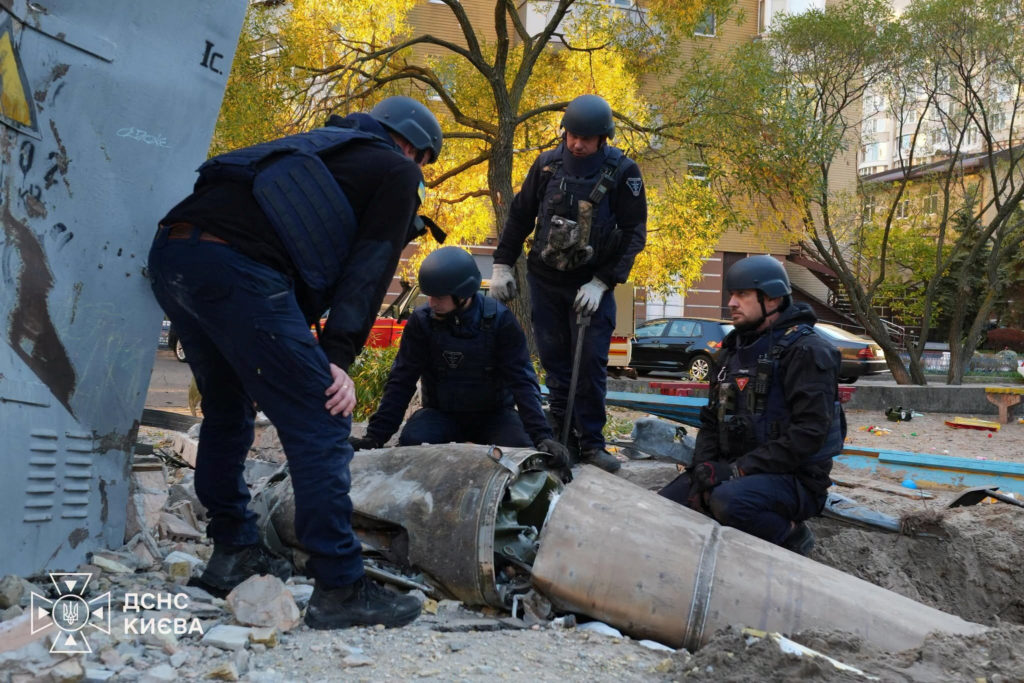
The Russian Defense Ministry reported shooting down 604 Ukrainian drones overnight over Russian regions and the Sea of Azov. It also stated that Russian forces launched strikes targeting Ukrainian military-industrial facilities, logistics centers, railway and port infrastructure, and vessels delivering military cargo, including a bulk carrier near the port of Mykolaiv. Ukrainian President Volodymyr Zelenskyy said Ukraine received no early warning from its partners about five Russian ballistic missiles that struck civilian infrastructure in Kyiv. Meanwhile, former U.S. President Donald Trump commented on the attacks, noting that Ukraine had hit many sites the previous day and appeared to defend Russia's continued strikes on Ukrainian energy infrastructure following his announcement of an "energy ceasefire" he claimed Moscow had agreed to.

Sourcespbs.orgbbc.co.uknytimes.compbs.orgthehill.commotherjones.commotherjones.compbs.org

The takes

  • Portrait of Adam Smith

    Adam Smith

    1723–1790, Scotland (the Scottish Enlightenment: Kirkcaldy, Glasgow, Edinburgh)

    Missiles, Markets, and the Failure of Duty

    When ballistic missiles fall without warning and ports and railways become targets, it is not abstractions but the labouring poor, and the very fabric of the market, that are blown apart.

    The facts as reported are grim and precise. Drones and missiles cross frontiers; hundreds are said to be shot down; others reach their mark. Strikes are launched, we are told, not only against military works, but against energy infrastructure, railways, ports, even a bulk carrier in the estuary of a river. In Kyiv, ballistic missiles hit civilian infrastructure, and the Ukrainian president declares that his country received no early warning from its partners. Meanwhile, merchant ships sink or are damaged in the Black Sea, and neighbouring states protest that such attacks are “absolutely unacceptable.” The words are diplomatic; the reality is simple: the ordinary business of life is being interrupted by violence from which those most exposed had little protection and less foreknowledge.

    Read the essay


  • Portrait of John Locke

    John Locke

    1632–1704, England (writing amid the Exclusion Crisis and the Glorious Revolution)

    Missiles Without Warning Are Not Government but War

    When rulers loose force on civilians and allies withhold the warnings they can give, the bonds of political trust are already dissolving, whatever treaties may say.

    I begin from the scene reported: five ballistic missiles strike civilian infrastructure in Kyiv; a drone wounds people at an educational institution in Rivne; merchant ships in the Black Sea are hit by drones, one of them sinking with crew missing. The Russian Defense Ministry, speaking in its own cause, says it targets “military-industrial facilities, logistics centers, railway and port infrastructure, as well as vessels involved in delivering military cargo.” At the same time, the Ukrainian president declares that his country received no early warning from its partners about those missiles headed to the capital. Here are men, cities, ships, and promises, all under fire at once. The question is what authority, if any, stands behind these acts of force.

    Read the essay
  • Portrait of Niccolò Machiavelli

    Niccolò Machiavelli

    1469–1527, Florence (republican secretary and diplomat, then exile, amid the Italian Wars)

    In Ukraine’s Sky War, Borrowed Arms and Half-Measures Are Already Defeats

    Ballistic missiles without warning, drones over the Black Sea, and improvising princes arguing about ceasefires all reveal the same thing: those who rely on others’ arms and on ambiguous peace are already in decline.

    Five Russian ballistic missiles fall on Kyiv and the Ukrainian prince says he had no warning from his partners. That single complaint tells me more than a hundred communiqués. A state at war is naked in the most important hour: when iron is already in the air. At the same time, the Russian Defense Ministry boasts of striking Ukraine’s military‑industrial facilities, its logistics, its ports, even a bulk carrier said to carry military cargo. Drones hit an educational institution in Rivne, and Russia claims it shot down hundreds of Ukrainian drones over its own regions. Everything moves. Whoever expected a stable front or a tidy ceasefire has already misunderstood the first rule of politics: nothing stands still.

    Read the essay