Legal and Political Disputes Surround Alaska Senate Race and Ballot Counting
In Alaska, the Fox Learns Ranked Choice
The decoy candidate in Alaska’s Senate race is not a scandal of morals but a lesson in how free states must harden their laws when clever operators find the seams.
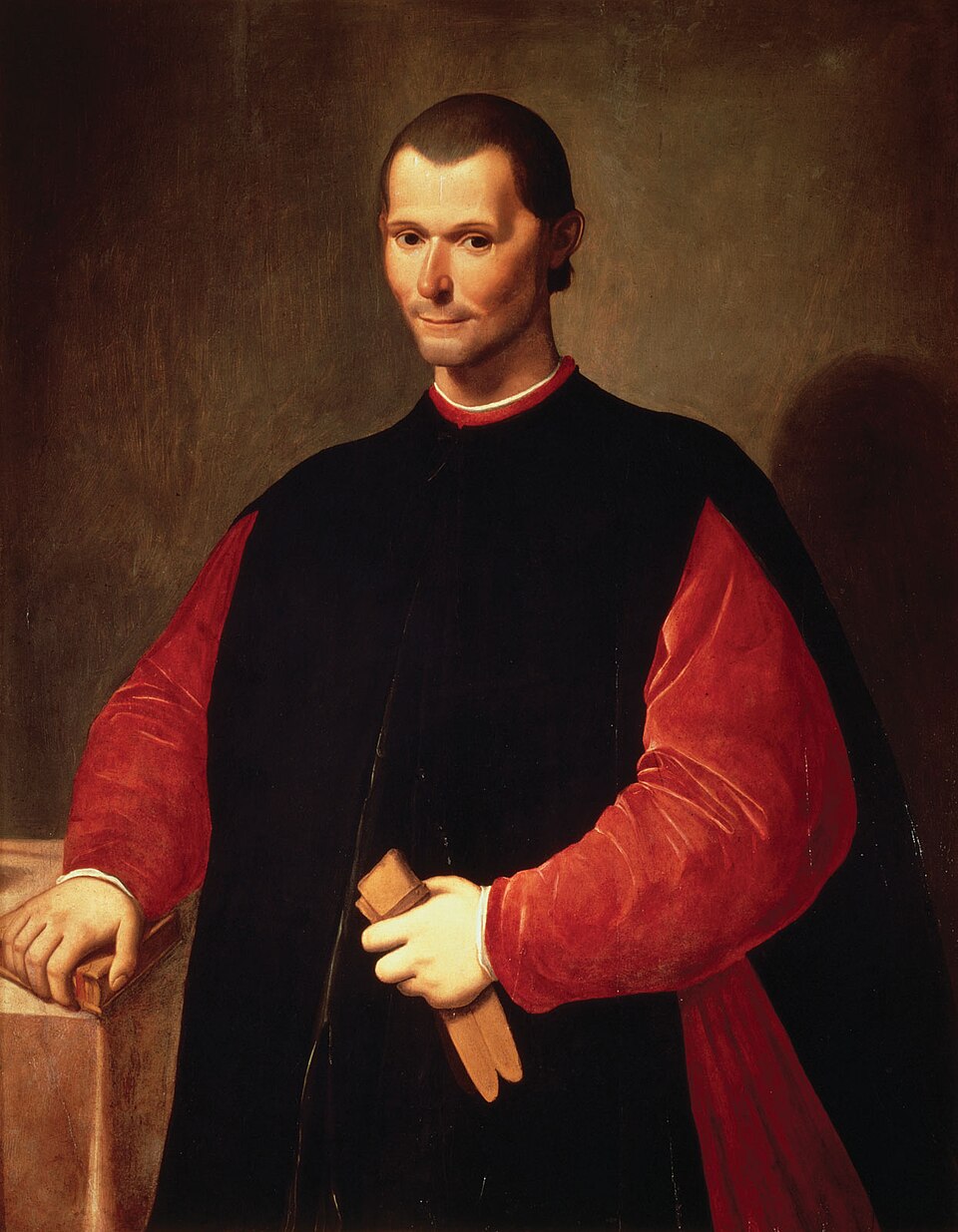
Begin with the indecency itself: in Alaska, a retired schoolteacher with the same name as the sitting Republican senator appears on the ballot, and reporters trace his recruitment to Democratic operatives backing his opponent. Allies of the senator call it a fraud; allies of the challenger say such name games are common and that she knew nothing. A newspaper publishes texts and finance records; a governor denounces; a former president demands prosecutions and that ballots be set aside. Here you have not a tragedy but a very modern comedy of elections, where everyone claims to defend “integrity” while testing how far they can bend it.
When I wrote in *The Prince* that one must look to the “effectual truth” of things, Marriott’s translation only caught half my impatience. The point is not simply to ignore sermons, but to observe that men in public life, when pressed by necessity and ambition, behave in roughly the same way across centuries. Faced with ranked choice rules that reward confusion and second preferences, someone on one side appears to have asked the oldest question in politics: can I place a piece on the board that looks like my enemy and draws away his support? The innovation is the ballot design; the instinct is antique.
You may object that this is trickery unworthy of a free republic. I share the love of free orders; in the *Discourses on Livy*, in Thomson’s translation, I praised those Roman tumults that produced good laws from bad behavior. But see the rule: wherever you offer prizes, men will game the contest. In my Florence, factions falsified tax rolls; in your Alaska, professionals apparently conjure a namesake. Blame them if you like, yet if the law permits such a stratagem, it silently commands it. Legislators who leave obvious snares in place are the real authors of the ambush.
Notice how swiftly arms appear when advantage is threatened. The former president invokes a federal law’s preamble to claim guardianship over election “integrity” and demands that ballots be discarded and the opponent prosecuted. His administration pushes the Justice Department to launch criminal investigations and issue subpoenas. The state, jealous of its own authority, replies that such interference is both meritless and practically impossible, and the governor orders his own probe. In *The Prince*, I warned against relying on mercenary arms; here no one repeats that error. Each power center reaches for its own lawyers, investigators, and microphones. Nobody prays; everybody subpoenas.
This is healthy conflict, up to a point. In the *Discourses* I argued that freedom is born from the quarrel between the great and the people, provided the quarrel is fenced by laws. The danger in Alaska is not that parties fight, but that they fight by inventing new weapons faster than the laws can recognize them. Ranked choice voting promised to soften partisanship; instead, a well-placed decoy may have turned it into a new theater for tactical mischief and a referendum on whether the system itself should survive. New modes and orders attract virtuosi of manipulation before they attract statesmen of reform.
Do not overlook appearances. Most citizens do not read legal briefs or internal texts; they hear that one side “cheated” and the other “overreached.” Each camp races to fix the narrative: one paints a corrupt scheme to confuse voters; the other paints a bullying attempt to throw out ballots and criminalize hardball politics. In my time I wrote that it is safer for a prince to be feared than loved, but never hated. Here, campaigns risk precisely that hatred if voters come to believe that their cleverness has made the vote itself a joke. To win the office yet lose faith in the counting is a barren victory.
What, then, is prudence in such a case? Not squeamishness, and not the middle course. If decoy candidates are to be treated as frauds, the law must say so clearly and punish them swiftly, so that a few suffer and the many are spared disorder. If they are to be permitted as gamesmanship, then the public must be told in equally clear terms and allowed to judge whether it still wants this voting system. Half-condemning the tactic while secretly admiring it, or half-enforcing vague rules through partisan investigations, will only deepen suspicion. Where elections are concerned, ambiguity is the first instrument of corruption, and clarity the only true arm of the republic.
From the works cited
- The Prince — The economy of violence and the feared/loved calculus: better feared than loved if one must choose, but never hated — fear rests on the prince's will, love on the fickle will of others.
- The Prince — Arms of one's own versus mercenaries and auxiliaries: power borrowed is power owed, and it will be collected at the worst moment.
- Discourses on Livy — Managed conflict between the great and the people is the source of a free state's vigor — Rome's tumults produced its liberty.