Trump Criticizes Former Lawyer Alina Habba Mildon's $50 Million Deal
A $50 Million Shadow Over the Pardon Power
When the king’s ancient prerogative is sold, or appears to be for sale, it ceases to be a remedy and becomes the very arbitrary power it was meant to restrain.
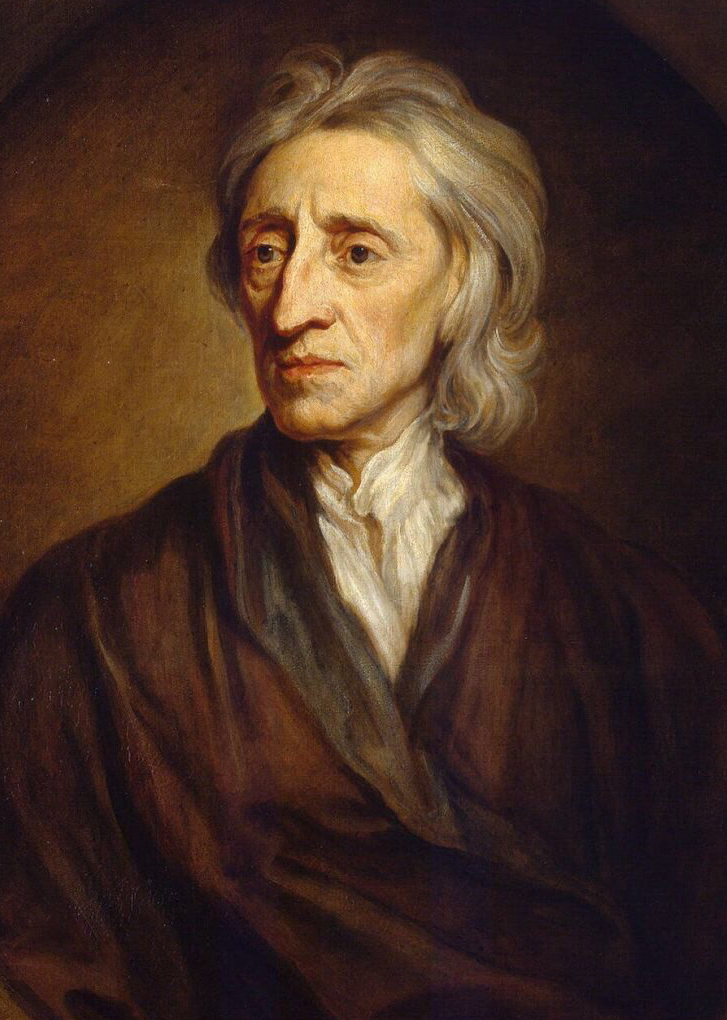
That a single lawyer’s contract should be worth more than $50 million would be remarkable in any age; that it is agreed with the family of a man seeking a presidential pardon, while she holds posts in the Justice Department, and is followed in time by a pardon to that family’s bank, makes it something more than remarkable. I read that the former president himself now calls this arrangement “obnoxious and outrageous,” and declares it “not acceptable.” I gladly leave the weighing of particular persons to an impartial judge. But I cannot pass over in silence what this story reveals about the pardon power itself, and the trust on which all political power stands.
In the work where I treated of government, which men now call the *Second Treatise*, I described prerogative as a power in the executive to act for the public good without a standing rule, and sometimes even against the letter of it, when the common safety so requires. Such a power is needful in all states, for laws are blunt instruments, and occasions are sharp. The power to pardon offenders is of this sort. It interrupts the steady course of punishment in favour of mercy, or policy, or both. But because it goes beyond ordinary rule, it is tolerable only while it is manifestly employed for the public, and remains always revocable in the hands of the people.
When an officer in the very department charged with justice enters a four‑year contract, reportedly guaranteeing more than $50 million from the family of a banker seeking such a pardon, every element of that trust is brought into question. First, the appearance of a private interest tied to a public act is itself a wound to confidence, even if no unlawful bargain is struck. Men are the workmanship of one Maker, and the rulers they set over themselves hold power only to preserve their lives, liberties, and estates. If the ordinary citizen comes to believe that a different law is written for the wealthy suppliant who can command tens of millions, then the equality that undergirds consent is quietly undone.
Secondly, prerogative presumes that, where the law does not reach, the magistrate’s own judgment will stand in its place, and that this judgment will be disinterested. Here, however, the suspicion arises that the chain of advice leading to a pardon may have been touched by vast private gain, or by the hope of it. The lawyer denies that she was ever paid to obtain a pardon or laboured to secure one; the former president condemns the transaction as beyond what can be accepted. Between these assertions lies a region of doubt; yet even doubt on such a matter is costly. For when men cannot tell whether mercy is dispensed for public reasons or for hidden fees, they must conclude that they are governed by an arbitrary will, not by a known standing rule.
Thirdly, the law of nature, which is no more than reason rightly consulted, teaches that no one ought to harm another in his life, liberty, or possessions. Property here includes that steady expectation that public power will be used for common ends, not prostituted to particular gain. A pardon granted under the cloud of an enormous private contract may not directly seize any man’s house or coin, yet it may despoil the whole people of something more delicate and more necessary: their assurance that justice is not a market. Corruption in the dispensation of grace is still corruption, and breeds a long train of abuses wherever it is not promptly and severely checked.
Yet I must add, as I argued in my *Essay Concerning Human Understanding*, that assent ought to be proportioned to the evidence, and to believe beyond one’s proofs is a failure of duty, not a mark of zeal. Here the public reports are partial; at least one important claim is said to be contested or to await further verification. Prudence therefore forbids us to pronounce, as a matter of fact, that the pardon was bought, or that any positive law was broken, until fuller evidence is produced. But prudence does not forbid us to judge institutions. Even while we suspend our sentence on particular persons, we may firmly condemn any arrangement that makes it thinkable, or plausible, that the path to mercy from the chief magistrate runs through a $50 million gate.
If a people find that their rulers’ extraordinary powers of pardon and favour are habitually entangled with private contracts of fabulous size, then the power placed in trust for their protection has been turned back upon them. It is no longer prerogative, answerable and revocable, but something nearer to absolute power, exercised without a clear rule and clouded by interest. Against such a tendency the people have, under God, only their vigilance and their voice. They do not owe belief where reasons are not given, nor consent where power is manifestly abused; they owe it to themselves to insist that no man’s liberty or reputation shall depend upon his ability to hire, at any price, a secret passage to the magistrate’s ear.
From the works cited
- Second Treatise of Government — Prerogative as revocable emergency discretion — legitimate exactly as long as the public visibly benefits and no longer.
- Second Treatise of Government — All political power is held on trust: it is legitimate only insofar as free and equal persons could have consented to it for the protection of their lives, liberties, and estates.
- An Essay Concerning Human Understanding — Assent must be proportioned to the evidence; believing beyond one's proofs is a failure of duty, not a mark of faith.