Justice Department and FDA Actions on Abortion Pills Discussed Amid Legal Uncertainty
A President Is Not the Nation’s Prosecutor-in-Chief
When the executive sacks a prosecutor on contested authority and his allies trade in misinformation, power slips its lawful trust and edges toward usurpation.
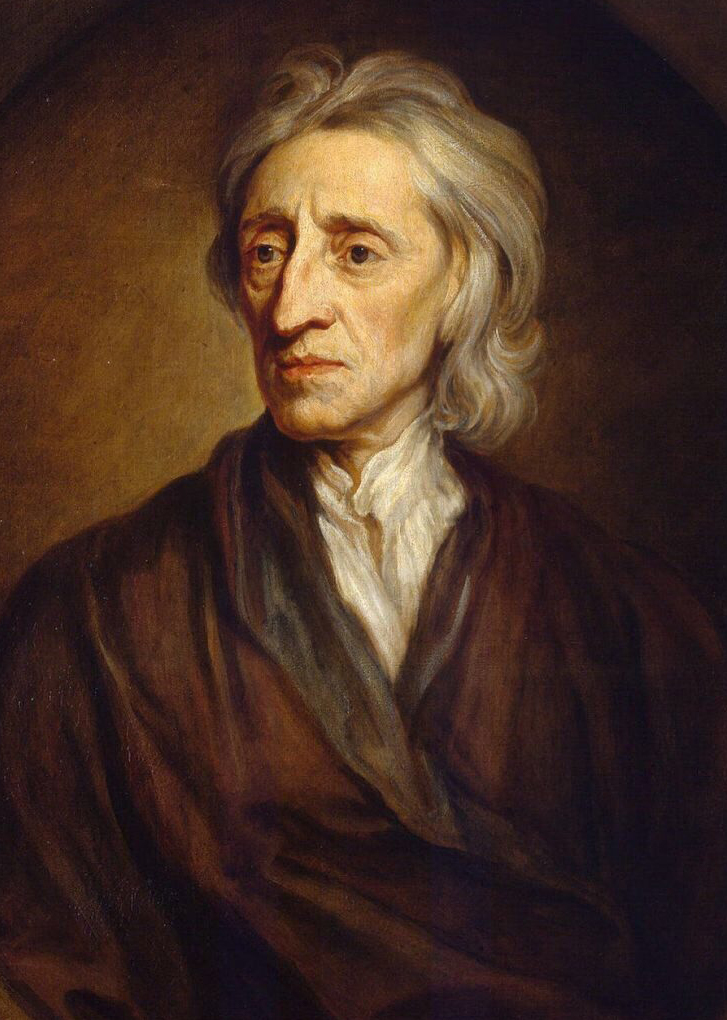
The dismissal of the chief federal prosecutor in Seattle, appointed by a panel of seventeen judges yet removed at the president’s pleasure, may look to some like a routine change of officers. I cannot see it so. Where the very power to remove is, by learned testimony, “not settled law,” and where that power is pressed chiefly to align prosecutions with an administration’s political temper, we are no longer speaking of the mere choice of servants, but of the bounds of authority itself. In the Second Treatise I defined political power as a right to make and execute laws only for the public good. Whatever cannot be squared with that definition is not government, but force.
Here the ambiguity is open. One legal office has held since 1979 that a statute granting the president authority to remove each prosecutor bears that meaning; yet a later opinion from the same Office of Legal Counsel, and the judgment of an experienced former prosecutor, mark the question as unsettled. In such a case, where the text is doubtful and practice contested, the burden does not lie on liberty to prove its exemption, but on power to establish its title. Persons are naturally free and equal; any claim that one may dismiss the community’s chosen accuser at will must be justified, and justified in terms that those subject to it could have consented to.
I do not deny that some discretion in the executive is necessary. In my own time I allowed a prerogative, a power in the magistrate to act for the public good where the law is silent, or even against the letter, so long as it manifestly serves that end and remains revocable by the people. But prerogative is a dangerous medicine. The moment a ruler uses that latitude to shield his friends or pursue his adversaries, to bend prosecutions toward a private or partisan design, he ceases to be a trustee and becomes a party in the cause. When he is judge in his own case, those under him are remitted toward a state of nature, where no impartial judge governs their lives, liberties, and estates.
What deepens my concern is the wider “sea change” in your Justice Department that an observer notes: high offices filled on an avowedly partisan footing, and a president drawn into the department’s day-to-day operations. A prosecutor is not the prince’s champion; he is the people’s minister of the law. When his station depends not on the steady rule of law, but on the fluctuating favour of one man, prosecutions risk becoming instruments of that man’s designs. A long train of abuses is not proved by a single firing; yet such dismissals, joined with the disqualification of other officers in contentious cases, are early links in a chain that may, if continued, bind the whole.
The same pattern appears in the hearings over a drug used in abortion. An official ally of the administration assured senators that, for the first time in a decade, your health agencies were truly examining the safety of these pills, and that real studies were only now undertaken. Yet we are told more than one hundred studies had already shown this medicine to be safe and effective for early pregnancy. Here is not merely an error in a tavern talk, but misinformation in a solemn proceeding. In the Essay Concerning Human Understanding I urged that assent be proportioned to the evidence; to invite legislators to believe contrary to an established body of studies is to tempt them to sin against their own understanding.
Some will answer that strong measures are needed in matters of great moral weight, and that if the end be to reduce abortions, a certain roughness in law and rhetoric may be excused. I cannot grant it. In my Letter on Toleration I argued that the magistrate has no power over the inward persuasion of the mind; outward penalties can breed hypocrisy, not conviction. If the state leans on misinformation to move men’s consciences, or stretches old statutes toward a nationwide ban by strained interpretation, it does not guide souls but overreaches its civil commission. Positive laws that trample reason and evidence, or that wield criminal sanctions where consent could never have placed them, are not true laws, but masked force.
What then follows? Not that every doubtful removal or every false claim dissolves government. People are not loosed from obedience by a single irregularity, nor is resistance justified by each private grievance. But when the power to appoint and dismiss prosecutors is used on uncertain legal ground, in a climate where justice is drawn into partisan designs; when, at the same time, officials spread dangerous untruths about matters touching life and health, and press fringe readings of old criminal statutes toward sweeping new ends; then the people are entitled to watch closely, to insist on clear laws, and to be ready, if a long train of abuses tends all one way, to replace rulers while preserving society. Power is held on trust; when it forgets that, the people must remember it for them.
uncertainty_note: I write under the constraint of fragmentary reports, and so I judge chiefly the kinds of power and argument displayed, not every hidden fact of this particular case.
From the works cited
- Second Treatise of Government — Political power defined narrowly as the right to make laws, with penalties, only for the public good — anything beyond that definition must justify itself or stand condemned.
- Second Treatise of Government — Absolute arbitrary power is worse than the state of nature it claims to cure; judge any concentration of discretion by whether it leaves those subject to it a known standing law and an impartial judge.
- An Essay Concerning Human Understanding — Assent must be proportioned to the evidence; believing beyond one's proofs is a failure of duty, not a mark of faith.