Wildfire Smoke and Flash Flood Warnings Affect Large Parts of US Ahead of World Cup Final
Wildfire Smoke, Flooded Streets, and the Real Cost of a World Cup Final
When thunderstorms are asked to save a spectacle, we glimpse how readily modern societies count ticket revenue in full and the lungs of the poor at a discount.
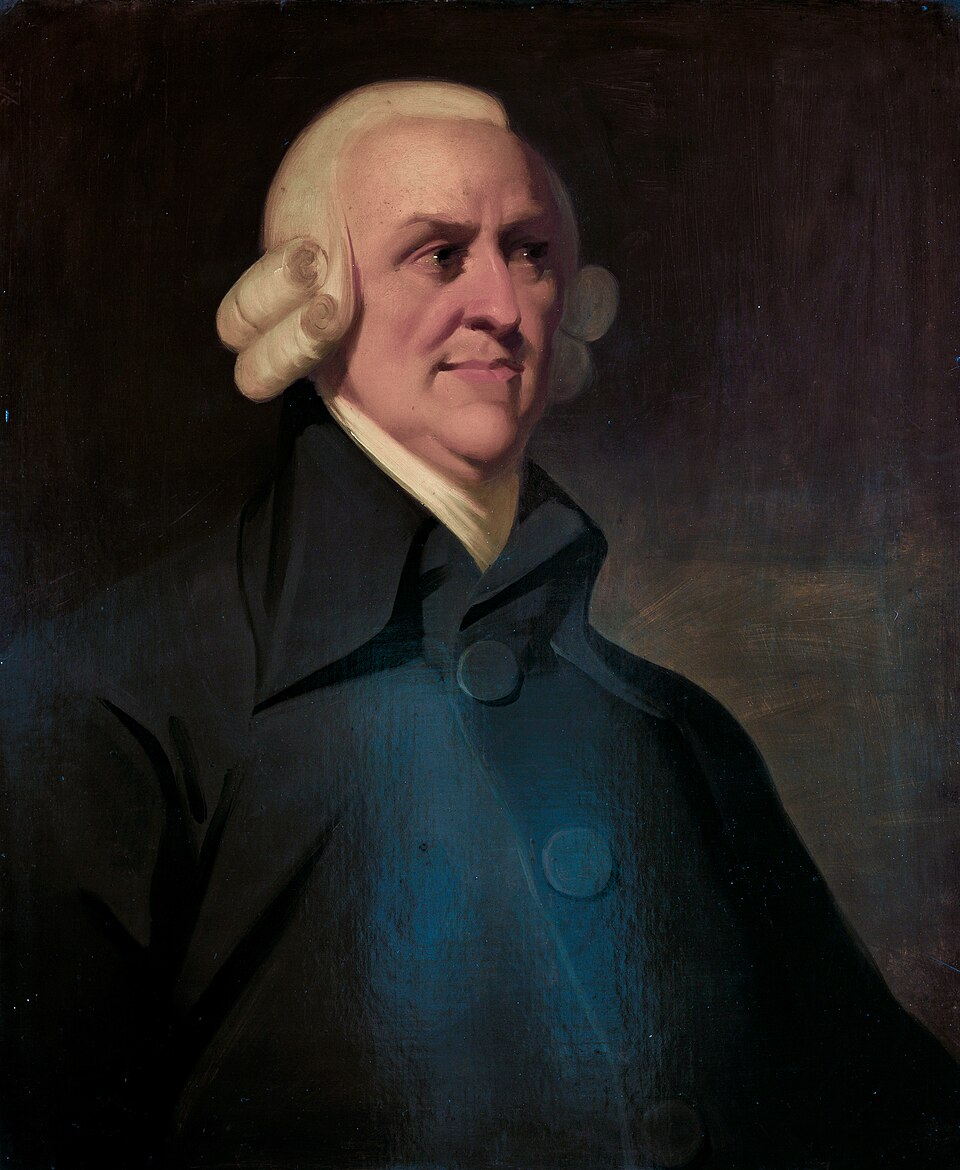
The scene is easily imagined, even from my great distance in time: a famous match scheduled for Sunday, the air on Saturday choked with smoke from distant fires, and meteorologists promising that thunderstorms will sweep the miasma from the sky just in time for the final. To some, nature seems obligingly to play stagehand to commerce. Yet the same storms that clear the view threaten flash floods, and the same smoke that lifts from the stadium lingers in the surrounding country. The benefit is vivid and concentrated, the harm diffuse and obscure; and wherever this is the case, the impartial spectator must look twice at the ledger before applauding the balance.
The air at the field, I am told, is measured every ten minutes with elaborate instruments, while whole regions are advised in general terms that conditions are “dangerous” or “unhealthy”. This contrast is not accidental. Where large sums are at stake, information is precise, frequent, and localized; where only the quiet breathing of the labouring poor is concerned, it is vague, intermittent, and national. In The Wealth of Nations I argued that we ought to judge an economy by what it delivers to those labouring multitudes, not by the splendour of courts; the same rule applies to stadiums filled with cheering spectators.
When smoke blankets a continent and rain turns streets into torrents, the division of labour itself is thrown out of joint. Those whose business requires them to move—drivers, carers, messengers, the humble purveyors of food—cannot easily perform their several functions when the air stings the lungs and the roads threaten to disappear under water. The extent of the market is then literally shortened by miles of impassable highway and by hours prudently spent indoors. Every such contraction narrows the scope for specialization, dulls productive powers, and silently diminishes the annual produce of the land and labour, even while the broadcasters assure us that the great match will proceed as planned.
It is not, however, from the benevolence of meteorologists or tournament organizers that we must expect prudent conduct, but from their regard to their own interest, disciplined by rules of justice. If public authorities merely issue pious exhortations—“stay indoors”, “avoid exertion”—whilst work must still be done and wages must still be earned, they design a scheme that relies upon unusual virtue and will therefore fail. A man who must choose between the rent and his lungs will walk into the haze. In The Theory of Moral Sentiments I observed that self-command is admirable, but it is not infinite; wise policy is that which does not require heroism merely to breathe.
Here the duties of the state are plain. No private undertaker can trace the path of a smoke plume across half a continent, or predict, with any tolerable probability, which valley will become a sudden channel for a flood. Weather observation, honest warning, emergency response—these are public works which, as I once wrote, though they may be of great advantage to a great society, could never repay the expense to any individual or small number of individuals. To perform them negligently, or with an eye more to the preservation of an entertainment than to the preservation of health and life, would be conduct which no impartial spectator could approve.
Yet I should be sorry to see these alarming events furnish a new pretext to the man of system, who beholds smoke and storm and instantly sketches a comprehensive plan to regulate every fire, every journey, every match, as if human beings were the motionless pieces of a chess-board. The fires themselves, I am informed, arise far away; the winds and rains acknowledge no ministry. To imagine that any council can, by a few general maxims, abolish hazard from the climate is folly and presumption. Gradual, intelligible rules that work with people’s ordinary motives may succeed; grand designs that demand continual sacrifice from everyone for distant, abstract gain will very soon be honoured in speech and evaded in practice.
Nor should we trust unquestioningly the clamour of commercial interests, whether they plead for cancellation or for perseverance. People of the same trade, when they meet to discuss safety standards, often conclude in reality upon the distribution of loss—who must refund the tickets, who may claim upon insurance, who can shift blame to the weather. Their proposals deserve, as I once advised, the most suspicious attention. If the match proceeds because powerful parties stand to lose much by delay, while the infirm and the poor are told simply to stay indoors and bear it, the invisible hand that reconciles private gain with public good has plainly been shackled. A society that breathes easily only in its stadiums is not, whatever the scoreline, truly winning.
The unknowns are many, but I remain unsure how far the quiet injuries to the labouring poor are counted, in practice, with the same exactness as the visible fortunes of celebrated events.
From the works cited
- An Inquiry into the Nature and Causes of the Wealth of Nations — The division of labour (the pin factory) as the engine of opulence, limited by the extent of the market.
- An Inquiry into the Nature and Causes of the Wealth of Nations — The sovereign's three duties (defence, justice, public works and institutions, including education for the common people) and the four maxims of taxation.
- The Theory of Moral Sentiments — Judge conduct by the impartial spectator: what would a well-informed, disinterested observer feel about this action?