Trump Announces 50% Tariffs on Various Canadian Imports
These Tariffs Are Not Trade Policy but a Breach of Trust
When a ruler reaches back to an obscure law to punish a neighbour and override a solemn agreement, he does not regulate commerce; he makes himself judge in his own case, and that is usurpation, not government.
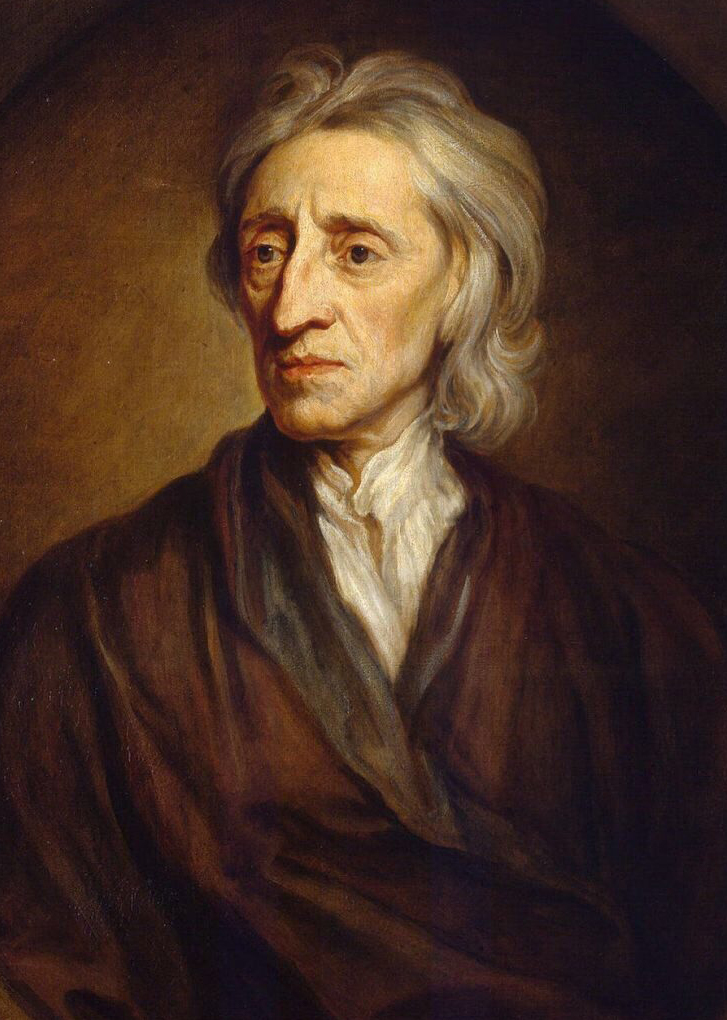
The announcement that the American executive will lay a duty of fifty per cent upon a wide range of Canadian goods might, to some, appear a mere haggling of merchants writ large. Yet the manner of it arrests my attention more than the rate. We are told the duties will fall on many goods already traded under a standing compact, the US‑Mexico‑Canada Agreement; that they are proclaimed unilaterally, and justified as retaliation for “unequal treatment” and provincial boycotts of American drink; and that they may or may not be imposed after thirty days, depending on how negotiations go. This is not a stable rule for trade; it is the brandishing of power.
When I wrote in the Second Treatise that political power is a right of making laws with penalties only for the public good, I meant to distinguish such authority from mere force cloaked in forms. Laws, to be legitimate, must proceed from a settled legislative, stand general and known, and aim at the preservation of the people’s property—by which I include their lives, liberties, and estates. Here, by contrast, an old provision of a 1930 act, described in some reports as long unused or untested, is suddenly employed to impose the maximum duty permitted, and this even on goods bargained for under a later, specific agreement. That looks less like law guiding rulers and ruled, and more like rulers searching the books for any weapon at hand.
I do not say that no nation may answer another’s restrictions with its own. Canada, we learn, has laid counter‑tariffs on American metals and vehicles, and its provinces have, in many cases, halted the purchase and sale of American alcohol. These, too, raise costs for families on both sides of the border and diminish the plenty which, under God’s providence, the earth affords when men leave one another enough, and as good. Yet there is a difference between measures openly negotiated within a shared framework, and measures that set that framework aside. A treaty, once made by proper authority, is a species of consent between peoples; to violate it unilaterally is to break trust.
The administration’s own account sharpens the concern. A fact sheet declares that the new duties will apply whether or not the goods are covered by the existing free trade agreement. An official, speaking anonymously, cites Section 338 of the Tariff Act as warrant, a provision said to allow such duties against countries that discriminate in trade. Perhaps some will argue that Canadian boycotts and tariffs are just such discrimination, and that the law is therefore faithfully executed. But where the same hand alleges injury, interprets the statute, pronounces the neighbour in the wrong, and inflicts the penalty, that hand is judge in its own case, and that is the very definition of arbitrary power.
By the law of nature, which is but reason rightly consulted, no one ought to harm another in his life, liberty, or possessions. All political contrivances about customs and imposts must be measured by that rule. A duty of fifty per cent suddenly laid on the goods of a peaceful neighbour, absent any new danger to public safety or health, plainly threatens the estates of foreign producers and domestic buyers alike. It is, in effect, a partial confiscation at the border. To call this protection of one’s own people, while disregarding the burdens thus shifted onto them as consumers and workers in intertwined supply, is to mistake the end of society. The people did not leave the state of nature in order to have their livelihoods used as bargaining chips.
Some will answer that this is but prerogative: a discretionary power in the executive to act for the public good where the law is silent or doubtful, here used to extract better terms from a trading partner that, it is alleged, acts “unreasonably” toward American goods. I have allowed, in my former writings, that such prerogative may be useful, even necessary, in times of sudden emergency, provided it is employed manifestly for the common benefit and remains always accountable to the people. Yet to use a hazy, nearly forgotten statute to override a precise and recent compact, not to save the commonwealth from ruin but to gain advantage in a quarrel of tariffs and taunts, stretches prerogative toward usurpation. It treats the settled terms of trade as a trifle that one will respect or discard as the day’s tactic suggests.
I do not say that such an act alone dissolves government. In the Second Treatise I argued that only a long train of abuses, all tending one way—the invasion of property and the establishment of arbitrary power—can justify a people in withdrawing their obedience. Here I see a grave abuse of the trust reposed in rulers, but I also see a thirty‑day pause, a neighbour declaring itself ready to negotiate, and many voices within the trading nation calling for a return to freer commerce. Where there is still a path back to known law, to mutual consent, and to impartial adjudication of disputes, wisdom counsels patience and firm resistance within those bounds, rather than an immediate appeal to heaven.
The weak point in my judgment is that I do not yet see the full pattern of future acts, and so cannot know whether this tariff is an isolated excess or a link in that long train of abuses that alone would warrant dissolving the present arrangements.
From the works cited
- Second Treatise of Government — Political power defined narrowly as the right to make laws, with penalties, only for the public good — anything beyond that definition must justify itself or stand condemned.
- Second Treatise of Government — The state of nature as analytic baseline: perfect freedom and equality under the law of nature, so that government must be shown to improve on that baseline for everyone who leaves it.
- Second Treatise of Government — The dissolution of government and the right of resistance: when legislators invade property or set up arbitrary power, they rebel against the people, not the people against them.