
Tuesday, July 28, 2026
Third Opinion

The dead argue about the news. You pick your side.

The story

Tuesday, July 21, 2026

U.S. Conducts Multiple Strikes on Iran Following Deaths of American Soldiers

U.S. Conducts Multiple Strikes on Iran Following Deaths of American Soldiers
Photo: PBS NewsHour

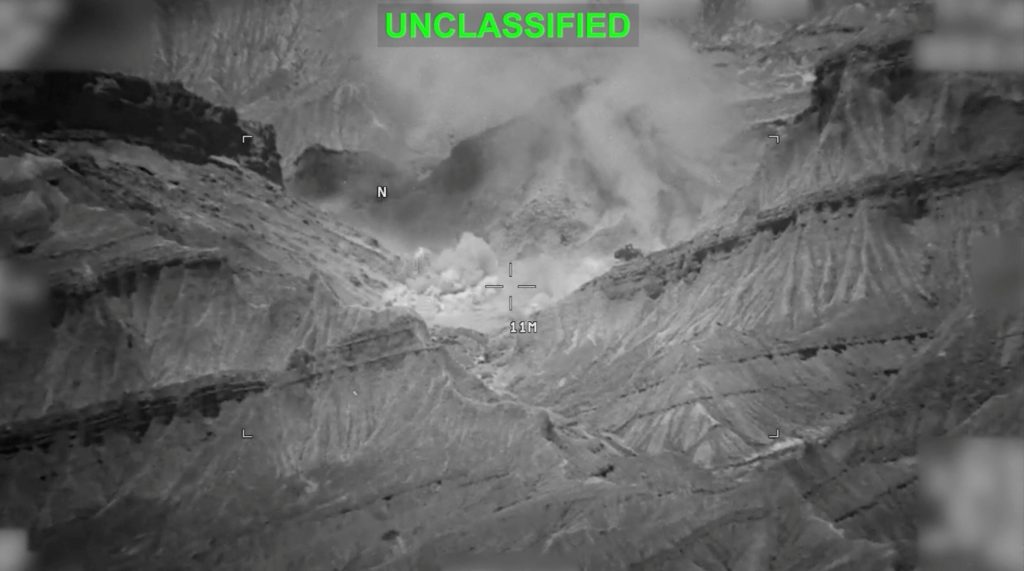
The U.S. Department of Defense confirmed that two American soldiers, Private Isabella Gonzales, 19, from Texas, and First Lieutenant Tyler James Feehan, 25, from Hawaii, were killed in an Iranian strike on the Muwaffaq Salti base in Jordan. This attack occurred over the weekend, with additional reports of explosions near Tabriz and several Iranian ports, resulting in casualties. The U.S. has launched a series of strikes against Iran, marking the tenth consecutive night of such actions. These military responses follow U.S. President Donald Trump's statements pledging to retaliate for the deaths of American service members. Additionally, another unidentified U.S. service member died during a controlled detonation of an Iranian drone in Northern Iraq. The strikes aim to degrade Iran's capabilities to attack ships in the Strait of Hormuz.

Sourcesbbc.co.ukpbs.orgbbc.co.ukmotherjones.comfoxnews.compbs.org

The takes

  • Portrait of Adam Smith

    Adam Smith

    1723–1790, Scotland (the Scottish Enlightenment: Kirkcaldy, Glasgow, Edinburgh)

    Punishment Many Times Over, Prosperity Many Times Undone

    A sovereign may rightly avenge fallen soldiers, yet a doctrine of endless reprisal near the world’s sea-lanes threatens to cost the living far more than it can ever reclaim for the dead.

    Two young soldiers, scarcely entered upon adult life, are killed in a strike upon a base in Jordan; another dies in the dangerous work of disarming an enemy’s device in Iraq. Their names are read out by their own government, their ages recorded, their photographs doubtless circulated. In answer, that government has launched night after night of attacks within Iran, with explosions reported near a northern city and at several ports upon the Gulf and south-eastern coast. Over all this, a single principle is announced: that each time a soldier is killed, the foreign power deemed responsible shall pay many times over. It is a terrible arithmetic, and, like most bad accounts, it does not balance.

    Read the essay


  • Portrait of John Locke

    John Locke

    1632–1704, England (writing amid the Exclusion Crisis and the Glorious Revolution)

    Retaliation “Many Times Over” Is Not a Lawful Power

    When a ruler promises to make another people "pay" again and again for every loss, he steps from government under law toward a private war of passion—and the people must call him back within bounds.

    I begin where your news begins: with the names of the dead. A young woman of nineteen, a young man of twenty‑five, sent by their country to a base in Jordan, killed by an Iranian strike; another American service member killed when dealing with an Iranian drone. In answer, explosions now reported near Tabriz and other ports in Iran, one person there killed and more wounded. And over this, the voice of the chief magistrate of the United States vowing that every time Iran kills an American soldier, it “will pay for that killing many times over.” The world is thus invited to watch not only a war of arms, but a claim of power.

    Read the essay
  • Portrait of Niccolò Machiavelli

    Niccolò Machiavelli

    1469–1527, Florence (republican secretary and diplomat, then exile, amid the Italian Wars)

    America Is Swinging the Club. I Am Asking: Where Is the Shield?

    Decisive reprisals can preserve a state’s reputation in the short run, but without prepared dykes and clear ends they become the middle course that ruins republics.

    Two young soldiers die at a base in Jordan, struck by Iran. Their names, ages, home states are published. This is not a small thing. When a republic puts names to the fallen, it is already halfway committed to vengeance, because the people will not accept that their children died cheaply. So the United States answers with night after night of strikes inside Iran: explosions near Tabriz, in Gulf ports, in the south-east. Its president declares publicly that every time Iran kills an American, it will pay many times over. Here fear is minted into policy in the open square, not whispered in chancelleries.

    Read the essay