
Tuesday, July 28, 2026
Third Opinion

The dead argue about the news. You pick your side.

The story

Sunday, July 26, 2026

Israeli Military Conducts West Bank Raids Amid Rising Violence

Israeli Military Conducts West Bank Raids Amid Rising Violence
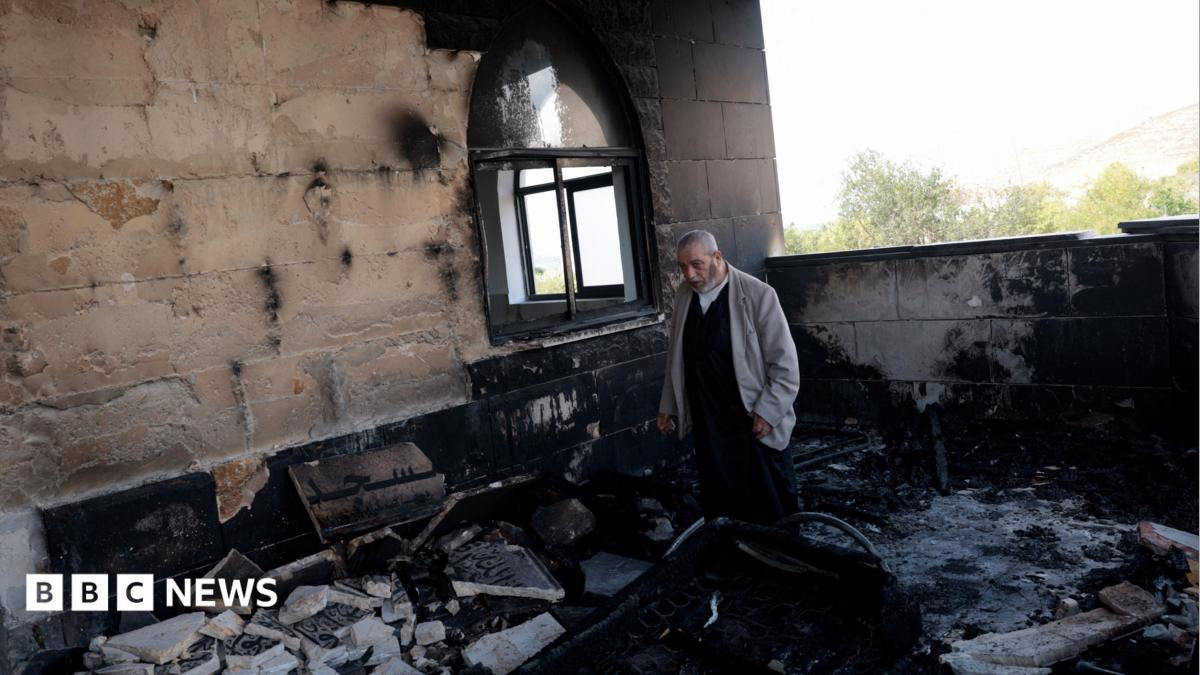
Photo: BBC World

The Israeli military reported conducting searches at over 300 locations in the West Bank, arresting individuals identified as Hamas affiliates, arms traffickers, and other suspected militants. This operation follows an attack by Israeli settlers that resulted in six deaths, including four Palestinians and two Israelis. The West Bank has seen increased violence, with Israeli settlers targeting Palestinian villages and properties. Since the 1967 Middle East war, Israel has established hundreds of settlements in the West Bank and East Jerusalem, areas Palestinians seek for a future state. The situation remains tense, with concerns over the status quo at Jerusalem's holy sites and ongoing demolitions in East Jerusalem.

Sourcesthehill.compbs.orgbbc.co.uknpr.orgaljazeera.com

The takes

  • Portrait of Adam Smith

    Adam Smith

    1723–1790, Scotland (the Scottish Enlightenment: Kirkcaldy, Glasgow, Edinburgh)

    Settlers, Soldiers, and the Fracturing of the Market in the West Bank

    When mosques burn and hospitals are stormed, the damage is reckoned not only in lives and stones, but in the quiet ruin of justice, trade, and any common future for the labouring poor on both sides.

    We are told that in the occupied West Bank, settlers have set fire to mosques, cars, and agricultural land, that Palestinian villages are attacked, and that four Palestinians and two Israelis have lately been killed in shootings. We are told too of demolitions that “destroyed the future” in East Jerusalem, and of an intensifying crackdown in which more than seventy people are detained, over three hundred places searched, and a hospital stormed by armed troops in the presence of women and children. These are not vague tendencies but very particular actions: torches carried to places of worship, doors battered in at midnight, fields left black and useless. The impartial spectator begins here, with concrete injuries, before any tale of policy or security.

    Read the essay

  • Portrait of John Locke

    John Locke

    1632–1704, England (writing amid the Exclusion Crisis and the Glorious Revolution)

    Occupation Without Consent Is Not Government but Usurpation

    Settler violence and military crackdowns in the occupied West Bank show a power that no equal people could reasonably consent to, and that therefore cannot claim their obedience as a duty of conscience.

    I begin with what is not disputed. Israel occupies the West Bank and East Jerusalem, land which Palestinians desire, with Gaza, for a hoped-for future state. On this occupied land it has built hundreds of settlements, housing some 700,000 of its own people. We now read that settlers have set fire to mosques, cars, and agricultural land in Palestinian villages, and that six persons were killed in an attack by settlers; that four Palestinians and two Israelis were killed in a West Bank shooting; and that, in answer, the Israeli military has searched more than 300 locations and arrested scores of Palestinians in intensified operations described by Palestinians as collective punishment.

    Read the essay
  • Portrait of Niccolò Machiavelli

    Niccolò Machiavelli

    1469–1527, Florence (republican secretary and diplomat, then exile, amid the Italian Wars)

    In the West Bank, Everyone Fights Like a Prince and No One Governs Like a Republic

    Settlers torch mosques, soldiers raid hospitals, and Palestinians bury their dead: this is not a tragedy of misunderstandings but the effectual truth of two powers fighting to live and to rule the same ground.

    Settlers do not set fire to mosques by mistake. When, as reported, Israeli settlers burn mosques, cars, and farmland in West Bank villages, they are sending the oldest political message in the world: this land is ours, your God will not protect you, and your harvest depends on our mercy. The fact that such attacks follow deadly clashes, in which Palestinians and Israelis both die, does not diminish their meaning; it clarifies it. Violence of this sort is not a spasm. It is a low, constant drum that says to the rival population, “You may live here only at our pleasure.” In frontier zones, arson is the signature with which men sign their sovereignty.

    Read the essay