Israeli Military Conducts West Bank Raids Amid Rising Violence
Settlers, Soldiers, and the Fracturing of the Market in the West Bank
When mosques burn and hospitals are stormed, the damage is reckoned not only in lives and stones, but in the quiet ruin of justice, trade, and any common future for the labouring poor on both sides.
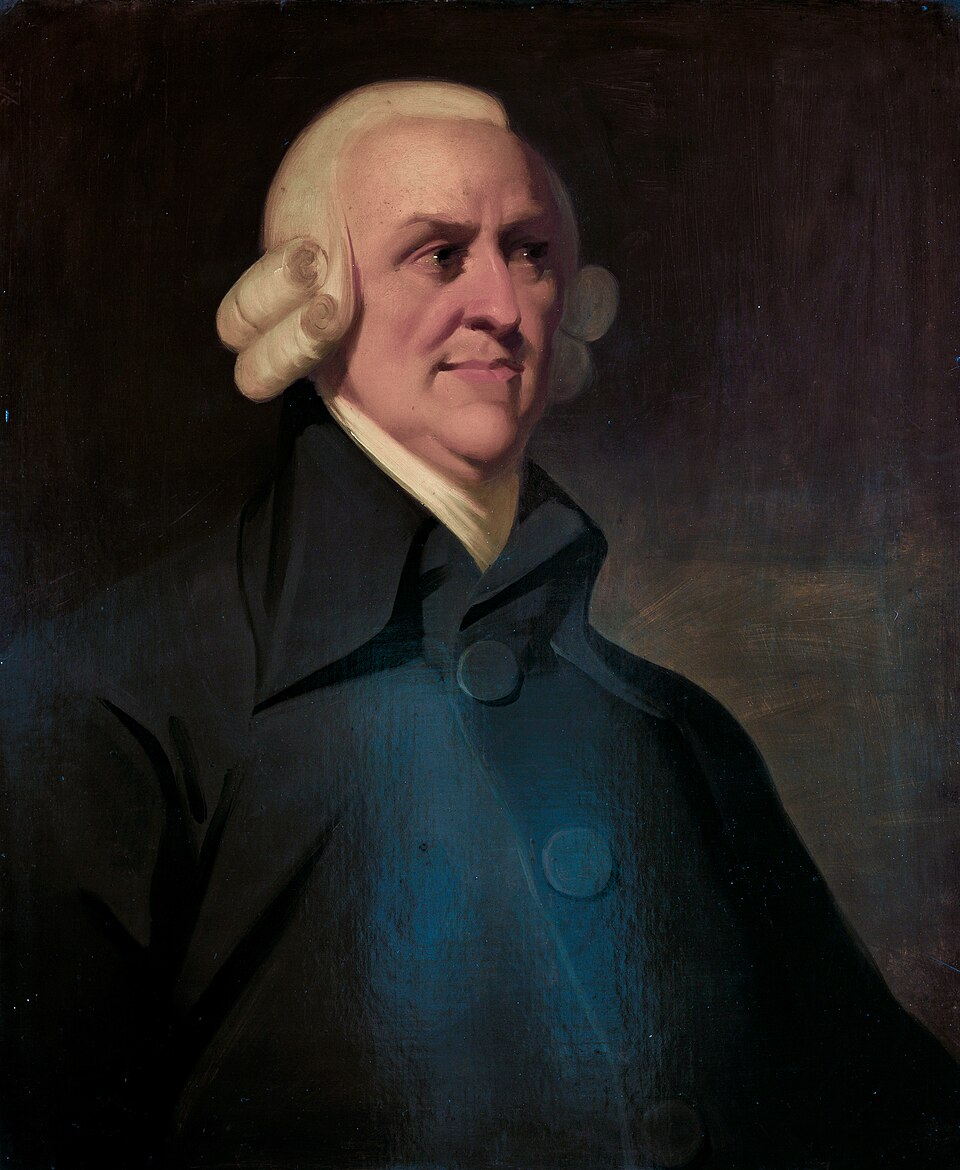
We are told that in the occupied West Bank, settlers have set fire to mosques, cars, and agricultural land, that Palestinian villages are attacked, and that four Palestinians and two Israelis have lately been killed in shootings. We are told too of demolitions that “destroyed the future” in East Jerusalem, and of an intensifying crackdown in which more than seventy people are detained, over three hundred places searched, and a hospital stormed by armed troops in the presence of women and children. These are not vague tendencies but very particular actions: torches carried to places of worship, doors battered in at midnight, fields left black and useless. The impartial spectator begins here, with concrete injuries, before any tale of policy or security.
When a mosque is burnt or a field laid waste, the visible authors are the men who carried the fire; the invisible payers are the many who must live thereafter amidst fear, resentment, and diminished means. As I argued in The Wealth of Nations, one ought always to trace measures to their effect on the annual produce of the land and labour, and to ask who bears the unreckoned cost. The settlers may imagine they have advanced security or dominion; the military, that it has exhibited strength. Yet the diffuse loss falls upon Palestinian cultivators deprived of crops, upon shopkeepers whose customers dare not travel, upon labourers whose day-wages vanish with the trade that once passed along a now-dangerous road.
In that book I observed that the division of labour is limited by the extent of the market. Here the market is not widened by roads and peace, but narrowed by blockades of fear. Every attack upon a village, every raid that terrifies patients in a hospital, breaks the continuity of ordinary dealings. Merchants think twice before sending goods; employers hesitate to hire in a district subject to arbitrary search; the farmer, uncertain whether his land will stand or burn, invests little and harvests less. Such measures may flatter the pride of those who seek predominance, but they contract the sphere within which wages, profit, and rent can arise. An impoverished neighbour is a poor customer; a cowed province is a bad market.
I have long suspected any regulation urged by those whose immediate interest it serves. When settlers demand protection that is in fact license, or when authorities cloak collective punishment in the language of public safety, the impartial spectator must view such petitions with the most suspicious attention. For the structural interest of any dominant group is to narrow the competition of others: to circumscribe their land, limit their movement, and weaken their claim to justice, all while professing only a concern for order. Here, the scattered Palestinian household confronts, not the equal protection of the law, but a kind of local monopoly of power, exercised at the expense of their security and their share in the common market.
In The Theory of Moral Sentiments I tried to show that self-love, restrained by justice and enlightened by fellow-feeling, may serve the public; but unrestrained, it sinks into what I once called the vile maxim of the masters of mankind—“all for ourselves, and nothing for other people.” To torch a neighbour’s place of worship, to desecrate his means of livelihood, is not self-interest under law; it is the pursuit of imagined safety by means of acknowledged injustice. Nor can the state plead neutrality when its soldiers storm hospitals and conduct mass arrests in ways that terrify the innocent and guilty alike. The administration of justice consists not only in punishing offences, but in doing so with a scrupulous regard to proportionality, publicity, and the security of those who have committed no crime.
Some will say that extraordinary dangers require extraordinary severities; that to preserve the state, harsh measures must be borne by the few. The objection is not without weight, for no government can abdicate its duty of defence. Yet even here, we must ask: are these severities in fact confined to the guilty, or do they fall broadly upon a whole people, as in what has been described as “collective punitive measures”? The man of system imagines that by arranging populations, settlements, and checkpoints on his great chess-board, he will secure a stable peace. He forgets that each piece has a principle of motion of its own, and that fear and humiliation are among the surest motives to future disorder. What is purchased in apparent security today may be repaid, with interest, in insecurity tomorrow.
Beneath the language of faith and patriotism, I discern also that old deception of ambition which I described in the poor man’s son: the belief that, by climbing to a station of superiority—by possessing more land, more walls, more armed protection—one will at last be content. Thus the race for settlements, for symbolic control of holy places, for demonstrations of military resolve, continues without rest; and yet contentment does not appear. Meanwhile, the labouring poor, whether Jewish or Palestinian, desire chiefly to be secure in their houses, regular in their employment, and hopeful for their children. Policies that burn their mosques, raze their homes, or turn their hospitals into theatres of intimidation are not merely unkind; they are hostile to the natural progress of opulence, which depends on trust, cooperation, and the quiet, steady industry of ordinary people.
The state has, among its first duties, defence and the exact administration of justice, and may also erect public works and institutions that no private interest could profitably sustain. But when its armed power appears more swiftly to chastise the weak than to restrain the violent among the strong; when it allows one group, under its protection, to engage in repeated attacks upon the lives, property, and sacred places of another, it ceases to be the impartial arbiter, and becomes instead a party to a long quarrel. Such a state, by preferring the immediate gratification of a part to the durable security of the whole, may fancy itself led by necessity; in truth it is misled by a narrow interest, and draws the invisible hand away from peace and plenty toward perpetual conflict and want.
If there is a way out of this unhappy course, it lies not in some grand design that would remake men overnight, but in the slow, resolute restoration of impartial justice: to punish arson whether the hand that holds the torch belongs to a settler or a militant; to protect worship and cultivation irrespective of whose prayers are said or whose crops are sown; to allow markets, schools, and hospitals to function without the constant interruption of fear. Only then can the higgling and bargaining of the market, and the ordinary commerce of daily life, begin to knit together what violence and partiality have long been tearing apart.
From the works cited
- An Inquiry into the Nature and Causes of the Wealth of Nations — The division of labour (the pin factory) as the engine of opulence, limited by the extent of the market.
- An Inquiry into the Nature and Causes of the Wealth of Nations — Trace every policy to its effect on the price system and ask who bears the unseen cost.
- The Theory of Moral Sentiments — Judge conduct by the impartial spectator: what would a well-informed, disinterested observer feel about this action?