Pandemic Power Was Held on Trust, Not on Dr. Fauci’s Conscience
The release of Anthony Fauci’s private notes is not a verdict but a summons: pandemic authority must now justify itself as power held on trust, or be judged usurpation and cut back accordingly.
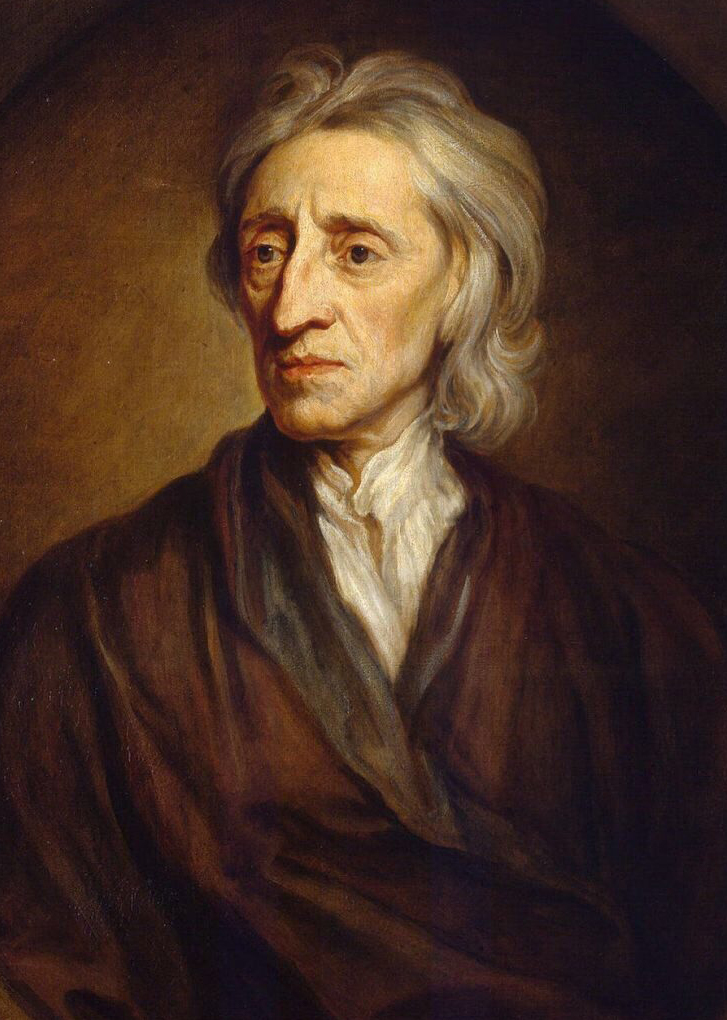
I begin from the scene we are given: a celebrated physician and public official, Anthony Fauci, sworn in before a committee of your House of Representatives in June 2024, and now, in 2026, his pandemic-era diary notes laid open by a senator who would call him to account. Add to this that his conduct in the COVID-19 crisis is called “controversial,” that another senator speaks of “Fauci emails,” and that Dr. Fauci has spoken in a public interview of being “accountable” and of stratagems in your Senate’s debates. Of the contents of those diaries and emails I know only that they exist, not what they prove. Yet even this scant outline suffices to frame the true question: by what right did he exercise such power over other men’s lives?
When I once defined political power in my Two Treatises of Government, I constrained it narrowly: it is a right of making laws, with penalties of death and lesser pains, only for the regulating and preserving of property, that is, the lives, liberties, and estates of the people, all for the public good, and not for any private interest. A physician called into public office, whether styled advisor or task-force member, enters under that same rule. He does not rule by his superior science, nor by the fears of a pandemic, but only by the people’s consent that such knowledge be used for their preservation and not for their bondage. The burden of proof always lies on power and never on liberty. It is not for the citizen to show why he should be free, but for the magistrate to show why he may restrain.
The release of a man’s diary does not by itself condemn him; every serious governor must deliberate, doubt, and even err in private. Yet private writings can reveal something of the spirit in which prerogative was exercised. In extraordinary dangers, rulers often claim a power to act without, or even against, the ordinary law, saying necessity and the public good require it. Such power I have called prerogative. It may be tolerable, for a season, if it be plain that delays of law would cost many lives, and if afterwards the people see clearly that it was used for their safety. But when extraordinary discretion becomes ordinary practice, when temporary measures harden into standing rules, or when those who exercised them resist examination, then prerogative ceases to be trust and approaches arbitrary power.
Your reports tell me only that Dr. Fauci has been summoned, that senators speak of holding him “accountable,” and that he himself avows accountability while discussing tactics of filibuster in your Senate. Here, then, is the first test: does the process now unfolding give the people an impartial judge of the measures taken in their name, or do those who advised and executed pandemic policy contrive to be judges in their own case? In my Essay Concerning Human Understanding I urged that assent must be proportioned to the evidence; believing beyond one’s proofs is a failure of duty. So too in politics: if men are asked, after the fact, to believe that the suspension of their livelihoods, their worship, their ordinary motion, was necessary and lawful, they are owed a clear chain of reasons and facts, not mere appeals to authority or to panic remembered.
I know that in a pestilence, many will urge that there was no time to consult, that swift commands were needed, that debate would have killed. I do not lightly dismiss this plea; where the law is silent and danger is loud, a magistrate must sometimes act on probabilities, and will afterwards answer to God and men for his prudence. But such necessity justifies only what could plausibly have been consented to beforehand by free and equal persons, had they been asked in cold blood. No people could ever grant to a physician, or to a council of them, a power to conceal reasons, to silence dissenting voices as such, or to prolong extraordinary restraints beyond the period of evident necessity. To claim such standing power over men’s lives and livelihoods is to treat them not as the workmanship of one Maker, sent into the world about His business, but as instruments for the projects of a few.
The diaries and emails, whatever they contain in detail, sharpen another point: was the advice given during the pandemic plainly directed to the preservation of life and liberty, or was it mixed with calculations of reputation, political advantage, and the avoidance of blame? If the latter predominated, then we see not merely human frailty, which all men share, but a corruption of the very trust on which such an office rests. In my discussion of the dissolution of government, I argued that when governors invade the people’s property or set up their own arbitrary will in place of known law, they make war upon their constituents and so dissolve the political bond from their side first. The people, observing a long train of abuses tending all one way, may then seek other rulers or other forms without guilt. Whether such a train exists here cannot be concluded from the thin public record I have before me; but that is precisely why open, rigorous inquest is not a luxury but a right.
I do not counsel that every error in a time of plague warrants rebellion; men are fallible, and government is still the remedy God has provided against the greater mischiefs of the state of nature. Yet I do insist that no man, however learned, is above being called to account; that emergencies do not cancel the law of nature, which forbids harming another in his life, health, liberty, or possessions without just cause; and that once the alarm has passed, opaque discretion must give way again to standing laws and public reasons. If Dr. Fauci’s power in the pandemic was indeed held on trust for the people’s preservation, it will bear the light of this examination; if it depended instead on secrecy, deference, and the dread of disease, then it was never rightful government, but usurpation under a medical name, and ought so to be remembered.
From the works cited
- Second Treatise of Government — Political power defined narrowly as the right to make laws, with penalties, only for the public good — anything beyond that definition must justify itself or stand condemned.
- Second Treatise of Government — The dissolution of government and the right of resistance: when legislators invade property or set up arbitrary power, they rebel against the people, not the people against them.
- An Essay Concerning Human Understanding — Assent must be proportioned to the evidence; believing beyond one's proofs is a failure of duty, not a mark of faith.