Authorities Treat Unaccompanied Minors as Regular Migrants in Ceuta Crisis
Ceuta Shows What Happens When Borders Have More Sentiment Than Arms
When 50,000 people cross in a week, the question is no longer what should be done about migration in the abstract, but whether Spain and Europe possess the virtù and the institutions to keep any policy at all from collapsing under impact.
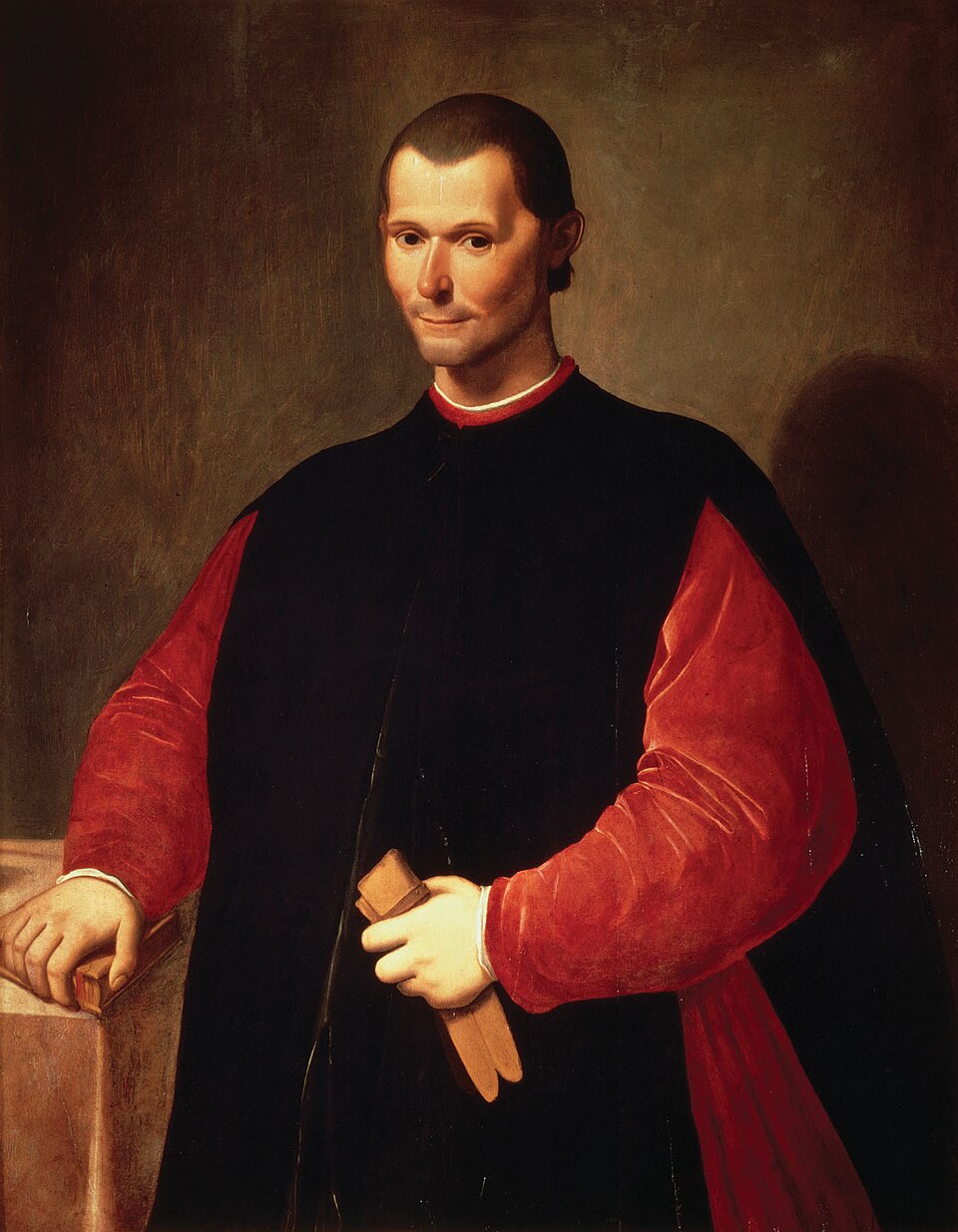
Fifty thousand people crossing into a tiny enclave in a few days is not a policy problem; it is fortuna breaking down the door. In Ceuta, Spain’s prime minister calls it a “violation of Spain’s territorial integrity.” The local leader says Morocco at least “encouraged or permitted” the crossing. Others speak of dozens dead in the attempt. I do not need more detail to see the outline. A border that functions one week and is simply walked through the next is like a city wall that looks solid until the first cannonball lands. In The Prince, in W. K. Marriott’s translation, I compared fortune to a river: here the river has clearly found low ground.
When tens of thousands arrive at once, the survival question for any government is primitive and urgent: who commands this ground, and who obeys? Everything else comes later, if at all. Spain’s first duty is to maintain the state; Europe’s, to maintain the larger order they say exists at Schengen’s edge. So I look first not at pity or rhetoric, but at what the soldiers are told. According to one of them, the protocol is to treat unaccompanied minors as regular migrants and return them to Morocco. That is an attempt at order. It is also the admission that the numbers have turned every exception into a luxury they can no longer afford.
From what is reported, Madrid acts swiftly, and Europe praises this and speaks of “vigilant monitoring and the use of physical barriers where needed.” A 500‑metre floating barrier begins to appear in the water. This is classic behavior when leaders discover they live beside my raging river: they rush to raise dykes after the flood. As I wrote in The Prince, those who do not build in fair weather must do everything in a hurry and often too late. The effectual truth is simple. If you want a hard border, you need more than a mood and a speech; you need walls, boats, men, money, and the resolution to use them consistently for many years.
But arms are not only soldiers and steel. In my time, I warned that princes who relied on mercenaries or auxiliaries instead of their own arms would lose everything at the worst moment. A union that depends on one frontier city, one small garrison, and the goodwill of a neighboring court behaves like a prince who trusts hired swords and an unreliable ally. Now Europeans quarrel among themselves; the Ceuta crisis “exposes divisions within Europe” and draws “criticism from EU countries.” The commission president calls for stronger borders after the fact. This is not a conspiracy; it is a sign that the body has many heads and no agreed plan for when the next 50,000 appear.
In such confusion, the great and the people do what they always do. An advocate says “political games are being played over the lives of people on both sides of the border – those who hope for a better life, and those who are made to fear a so‑called ‘invasion’.” You see two appetites facing each other with no honest tribune in between. On one side, those who feel abandoned and frightened; on the other, those who cross because they see occasione, an opening in the line. Between them stand politicians who discover that both pity and panic can be useful instruments, and who then become less interested in solving the crisis than in surviving it.
In the Discourses, in Ninian Hill Thomson’s translation, I praised the Roman tumults because they were contained by institutions: the tribunes converted street fury into laws. Here the tumults are pushed into the streets of Ceuta and into television studios across Europe, but I do not yet see the equivalent of tribunes. Offshore centers are discussed in another country, and a vast regularisation in Spain is cited by some as proof that “the door is open.” These are not dykes; they are gestures. When severity is half‑used and mercy is half‑used, the ruin is whole. You earn the hatred of those you restrain and the contempt of those you fail to protect.
I know the objection. You will say: a continent cannot simply harden itself into a fortress; there are rights, treaties, consciences. That is true, and I am not advising barbarous cruelty, which I have said brings no glory. I am saying that any order you mean to preserve must be backed by its own arms and clear rules, or it will be remade by those who test it. Either Europe declares its frontier a serious thing and equips it with consistent power and procedures, or it admits that the true border is elsewhere and designs new modes and orders accordingly. To live in between is to love the middle course, and the middle course is how republics slide from command to confusion.
Ceuta, then, is not only a Spanish affair. It is a public examination of whether this Europe has the virtù to match its language. Fortune has now struck that frontier more than once; the river will come again. If, by then, the dykes are merely another 500 metres of plastic and another stack of unkept promises, the next crossing will be larger, the fear deeper, the games more vicious. If, instead, they use this shock to build common arms, common laws, and honest outlets for the people’s anxieties, they may yet turn disorder into new strength. In these matters, reputation is itself a wall, and once a wall is laughed at, it no longer exists.
From the works cited
- The Prince — Virtù versus fortuna — the raging-river figure: preparation in fair weather is the whole difference between the drowned and the dry.
- Discourses on Livy — The tumults between Senate and plebs, channeled through institutions like the tribunate, were the cause of Roman liberty — conflict as constitutional fuel, not constitutional failure.
- The Prince — Arms of one's own versus mercenaries and auxiliaries: power borrowed is power owed, and it will be collected at the worst moment.