US Supreme Court Upholds Birthright Citizenship Despite Presidential Challenge
An Executive Order Cannot Unmake a Citizen
When a single magistrate claims the power to strip birthright citizenship against settled law, he does not govern but usurps, and the people’s obedience in that matter is no longer owed but dangerously misplaced.
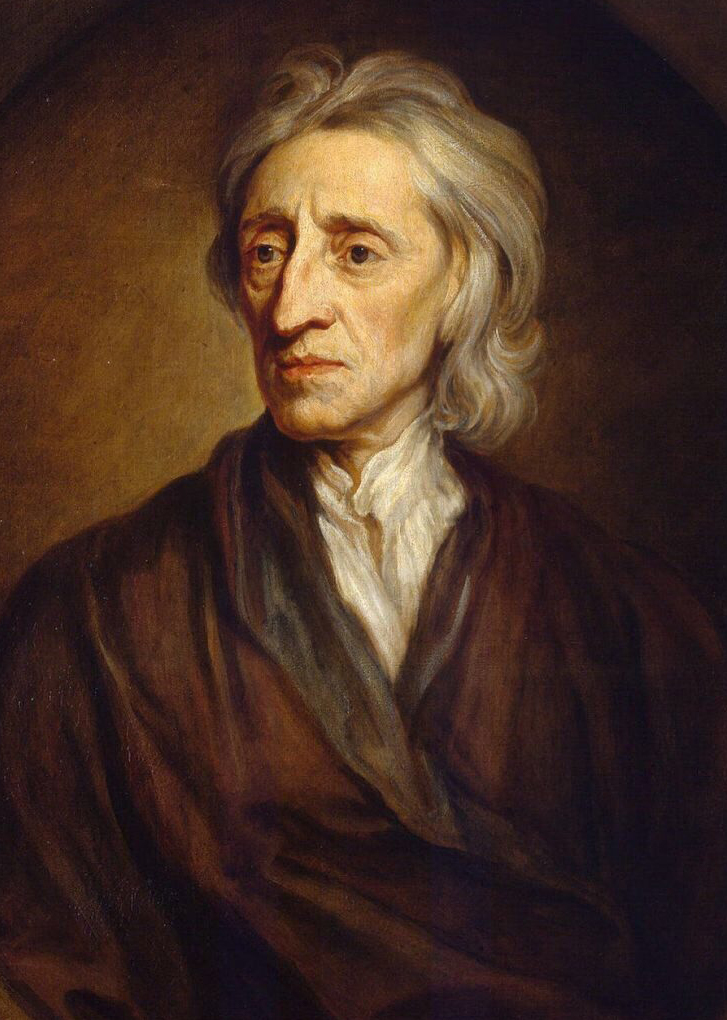
I read that in this republic, whose laws I know only by report, the Supreme Court has lately upheld what you call birthright citizenship and that the executive, having lost that contest, has now issued new orders to narrow or limit that right, including in cases of so‑called birth tourism. I am further told that a learned observer has said that once a child is born within your territory, the president has no power to declare that child not a citizen, and that this was confirmed by the Court’s recent decision. The facts are sparse and perhaps disputed; yet even this outline suffices to raise a grave question: what kind of power does a ruler claim, when he asserts that a stroke of his pen can unmake a citizen whom the law has made?
When I wrote that to understand political power aright we must derive it from its original, I meant that we must begin with men in the state of nature, free and equal, subject only to the law of nature, which is reason teaching that no one ought to harm another in his life, health, liberty, or possessions. From that condition they consent to a commonwealth for one end: the secure enjoyment of their property, in the broad sense of lives, liberties, and estates. Political power is thus, as I argued in my Second Treatise, only a right to make laws with penalties for the regulation and preservation of property, and all this only for the public good. Any particular office—be it called president, king, or otherwise—must show how its claimed authority fits within that trust. The burden of proof lies always on power, never on liberty.
Here, the settled law, as I understand it, is that children born in the territory are citizens, and that an impartial judge—the Supreme Court—has recently affirmed as much, to the present executive’s displeasure. The president now issues new orders to limit that status for certain classes of parents and purposes, and even speaks of calling upon the Court to reconsider what it has already resolved. I do not presume to know your written constitution; yet by your own account, the rule touching citizenship has been fixed for some 150 years and was but now confirmed by the proper judicature. When an executive officer then claims, by his own proclamation, to alter the terms of membership in the commonwealth, he ceases to execute the law and begins to legislate by decree. That change of role is the first mark of usurpation.
Some will say that emergencies of migration and the suspected abuses of birth tourism require a swift prerogative; that where the legislative is slow or divided, the executive must act for the public good. I have allowed a place for prerogative—power to act for the public good without, or even against, the letter of the law—yet only so long as two conditions hold. First, that the act plainly tends to preserve, not to narrow, the people’s fundamental rights. Secondly, that those subject to it may still appeal to a known law and an impartial judge, and that the power remains revocable. But a measure that redefines who counts as a member of the people, in contradiction to standing law and recent judicial sentence, does the opposite: it takes the very persons who should enjoy the law’s protection and places them instead at the mercy of a single man’s will.
In my account of the dissolution of government, I wrote that when those who hold power attempt to invade the property of the people, or to subject them to arbitrary rule, they put themselves into a state of war with the people and thereby dissolve the trust placed in them. To claim discretion over citizenship by executive order is to claim a power over men’s entire political and civil condition; for if a magistrate can say, of one born under his laws, “you are no citizen,” he holds at his pleasure that person’s access to protection, to inheritance, to residence, to all the civil interests that flow from belonging to a body politic. This is no small adjustment of policy; it approaches that absolute, arbitrary power which is worse than the state of nature it pretends to cure, for it makes the ruler judge in his own case and leaves the subject with no certain rule to live by.
It may be replied that the Court remains, that challenges may yet be brought, that nothing is entrenched until the judges speak again. I grant that so long as an impartial judge stands ready to correct the excesses of other powers, the commonwealth is not dissolved, though it may be distempered. But the very act of “calling the Court’s bluff,” as some phrase it, displays a temper that treats judicial judgment not as law to be obeyed, but as a rival will to be bested. Assent, as I wrote in my Essay Concerning Human Understanding, ought to be proportioned to the evidence; and the evidence here—your own long practice, your Court’s recent decision—runs against the executive’s pretensions. To persist in them is not zeal for the public good; it is belief beyond proof, and in politics such credulity in oneself is the seed of tyranny.
Whether this executive act is one instance in a long train of abuses tending to the same point, your own experience must judge; outsiders may see the principle more clearly than the pattern. Yet even taken alone, a claim of power to alter the citizen‑body by decree crosses a bright line. It does not merely misapply the law; it attempts to place will above law in the very matter where law must be firmest, the question who belongs to the people. Obedience to such an order, where it conflicts with standing law and judicial sentence, is not a duty but a danger; for when men accustom themselves to see their neighbors’ status rise and fall with one officer’s pleasure, they prepare chains for their own hands. A free people ought to be slow to speak of dissolution, yet quicker still to deny that any mortal is master of their membership in the commonwealth.
From the works cited
- Second Treatise of Government — Political power defined narrowly as the right to make laws, with penalties, only for the public good — anything beyond that definition must justify itself or stand condemned.
- Second Treatise of Government — The dissolution of government and the right of resistance: when legislators invade property or set up arbitrary power, they rebel against the people, not the people against them.
- An Essay Concerning Human Understanding — Assent must be proportioned to the evidence; believing beyond one's proofs is a failure of duty, not a mark of faith.