Senate Faces Challenges Passing SAVE America Act Amid Trump Criticism
Why the SAVE America Act Was Never Going to Be Saved by an All‑Nighter
When legislation is driven by pressure, spectacle, and promises of stability, but neglects prices, incentives, and unseen costs, its failure is less a scandal than the ordinary working of a complicated constitution.
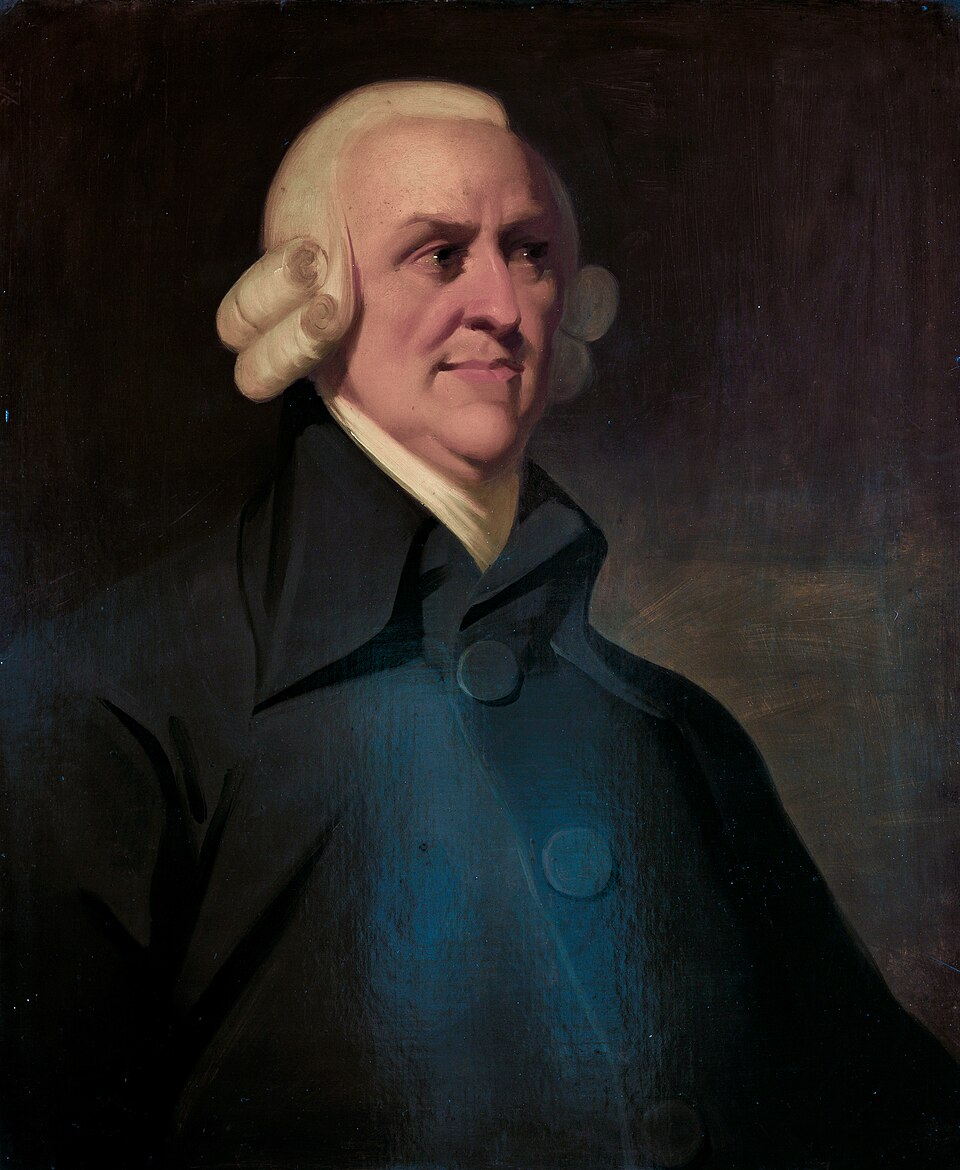
The spectacle reported to me is vivid enough: a chaotic all‑night sitting of the Senate, a president urging the passage of his SAVE America Act and even the abolition of a long‑standing voting rule, a leader replying that some things are “difficult if not impossible,” and allies explaining that public criticism is but a tactic to apply pressure. Around this, other business is transacted: an acting attorney general is hauled before a committee in hopes of confirmation; some senators resist leadership’s procedural bargains; another reproaches the chamber for going on recess without passing the Act and calls upon the newly confirmed magistrate to prosecute a particular doctor. It is an energetic scene, though one in which energy seems a poor substitute for judgment.
The first duty, when confronted with any such measure, is not to be overawed by its title or its theatrics, but to ask the dull questions: what prices will it alter, what contracts will it reshape, upon whom will the invisible burdens fall? I am told it is promised that “hundreds of thousands of student‑athletes” will receive “results” and “stability” in college athletics if only the bill is carried to the president’s desk. These are agreeable words to those who picture grateful young people and orderly competitions. Yet, as I argued in the Wealth of Nations, every regulation, however humane in its pretext, resolves at last into changes in wages, profit, and rent; it enriches some, restrains others, and leaves still others paying in dearer terms and narrower opportunities.
We are not informed in detail who would lose by this stability, only who might gain. That ignorance alone counsels caution. A measure that parades the supposed beneficiaries in the front rank, yet keeps the payers in the shadows, bears a strong family resemblance to the many schemes by which particular orders of men shift the burden of their own concerns upon the public at large. I do not say this Act must be such a conspiracy against the public; I say only that it has the right smell. To the extent that college athletics have become a considerable trade, we must expect the same passions as among other trades: the desire to secure revenue, to fence off rivals, to convert what was once competition in the market into competition for favour at the legislature.
The political manoeuvres described are, in this light, less shocking than perfectly ordinary. In The Theory of Moral Sentiments I remarked that men commonly pursue their own interest, but under the eye of an impartial spectator, who moderates their passions and renders them fit for society. Here, the president presses, the Senate leader pleads institutional realities, allies explain that public rebukes are but instruments to alter another man’s calculations and may be set aside “after the election.” No unusual vice is required to account for this; the actors respond to the incentives actually before them. So long as a leader’s prospects depend both on pleasing a chief and surviving the chamber’s rules, he will attempt to reconcile them; and when they cannot be reconciled, he will search for someone else to blame.
The filibuster, or the rule that most business requires a number of votes greater than a bare majority, plays here the part of a stubborn fact. It is easier to denounce it than to assemble the wider agreement it demands. Yet such contrivances, however clumsy, are one remedy against the man of system who imagines that, because his plan bears an attractive name and promises immediate benefits, the pieces on the great chess‑board of society may be pushed into new places overnight. The difficulty of moving from intention to enactment, and from enactment to execution, is not an accident but a defence. That the SAVE America Act cannot be rammed through before a recess is not proof of corruption; it is proof that other people’s rights to be consulted are not so easily set aside.
More troubling, to my mind, is the reported call upon the new attorney general to prosecute a particular individual, as if the failure to pass a favoured bill entitled legislators to seek satisfaction in the courts. The impartial spectator, observing this, would feel some indignation. The administration of justice is one of those duties of the state which I never placed at the mercy of faction. When men who shape the law also agitate for specific prosecutions, they tempt the gravest of confusions: the use of criminal accusation as a continuation of legislative bargaining by other means. Even those who wish the doctor in question ill should hesitate before applauding a precedent that may, in time, be turned against themselves.
What then should we say of this all‑nighter that ended with the SAVE America Act “on the shelf”? The disappointed will call it betrayal; the zealous will blame the procedural rule; the impatient will mutter of cowardice. The cooler view is that a constitution in which many actors, each with his own principles of motion, must concur before a grand scheme is adopted will frequently fail to adopt grand schemes. This is not always wise; for public works, for the support of justice, for the instruction of the common people, delay can be cruel. But in matters where the real incidence of costs is obscure, where benefits are trumpeted while burdens are left uncounted, and where political tactics run far ahead of sober calculation, failure may be the cheapest tutor. A bill can always be re‑introduced; lost liberty, once bartered away in the small hours, is seldom so easily redeemed.
The uncertainty that remains, for an observer at my distance, is how exactly the SAVE America Act would redistribute the gains and losses of college athletics, and thus whether its unseen costs would in fact fall upon those most able, or least able, to bear them.
From the works cited
- An Inquiry into the Nature and Causes of the Wealth of Nations — Prices resolve into wages, profit, and rent — and each class's interest relates differently to the public's, so testimony from a class about the public good must be discounted accordingly.
- The Theory of Moral Sentiments — Judge conduct by the impartial spectator: what would a well-informed, disinterested observer feel about this action? Praise-worthiness matters more than praise; to be loved without being lovely is worth nothing, and to be blamed unjustly stings less than to deserve blame.