
Tuesday, August 25, 2026
Third Opinion

The dead argue about the news. You pick your side.

The story

Friday, August 14, 2026

US Senators Raise Concerns Over Conditions on USS Abraham Lincoln Aircraft Carrier

US Senators Raise Concerns Over Conditions on USS Abraham Lincoln Aircraft Carrier
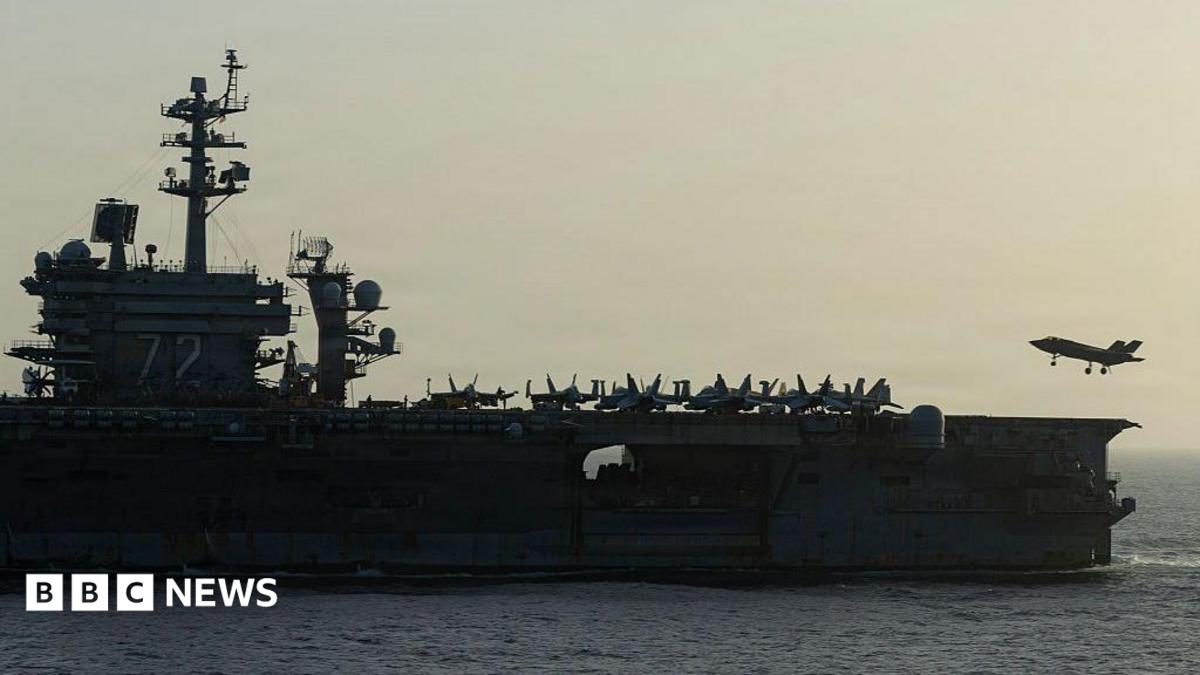
Photo: BBC World

The USS Abraham Lincoln aircraft carrier has been continuously at sea for nearly seven months, with about 5,000 US sailors and Marines on board, according to a letter from Senator Richard Blumenthal to Secretary of Defense Pete Hegseth. Reports from Navy Times and Stars and Stripes, citing family members and military personnel, describe hardships including food shortages, broken plumbing, moldy showers, and mental health challenges such as burnout and suicidal ideation. One sailor reportedly attempted to jump overboard and was rescued and treated. Democratic Senator Ruben Gallego has called for a congressional delegation to visit the ship to conduct an oversight investigation. California Congressman Mike Levin highlighted issues like broken toilets, laundry outages, and limited meals. These reports have prompted lawmakers to seek answers from the Pentagon regarding the sustainability of the Navy's current operational tempo.

Sourcesbbc.co.ukaljazeera.compbs.orgnytimes.com

The takes

  • Portrait of Adam Smith

    Adam Smith

    1723–1790, Scotland (the Scottish Enlightenment: Kirkcaldy, Glasgow, Edinburgh)

    A Blockade Built on Burnout Is Bad Defence

    When a warship stays at sea for months with moldy showers, broken toilets, and sailors on the brink of suicide, the price of “readiness” has been miscalculated — in coin no just state is entitled to spend so carelessly.

    We are told that an enormous ship, carrying more than 5,000 souls, has been kept continuously at sea for nearly seven months, enforcing a distant blockade. The reported facts are homely rather than heroic: mold in the showers, broken plumbing, laundry idle for weeks, long stretches without hot water, a meal dwindled to half a cup of rice and two tortillas. Families speak of exhaustion, declining morale, and even suicidal thoughts; at least one sailor, it is said, has gone overboard and had to be recovered. This is not the romance of arms, but the prosaic reality of defence when the body is neglected in the name of the flag.

    Read the essay


  • Portrait of John Locke

    John Locke

    1632–1704, England (writing amid the Exclusion Crisis and the Glorious Revolution)

    What the USS Abraham Lincoln Teaches Us About Power at Sea

    When 5,000 sailors live for months in squalor beyond public scrutiny, the chain of command ceases to be government by consent and slips into usurpation by prerogative.

    I read that nearly 5,000 men and women have been kept aboard the USS Abraham Lincoln for more than 250 days, that this ship has been “continuously at sea for a record length of nearly seven months”, and that life aboard has come to moldy showers, broken toilets, weeks without laundry, long stretches without hot water, and a meal reduced to half a cup of rice and two tortillas. I read, too, of exhaustion, “declining mental health and morale”, of suicidal ideation, of at least one sailor attempting to jump overboard from “severe burnout”, and of another going overboard and needing to be recovered and removed for further care. One need not be a seaman to understand that something has gone gravely wrong.

    Read the essay
  • Portrait of Niccolò Machiavelli

    Niccolò Machiavelli

    1469–1527, Florence (republican secretary and diplomat, then exile, amid the Italian Wars)

    A Superpower That Starves Its Own Sailors Is Weak by Choice

    When an aircraft carrier rots from the inside to sustain an ‘indefinite’ blockade, the failure is not fortune but the command’s lack of virtù.

    A great power has kept one of its floating cities at sea for nearly seven months, with some 5,000 souls aboard, and now pretends to be surprised that the city stinks. Senators speak of moldy showers, broken toilets, laundry down for weeks, long stretches without hot water, food reduced to a half cup of rice and two tortillas. Military publications repeat families’ reports of mental collapse and suicidal thoughts; a sailor goes overboard and must be rescued. All this on a ship that is supposed to be the tip of the spear in an “indefinite” blockade against Iran. When the spear’s point is rusting, the strategist must stop admiring his map and look at the metal.

    Read the essay