Campaign Spending and Candidate Backgrounds Highlight Midterm Primaries
When Merchants Buy the Election, Farmers Pay the Bill
In the modern trade of politics, super PACs and monopolists haggle for power while the labouring farmer quietly foots the unseen cost.
Begin, if you please, not in the fields of Iowa but at a candidate’s balance sheet. In one contest, I am told, a super political committee has laid out more than a million dollars to assist one aspirant and to oppose another; in another, a committee of governors has advanced five million to a different favourite; in a third, a man disdaining “Big Ag” donations has simply contributed some millions to himself, while a local machine supplies the rest. The sums are large, the donors few, the supposed beneficiaries the public at large. Yet whenever benefits are thus concentrated and costs dispersed, prudence bids us ask, not who writes the cheque, but who will ultimately pay it.
The answer, in this case, appears in the complaints of farmers crushed by tariffs and “gutted” by the rising cost of fertiliser, in a market where four companies control most of the trade and one is accused of monopolistic practices. Here the chain is plain enough. Tariffs raise the price of what farmers must buy and depress the price of what they sell; monopoly in a necessary input finishes the work that bad policy begins. When, at the same time, the great interests engaged in this commerce shower six- and seven-figure donations on candidates, the impartial spectator is entitled to suspect that the bill for these political benefactions is being collected, quietly but efficiently, in the farmyard.
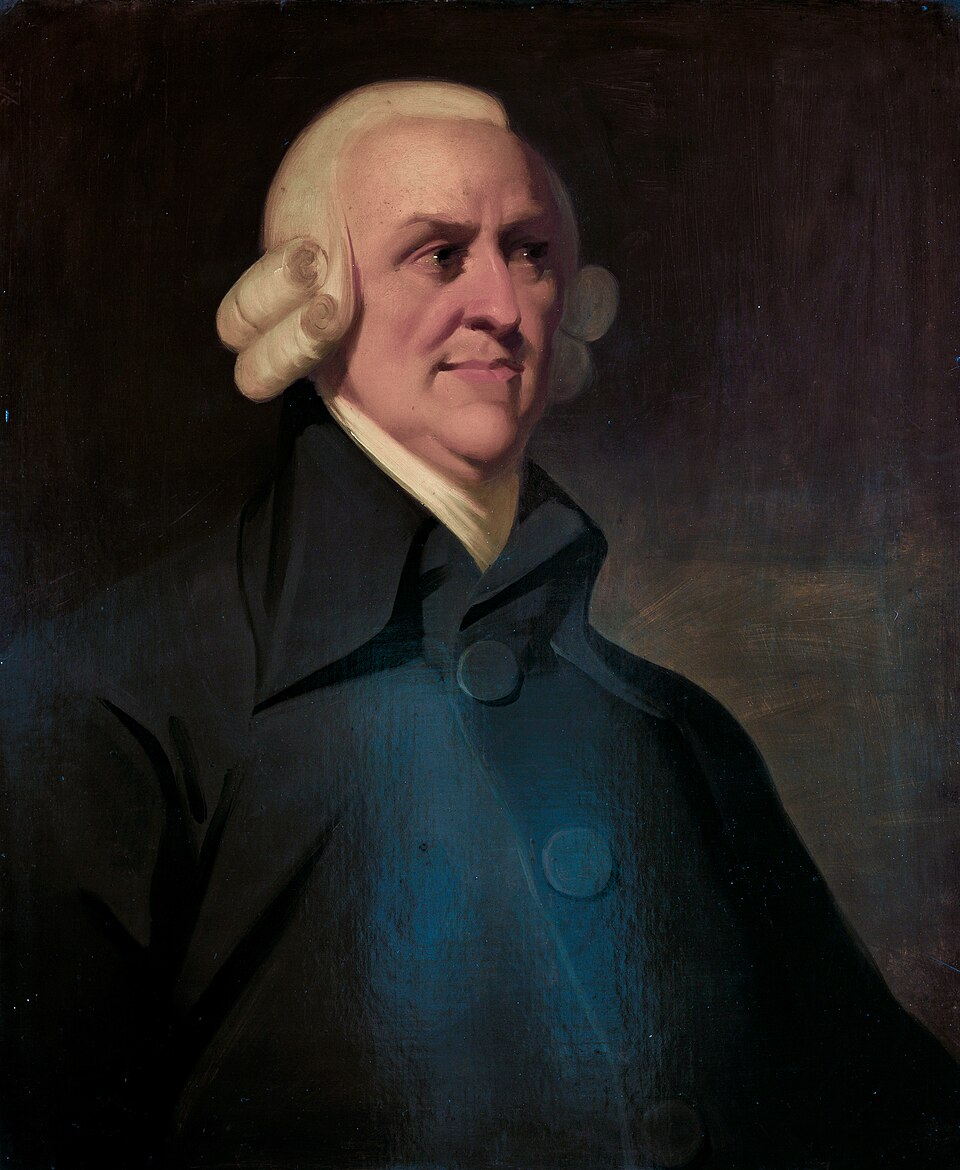
When I wrote of merchants and manufacturers in the Wealth of Nations, I remarked that their proposals for regulation ought always to be received with the most suspicious attention, as coming from an order whose interest is never exactly the same with that of the public. I see little in your modern arrangements to revise that judgment. The form has changed: where once it was a petition to Parliament, it is now a super committee’s expenditure; where once it was a direct bounty or exclusive privilege, it is now a tariff that pleases the loudest lobby or an indulgent eye turned upon a concentrated market. But the substance is familiar: a few great dealers in fertiliser and a few great dealers in political influence contrive together, and the conversation ends, as it usually does, in a conspiracy against the public.
It will be said that another candidate, who funds himself, is therefore purer. I would not be so hasty. Self-interest, under the rules of justice, is a most useful and indeed necessary principle; it spares us from trusting our dinner, or our laws, to mere benevolence. But the man who spends other people’s money in the pursuit of power is tempted in one fashion, and the man who spends his own is tempted in another. The first may become the mere factor for his patrons; the second may become enamoured of his own system, certain that his fortune proves his wisdom and that his wisdom deserves a public theatre. In neither case do we escape the need for institutions that oblige candidates to consult, not only their backers or their vanity, but the sober interests of those who till the soil and pay the duties.
The economic mischief here is not subtle. In an open market for fertiliser, many rivals, finding profit only in serving farmers cheaply, would, by their higgling and bargaining, bring the price toward the cost of production with a moderate return. In a market narrowed by concentration and favoured policy, a few firms may raise prices well above that level, knowing their customers cannot easily escape. The division of labour in husbandry then works in reverse: instead of specialisation cheapening every bushel, soaring input costs drive the weaker farmers from the field, lessen the extent of the market, and thus cramp the very source of improvement. The wealth of the nation, which consists in the annual produce of its land and labour as enjoyed by the whole people, is sacrificed to the profits of a few masters of mankind.
From the moral side, as I argued in The Theory of Moral Sentiments, we ought to judge such arrangements by the eye of an impartial spectator: a well-informed, disinterested observer who sympathises equally with farmer and financier, with candidate and constituent. Would such a spectator esteem a system in which distant committees, animated by causes only loosely related to local welfare, pour money into districts they scarcely know, while the actual burdens of policy fall heaviest on those least able to escape them? Would he applaud the enchantment by which voters are taught to cheer the very tariffs and monopolies that daily diminish their own condition? To be praised as patriots while pursuing a narrow interest is to be loved without being lovely, and that, in morals as in politics, is a most contemptible success.
I do not propose that the state should command who may support whom, or that it can, by any single statute, extirpate ambition from public life. The desire for distinction and power is one of those deceits of self-love that keeps industry and politics in motion; men overrate the felicity of office as they overrate the splendor of riches. But the duties of the state remain: to secure justice, to prevent obvious monopolies from preying upon the labouring poor, and to frame rules of political competition that prevent any order—whether merchants, farmers, or factions of place-men—from turning the commonwealth into their private counting-house. Where money in politics chiefly narrows competition and entrenches privilege, it is not the invisible hand but the visible purse that guides legislation, and the poorest hands in the nation are left to bear its weight.
From the works cited
- An Inquiry into the Nature and Causes of the Wealth of Nations — The critique of mercantilism: wealth is not money; policies rigged by merchants and manufacturers sacrifice the consumer to the producer.
- An Inquiry into the Nature and Causes of the Wealth of Nations — The division of labour (the pin factory) as the engine of opulence, limited by the extent of the market.
- The Theory of Moral Sentiments — Judge conduct by the impartial spectator: what would a well-informed, disinterested observer feel about this action?