Charter Plane Crashes Near Alaskan Military Radar Site, Killing Eight
A Remote Crash, a Vital Mission, and the Limits of Military Trust
When eight people die on a chartered plane to a secretive radar site, the first duty of power is not self-praise for a ‘vital mission’, but a public account of how it guarded the lives entrusted to it.
Eight persons are dead in western Alaska: two pilots and six passengers, flying in a civilian‑contracted aircraft toward a long‑range radar site near Cape Newenham, on what their military superiors call a “vital mission in a demanding environment.” The crash came shortly after midday; rescuers reached the site and found no survivors. The command speaks of a “devastating loss for our military family and the communities we serve,” and announces an investigation. Of the passengers themselves, we are told almost nothing: who they were, why they were there, by what chain of orders they came to be on that aircraft in that place. The flight is surrounded by power and purpose, but the dead are, as yet, nearly nameless.
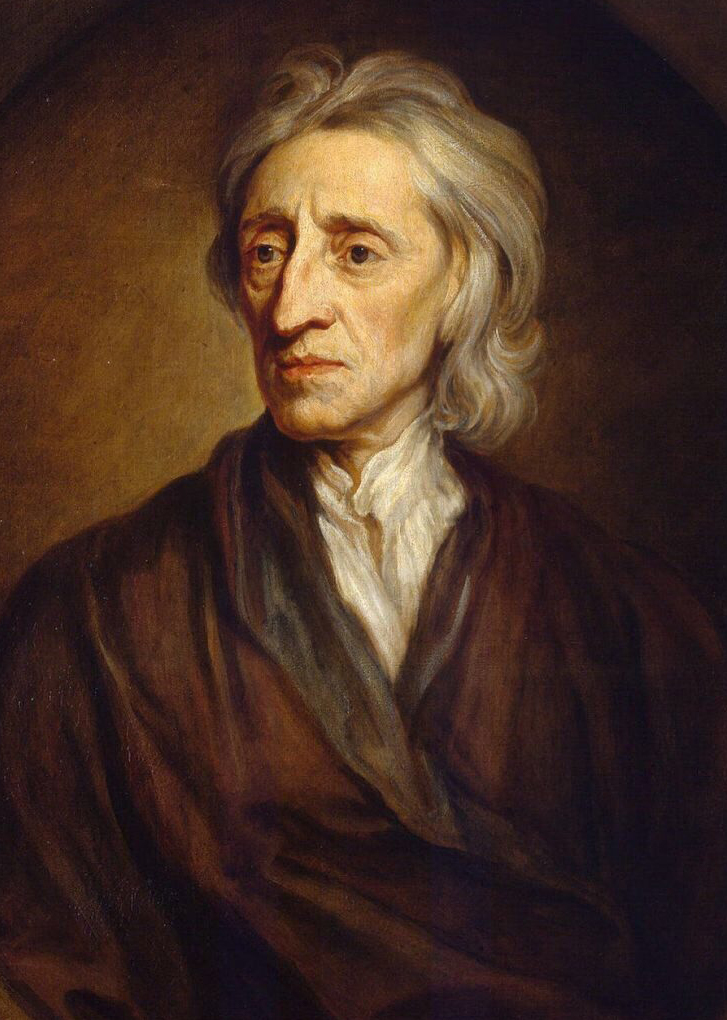
When I wrote in the Second Treatise that political power is a right to make laws and employ force only for the public good, I meant to bind not only kings, but every institution that claims obedience where disobedience will be punished. A military command, though necessary to any commonwealth that would be secure, is power of the highest sort: it directs men into danger and, by its decisions, exposes or preserves their lives, liberties, and estates. It holds that power on trust. Those who serve under it are not its property. They are, like all men, the workmanship of one Maker, sent into the world about His business, and may not be squandered for ends that cannot be publicly justified.
In the state of nature, where there is no common superior on earth, each man has a right to preserve his life and, by his own judgment, avoid unnecessary peril. When he enters a civil society, and perhaps a military service within it, he does not abandon that right; he agrees only that, for the common defence, some share of his natural liberty shall be directed by known standing rules and by officers acting under them. The burden therefore lies always on authority to show, first, that the mission was truly necessary to that common defence; secondly, that reasonable means were taken to secure the instruments of it, here a charter aircraft in harsh conditions; and thirdly, that no arbitrary will displaced settled prudence in putting eight lives into that particular machine on that particular day.
The facts so far made known are few: a chartered Cessna, operated by a private company from Anchorage, flies hundreds of miles to a remote radar airfield; it crashes; all aboard perish; the military, which calls the dead “dedicated professionals,” promises an inquiry while withholding, for now, their identities and purposes. From the law of nature, which is only reason applied to our equal condition, follows a clear rule: no one ought to harm another in his life, health, liberty, or possessions. Where harm has occurred under the direction or with the authorization of superiors, those superiors must demonstrate that it was not the product of negligence, of over‑hastened zeal, or of that secretive arrogance which so often attends concentrated power.
There is here also the question of prerogative. In dangerous climates and remote stations, much must be left to the discretion of commanders. I allowed, in speaking of prerogative, that there is a power in the executive to act for the public good, sometimes without, even against, the letter of the law, where the law is silent or ill‑fitted to sudden emergencies. But that power was always, in my account, revocable and answerable; it lives by the visible benefit it brings to the people, and dies the moment it is used to cloak folly or favour. If in ordering, contracting, or permitting this flight, any rule was set aside in the name of necessity, that necessity must now be shown, not asserted.
Some will say: we face adversaries, we must maintain our radars, we cannot, in so sensitive a domain, disclose every detail to the public. I do not deny that secrecy has its place in military affairs; an enemy has no right to be instructed by our candour. Yet secrecy is not a general licence. It may withhold times, methods, and tactical particulars; it may not dissolve the fundamental distinction between government and mere force. The families of the dead, and the citizens in whose name this “vital mission” was undertaken, are owed an account before an impartial judge, under known procedures, of how their servants died and whether those deaths flowed from misfortune alone or from a breach of the trust reposed in command.
With so little yet established, I do not presume to pronounce that breach. But I insist on the rule by which it must be tried. Where power directs men’s lives into danger, it must show, under public forms of inquiry, that it did all that sober reason could demand to safeguard them; that any extraordinary discretion it used was strictly for the common good; and that those who contracted and commanded in this affair are as answerable to law as any private person. If, in the end, that cannot be shown, then the crash near Cape Newenham will stand not only as an accident of flight, but as a small, sharp instance of how easily trust, once loosened, slides toward arbitrary power.
From the works cited
- Second Treatise of Government — Political power defined narrowly as the right to make laws, with penalties, only for the public good — anything beyond that definition must justify itself or stand condemned.
- Second Treatise of Government — The law of nature as analytic baseline: perfect freedom and equality under the law of nature, so that government must be shown to improve on that baseline for everyone who leaves it.
- Second Treatise of Government — Prerogative as revocable emergency discretion — legitimate exactly as long as the public visibly benefits and no longer.