North Korea Fires Missiles Following US-South Korea Military Drill Adjustments
Bargaining with Bayonets: When Defence Becomes a Tariff Chip
Turning joint military drills into a lever for investment and tariffs mistakes the market’s logic for war’s, and risks squandering a hard‑won peace dividend for a very visible, very narrow gain.
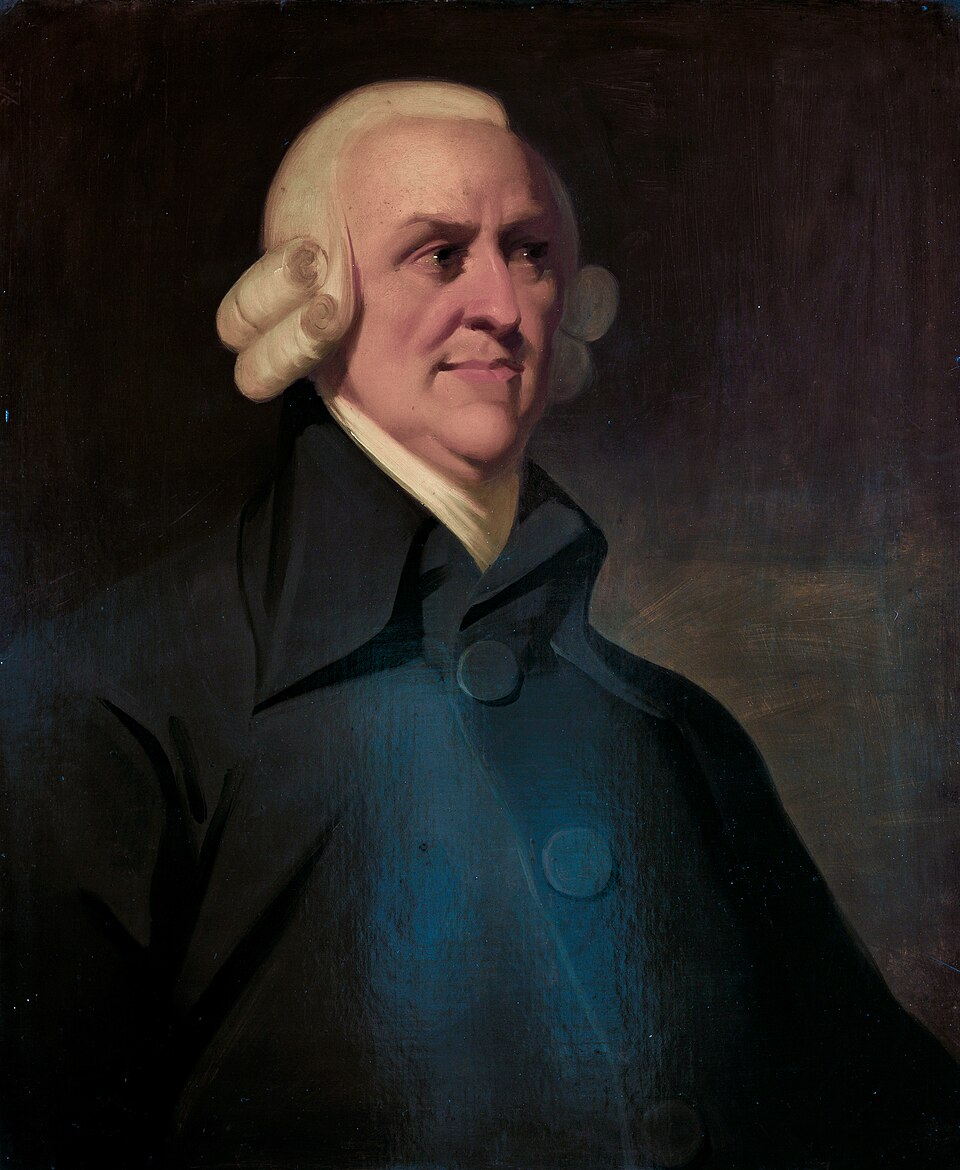
We are told that annual war games between the United States and South Korea have been cut short, after the president ordered these “inappropriate and hostile” drills scaled back. A South Korean official, Cho Hyun, explains that this shortening was intended in part to press his country to hasten $350 billion of investment in America, in exchange for lower tariffs. The coins upon the table, then, are not merely steel and soy, but missiles and manoeuvres. When I wrote in *The Wealth of Nations* of tracing every regulation to its effects upon prices, I did not imagine that exercises in which armies rehearse their own survival would themselves be treated as a kind of sliding scale.
The visible benefit of such a bargain is obvious and loudly advertised. Investment promises are large and numerically impressive; tariff reductions can be pointed to as trophies in the higgling and bargaining of the market. The costs, as usual, are quieter and more widely spread. They fall upon South Korean citizens who sleep a little less securely; upon American soldiers stationed near the frontier; upon neighbouring nations who must now infer how reliable this alliance is when war games may be lengthened or shortened to suit a commercial negotiation. Security here is treated as if it were a private warehouse, to be rented by the week.
Events have already supplied a rough account of the unintended consequences. Even as the president speaks of meeting the ruler of North Korea later this year, that state fires around ten short‑range ballistic missiles into the sea, after having already launched several earlier in the month. Its officials pronounce the scaling back of the drills “unworthy of comment” and insist that the “provocative and offensive” nature of the exercises is unchanged. Thus, the supposed appeasement displeases the ally it is meant to pressure, while it does not appease the adversary it is meant to placate. In the great chess-board of human society, the pieces have moved themselves in ways the planner did not intend.
In *The Wealth of Nations* I argued that the division of labour is limited by the extent of the market, and that peace and assured defence are among the chief means by which markets are widened. Roads and ports extend trade; but so do credible alliances and predictable security arrangements, which permit merchants to plan, labourers to migrate, and capital to commit itself to long projects. When defence drills become negotiable instruments, callable for cash, the foundation upon which all this delicate co-operation rests is shaken. Trade may be invoked as the justification, but the natural progress of opulence is thereby thrown into reverse.
One must also recall the old lesson about petitions. When a statesman treats an ally’s safety as a lever to obtain investment at home, he acts, in effect, as the advocate of a particular class of merchants who hope to profit from that capital and from lower tariffs. Their interest may be perfectly intelligible; it is not therefore the same as the public interest. The labouring poor, whether in Seoul or in the Midwestern town that hosts a new factory, have little voice in determining whether their prosperity shall be purchased at the price of greater insecurity abroad and heightened instability on their own news-screens.
From the moral point of view, which I attempted to describe in *The Theory of Moral Sentiments*, the impartial spectator would ask a simple question: is it praise-worthy to make the terror and reassurance of millions a negotiable instrument in a bargain over customs duties? He would observe that before the drills began, North Korea threatened “a new level of a deterrent,” and then followed words with a barrage of missiles. He would note South Korea’s fear of being sidelined. He would see a policy that excites hopes of investment, yet breeds distrust among allies and bravado among adversaries, and he would judge the self-command of the actors to have been found wanting.
None of this is to deny that defence itself is a most expensive public work, or that nations may properly debate its scale. The state has a duty to provide for security, and that duty must be reconciled with other burdens on the public purse. But the right question is whether shortening these exercises enhances safety per dollar of expense, not whether it yields $350 billion of promised investments. Judged by its early fruits—heightened missile activity, declarations that the drills remain provocative, and allies newly uncertain of American constancy—this experiment in turning bayonets into bargaining chips appears less an ingenious stroke of policy than another way of teaching the world that even peace may be for sale.
From the works cited
- An Inquiry into the Nature and Causes of the Wealth of Nations — The division of labour is limited by the extent of the market: whatever widens the market — roads, ports, peace, cheap carriage, open trade — deepens specialization and enriches; whatever fragments it impoverishes.
- An Inquiry into the Nature and Causes of the Wealth of Nations — Trace every policy to its effect on the price system and ask who bears the unseen cost: benefits are visible and concentrated, costs are diffuse and quiet.
- The Theory of Moral Sentiments — Judge conduct by the impartial spectator: what would a well-informed, disinterested observer feel about this action? Praise-worthiness matters more than praise; to be loved without being lovely is worth nothing, and to be blamed unjustly stings less than to deserve blame.