Judge Rules Against 75-Country Visa Ban Citing Legal Violations
A 75‑Country Visa Ban Is Not Law but Force
When an officer of state freezes the lawful hopes of nearly half the world without evidence or authority, he does not govern; he usurps, and must be stopped by an impartial judge if the people are not to appeal to heaven themselves.
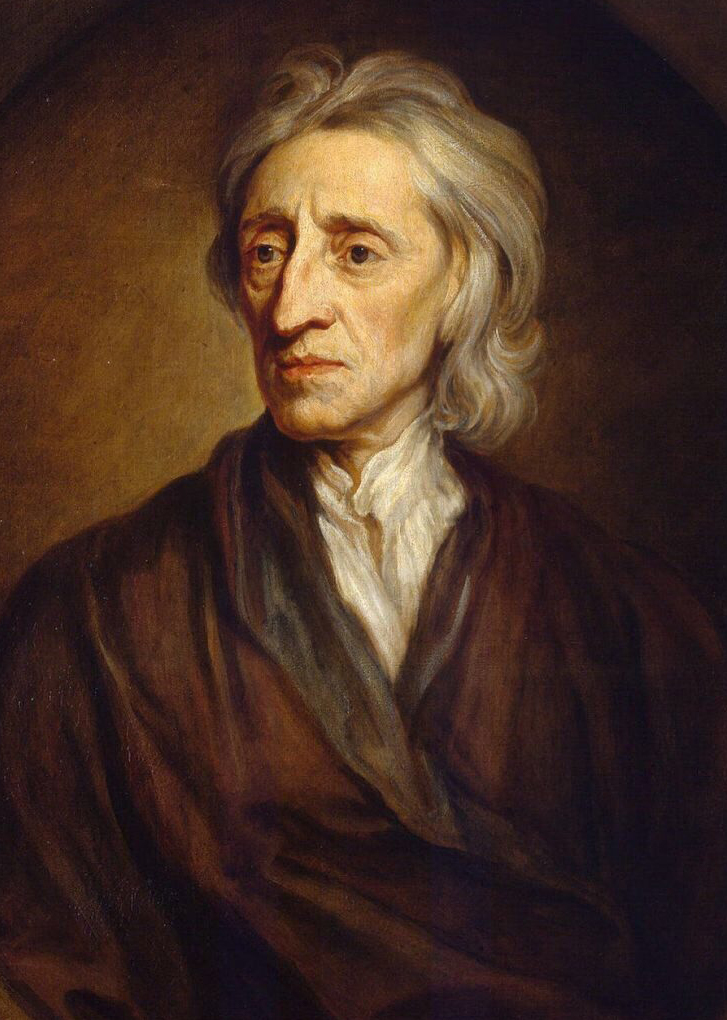
I begin not with borders but with men. By nature, as I argued in the Second Treatise, men are in a state of perfect freedom and equality, each the workmanship of one Maker, sent into the world about His business, with a right to preserve himself and those he is tied to in life, liberty, and estate. No one starts entitled to command another. Political power is therefore a trust, taken up only to protect these rights better than they could be secured in that state of nature. Whatever goes beyond that end, or crosses it, does not enjoy the name of government in any true sense. It is force wearing the borrowed robes of law.
On the facts reported, a high officer of the United States this year directed consular servants to refuse even to process immigrant visas for persons from seventy‑five nations, all in Africa, Latin America, the Middle East, or Eastern Europe. The reason given was not any particular crime or contagious disease, nor any fault of the individuals themselves, but a supposition that such persons would be more likely than others to “extract wealth” or “take welfare and public benefits” in that country. The effect, a judge has found, was to impose a categorical ban on immigrant visas for nearly forty percent of mankind’s political societies. Men and women who had followed the standing rules saw their applications frozen, their families divided, their plans turned to dust.
Here the first question is not of prudence but of title. In the same way that I once defined political power as the right to make laws with penalties only for the public good, so must every officer today show his warrant. The Immigration and Nationality Act, I am told, expressly forbids discrimination in immigrant visas on the mere ground of nationality. Yet this order commanded exactly that, and a federal judge, acting as an impartial arbiter, has declared it “contrary to law” and beyond the officer’s statutory authority. When a magistrate takes up a power which the legislative has not given, he does not merely err; he acts without right. That is usurpation.
But even if some general power over immigration were granted, a second question arises from the law of nature itself. That law, which is reason, teaches all, who will consult it, that no one ought to harm another in his life, health, liberty, or possessions. To shut the gates in the faces of countless particular persons, to bar the reunion of spouses, parents, and children who have obeyed every published rule, is plainly to touch their liberty and their property in expectations rightly formed. To do this not upon any proof concerning them, but upon bare suspicion attached to whole nations, is to wield arbitrary power. It makes the officer judge in his own case, measuring the rights of others by his fears and fancies rather than by a known standing rule impartially applied.
This brings me to the understanding. In An Essay Concerning Human Understanding, I urged that assent ought to be proportioned to the evidence; to believe beyond one’s proofs is not a mark of zeal but of failure in one’s duty to reason. Yet we are told this sweeping embargo rested on a “fiction” that immigrants from these seventy‑five countries would drain public resources, a fiction whose ancestry lies in old doctrines of eugenics and disability, which claimed that some stocks of men were “defective” and must be kept out lest they breed defect in a nation. That lineage is revealing. When present power leans on discredited notions rather than on fresh, public evidence—when it refuses visas even to those already found likely to be self‑sufficient—it shows not care for the commonwealth, but contempt for the very standard by which its acts must be judged.
Some will say that a state must be free to protect its welfare rolls, and that caution may justify rough instruments. I do not deny that a people may, by consent, entrust magistrates with power to exclude those who truly threaten its subsistence; men leave the state of nature to be safer, not more exposed. But such prerogative, as I wrote in the Second Treatise, is tolerable only while it is plainly used for the public good and remains answerable to the community. A blanket ban on nearly forty percent of the world, indifferent to individual circumstances and contrary to the very statute under which the officer claims to act, cannot pretend to that character. It is not a surgeon’s quick cut in an emergency; it is a dull axe swung at strangers’ rights because they are strangers.
Where then lies the remedy? When legislators or officers “endeavour to take away and destroy the property of the people, or to reduce them to slavery under arbitrary power,” I once argued that they put themselves into a state of war with the people, who are then absolved from obedience and left to that appeal to heaven which God has given to all against force. But because this controversy has been brought before a court, and that court has struck down the ban and restored case‑by‑case judgment, the appeal is still within the civil frame. The dissolution is of a particular exercise of power, not of the whole government, and need not breed confusion or tumults. For now, judicial resistance suffices. Yet the lesson is grave: whenever rulers claim a right to close their doors by great arbitrary swathes, on reasons they will not prove, over men they will not hear, they walk again that long train of abuses which ends, if not checked, in a people’s rightful refusal to obey.
From the works cited
- Second Treatise of Government — Political power defined narrowly as the right to make laws, with penalties, only for the public good — anything beyond that definition must justify itself or stand condemned.
- Second Treatise of Government — The state of nature as analytic baseline: perfect freedom and equality under the law of nature, so that government must be shown to improve on that baseline for everyone who leaves it.
- An Essay Concerning Human Understanding — Assent must be proportioned to the evidence; believing beyond one's proofs is a failure of duty, not a mark of faith.