Trump's Tariffs on Canadian Imports Affect Border State GOP Candidates and Automakers
Tariffs, Insults, and the Fragmenting of a Continental Market
A trade war between close neighbours is not statesmanship but a costly experiment conducted at the labouring poor’s expense.
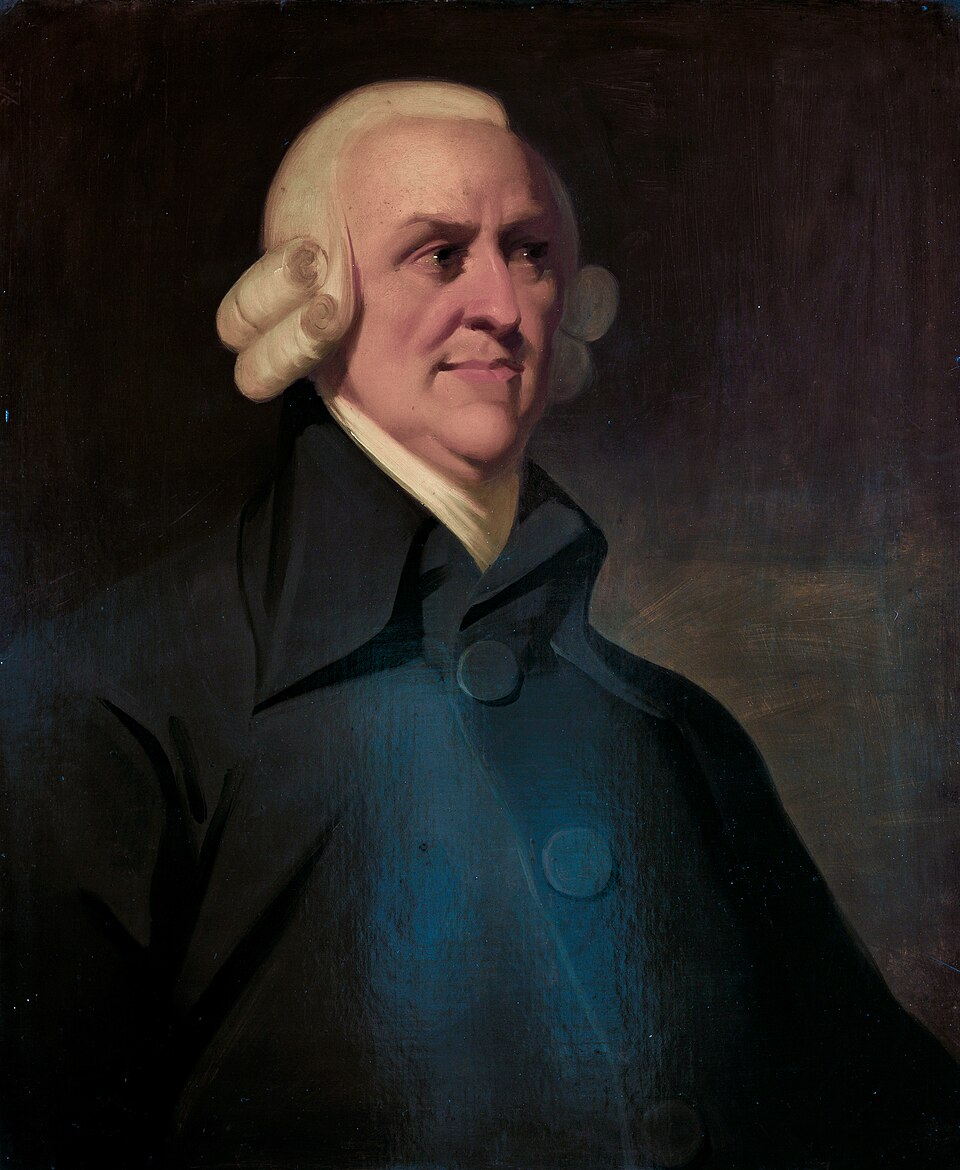
When a great republic slaps a fifty percent duty upon twenty billion dollars’ worth of its neighbour’s goods, it does not merely affix a tax; it proclaims a principle. We are told that these imposts, and the retaliatory ones now threatened in return, follow upon negotiations collapsed at the eleventh hour. The sums already paid in tariffs and disruption by North American automakers alone are reported at one hundred and ten billion dollars in only eighteen months. Such figures dazzle the eye, but they mislead the judgment if we pause there. In Wealth of Nations I urged that we trace every regulation to its effect upon prices. The true ledger of a tariff war is written, not in ministerial boasts, but in dearer goods and disordered employments.
In your time the pin‑factory has become the continent‑spanning supply chain, yet the principle is unchanged. The prodigious productivity of the division of labour rests always upon the extent of the market. Here that market is not merely national but North American: parts cross borders, workers specialise by region, consumers benefit from a competition enlarged by geography as well as by number. A fifty percent barrier suddenly raised between such closely intertwined producers does not merely change a price; it compels a clumsy re‑knitting of thousands of separate tasks. Every obstacle to this circulation diminishes the scope for specialisation, and whatever narrows the market, in the end, narrows the competence of the workman and the contents of the labourer’s basket.
The visible theatre of this conflict is political: candidates in border districts feeling the ground shift under their feet, ministers exchanging fiery phrases, officials promising to make the other side “fall in line” or endure consequences “far worse.” The invisible stage is the ordinary household. Each additional tariff is a tax, though the name be changed; it is paid by those who must accept dearer cars, costlier steel, and commodities disturbed in their usual channels. The gains, if gains there be, accrue to a smaller and more vocal set, who can reckon, invoice in hand, how much custom the tariff has diverted to them. The losses are spread among millions who never meet in any room, and therefore seldom in any legislature.
It is a curious feature of the present quarrel that many manufacturers themselves complain loudly of the imposts. One must not on that account suppose that merchants have become disinterested philosophers. When traders petition against a regulation, as when they petition for one, I advised in Wealth of Nations that the most suspicious attention is due. They dislike those burdens that fall on their own arrangements, yet are often well content with those that disable their rivals. In this case, however, the very structure of production—North American rather than narrowly national—means that an attempt to protect one domestic fragment may injure its domestic neighbours more than its foreign competitors. The tariff that aims at foreign industry often wounds a country’s own artisans in the same blow.
The political actors in this drama behave according to the incentives immediately before them. Leaders in a great capital perceive electoral peril in border regions and seek to exhibit strength; leaders in the neighbouring dominion, newly describing their old partner as an unreliable one, signal a willingness to endure economic pain rather than bend the knee. None of this is mysterious. In The Theory of Moral Sentiments I described how the desire not merely to be praised, but to be praise‑worthy, ought to guide the statesman. Yet here the incentives reward the appearance of intransigence more than the substance of prudence. A trade war is entered as one enters a tavern dispute, to avoid the shame of backing down, though the reckoning will be presented to other people.
More troubling still is the language with which these measures are defended. To speak of turning a long‑standing partner into a “fifty‑first state,” to misname its prime minister as a mere provincial governor, to indulge in coarse personal derision of local leaders—this is not only indelicate; it corrodes the very sympathy upon which commerce rests. The impartial spectator, placed between these countries and informed of their long friendship, would blush to hear such expressions. Trade is not a mere exchange of goods; it is a school of manners. When the parties cease to treat one another as equal bargainers and begin to speak as conqueror to subject, they poison both their moral relations and their commercial ones, and discover too late that resentment is a durable tariff.
I have never taught that governments should be idle in matters of trade. They must provide defence, secure justice, and establish those public works—roads, ports, customs‑houses honestly administered—without which private industry cannot flourish. But to turn these instruments from the widening of markets to their deliberate contraction is to invert their purpose. The man of system, enamoured of the beauty of his own plan, imagines that he can rearrange the great chess‑board of continental production by a sudden schedule of duties. He forgets that every worker, every firm, every consumer has a principle of motion of his own. The result is not the tidy pattern in his imagination, but confusion, bitterness, and a lower annual produce of the land and labour of both nations. The verdict of posterity will be simple: the poorest paid the highest price for the loudest boasts.
From the works cited
- An Inquiry into the Nature and Causes of the Wealth of Nations — The division of labour (the pin factory) as the engine of opulence, limited by the extent of the market.
- An Inquiry into the Nature and Causes of the Wealth of Nations — Trace every policy to its effect on the price system and ask who bears the unseen cost: benefits are visible and concentrated, costs are diffuse and quiet.
- The Theory of Moral Sentiments — Judge conduct by the impartial spectator: what would a well-informed, disinterested observer feel about this action?