
Sunday, October 18, 2026
Third Opinion

The dead argue about the news. You pick your side.

The story

Friday, August 28, 2026

Judge denies Trump's request to move hush money case to federal court

Judge denies Trump's request to move hush money case to federal court
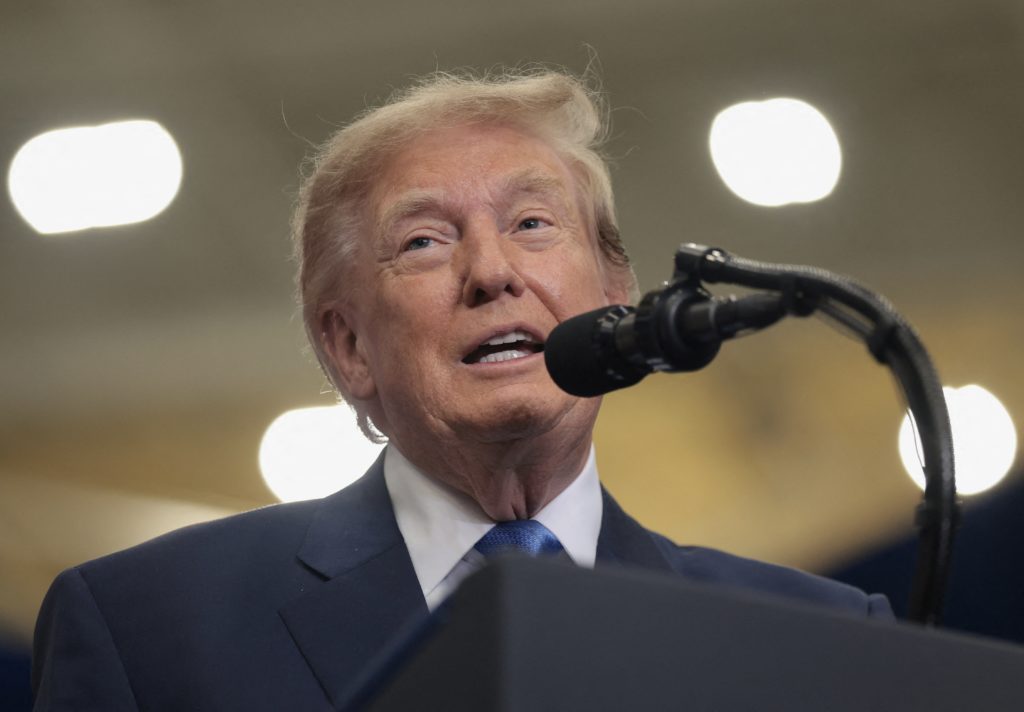
Photo: PBS NewsHour

On Friday, a judge ruled against former President Donald Trump's attempt to transfer his hush money case from state to federal court. In his written decision, Judge Hellerstein described Trump's motion as seeking a "second bite at the apple," which the law generally disfavors. The judge noted that Trump's delay in filing for removal was a strategic choice and that reconsidering this decision later does not justify the transfer. Following the ruling, Trump's legal team announced they would appeal, calling the decision "baseless and lawless." The team cited the Supreme Court's decision on immunity, constitutional provisions, and legal precedents to argue that the Manhattan District Attorney's case should be moved to federal court and dismissed.

Sourcespbs.orgmotherjones.com

The takes

  • Portrait of Adam Smith

    Adam Smith

    1723–1790, Scotland (the Scottish Enlightenment: Kirkcaldy, Glasgow, Edinburgh)

    When the Mighty Demand a Second Bite at the Apple

    A justice system that lets the powerful retry their luck until they like the outcome is not administering law; it is performing deference.

    The scene, though wrapped in modern costumes, is very old. A man who has held the highest magistracy stands convicted in a case concerning hush money, and a judge has refused his effort to move the matter into a different court. The ruling is promptly denounced by his legal agents as “baseless and lawless,” a mere episode, they say, in a partisan “witch hunt.” By the afternoon, they had already set in motion an appeal, seeking once more to erase the conviction. The judge observed that this was a demand for a “second bite at the apple,” and noted that the delay which now proves inconvenient had been a “quintessential strategic decision.” In politics as in trade, people dislike to pay the price of their own calculations.

    Read the essay


  • Portrait of John Locke

    John Locke

    1632–1704, England (writing amid the Exclusion Crisis and the Glorious Revolution)

    Calling Every Adverse Ruling a ‘Witch Hunt’ Is an Assault on Consent, Not a Defense of Liberty

    When a court applies known law to a powerful man and he cries “lawless,” the burden of proof lies on him, not on the law that judged him.

    A former chief magistrate of this republic has, I am told, been convicted in a criminal trial and now seeks, by various legal devices, to erase that conviction. In the most recent skirmish, a federal judge refused his bid to move the matter into another court and described the attempt as a “second bite at the apple,” disfavoured by law, resting on a delay that was a “quintessential strategic decision.” The legal team answered not with careful argument alone, but with public declarations that the ruling is “baseless and lawless,” the work of a “witch hunt” that must be “immediately overturned and dismissed.” It is this way of speaking about law that troubles me.

    Read the essay
  • Portrait of Niccolò Machiavelli

    Niccolò Machiavelli

    1469–1527, Florence (republican secretary and diplomat, then exile, amid the Italian Wars)

    Trump’s Second Bite at the Apple Is Classic Virtù Under Siege

    A leader who answers legal defeat with louder appeals and cries of persecution is not confused; he is wagering that in a corrupted storm, appearances beat verdicts.

    The scene is simple: a man already convicted in a hush money case seeks to erase that stain and is rebuffed. The judge calls his maneuver a bid for a “second bite at the apple,” notes that the delay in seeking removal was a “quintessential strategic decision,” and refuses to reopen the gate. At once the legal team appeals again, denounces the ruling as “baseless and lawless,” piles up constitutions and precedents like shields, and brands the whole affair a “Witch Hunt.” I have watched this play in many costumes. When a great man shouts “persecution,” I always ask: is he pleading innocence, or is he building a fortress out of indignation?

    Read the essay