Judge denies Trump's request to move hush money case to federal court
When the Mighty Demand a Second Bite at the Apple
A justice system that lets the powerful retry their luck until they like the outcome is not administering law; it is performing deference.
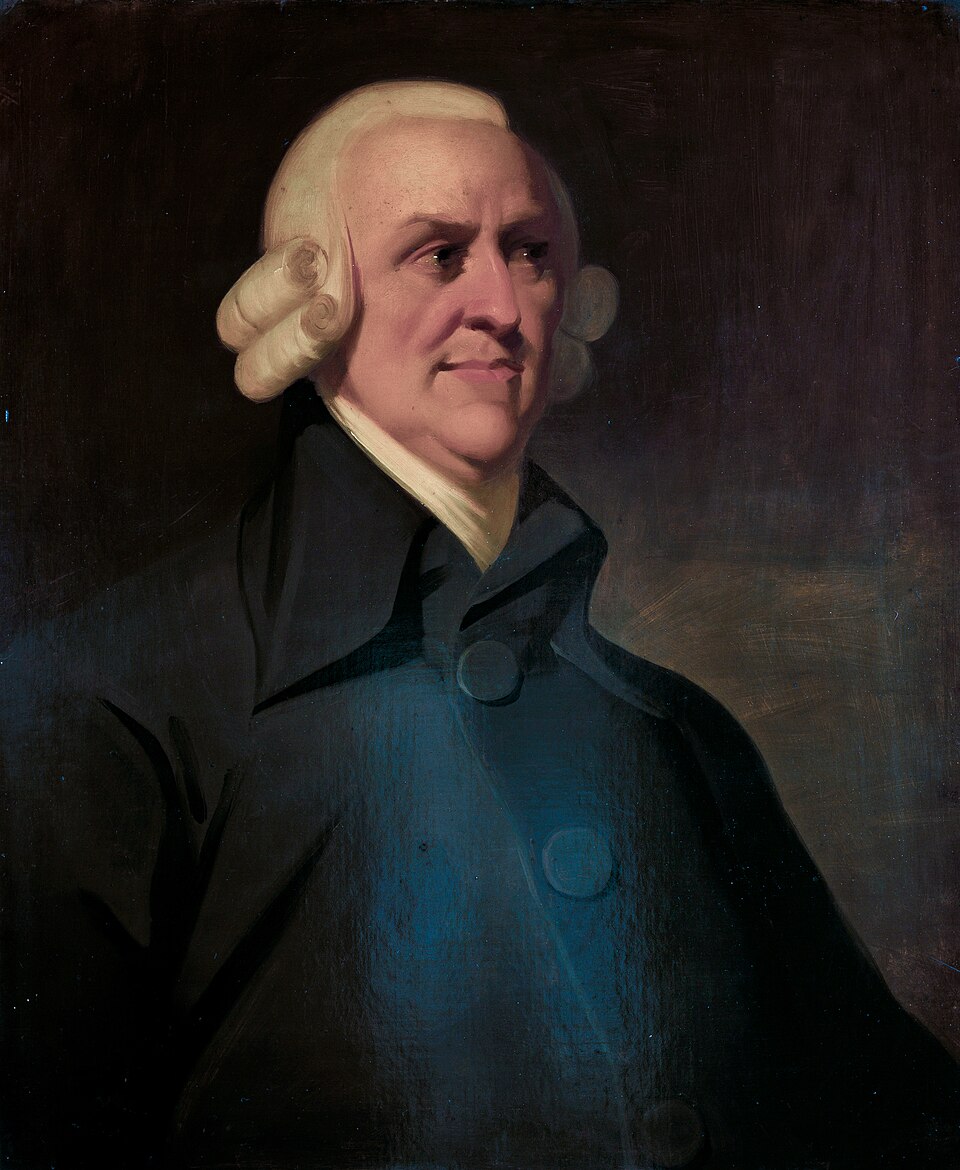
The scene, though wrapped in modern costumes, is very old. A man who has held the highest magistracy stands convicted in a case concerning hush money, and a judge has refused his effort to move the matter into a different court. The ruling is promptly denounced by his legal agents as “baseless and lawless,” a mere episode, they say, in a partisan “witch hunt.” By the afternoon, they had already set in motion an appeal, seeking once more to erase the conviction. The judge observed that this was a demand for a “second bite at the apple,” and noted that the delay which now proves inconvenient had been a “quintessential strategic decision.” In politics as in trade, people dislike to pay the price of their own calculations.
In the work I wrote on the wealth of nations, I assigned to the sovereign three principal duties: defence, public works, and, above all, the exact administration of justice. Without that exactness, the higgling and bargaining of the market becomes mere gambling; contracts lose their meaning when promises have no certain enforcement. A great people may endure some folly in its commercial regulations, and even some waste in its public works, yet still grow; but when they come to believe that there is one rule for the strong and another for the weak, the very sources of opulence are poisoned at the spring. The poorest labourer obeys the law when he supposes the law will be impartially obeyed by his betters.
Now, the laws of all civilized nations provide for appeals. Men are fallible, and a single judge may mistake the facts, misinterpret the rules, or even yield to passion or prejudice. To correct such errors is not to weaken justice but to strengthen it. Yet the law, as this judge sensibly observed, looks ill upon a contrivance by which a party, having made a deliberate tactical choice, demands a second chance merely because the first has gone badly. In common life, we should not commend the merchant who, after speculating rashly, insists that his bargains be undone when the price moves against him. To transform every miscalculation into an injustice is to confuse disappointment with injury.
When I treated of moral sentiments, I urged that we judge conduct by placing ourselves in the situation of an impartial spectator, well informed yet disinterested. Such a spectator would, I think, distinguish between the rightful use of legal remedies and their abuse as instruments of evasion. He would note that the same party who now pleads for special consideration once chose, for reasons of advantage, a different course, and that the plea arises only when that advantage has failed. He would ask whether a claim of immunity for paying hush money and covering up an embarrassment truly serves the dignity of the office once held, or merely shields the individual from the consequences of his own acts. To demand exceptional protections for personal embarrassments is to confuse public trust with private convenience.
I do not wonder that a man, threatened with disgrace or punishment, should clutch at every possible escape; self-love is a constant principle, and we rely upon it in trade as in ordinary life. What concerns me is not that a single defendant presses his interest, but that the doctrines advanced in his name—of boundless immunity, of “baseless and lawless” courts whenever they rule against him—may become the common currency of political defence. When persons of rank teach their followers to expect that any adverse judgment must be a “witch hunt,” they accustom whole multitudes to despise the tribunals upon which their own security depends. The temporary relief of one prominent man is dearly purchased by the permanent suspicion of the many.
The costs of this suspicion are, as in many matters of policy, unseen and dispersed. No single artisan can point to the coin lost because a great person’s conviction was delayed or undone; no peasant can say which assault or fraud was committed because another offender hoped to imitate the great man’s escape. Yet, over time, when the poor believe that money and office can always purchase a fresh hearing, a softer judge, a kinder jury, they become less willing to obey the decisions that fall upon themselves. The annual produce of the land and labour then suffers, not from any one decree, but from a slow, general decay of trust. Justice, when it ceases to be exact, becomes an uncertain tax upon the innocent and a cheap insurance for the powerful.
The remedy is neither to refuse appeals, nor to hound a single offender with unusual rigour, but to hold fast to the principle that the rules of procedure are not toys to be rearranged whenever a mighty client repents his strategy. A court that declines to indulge a late and self-serving change of heart does not make itself an enemy of liberty; it preserves the equal liberty of all who lack the means to purchase a “second bite at the apple.” If the most exalted citizen finds that his strategic decisions, like those of any tradesman, bind him to their consequences, the rest of society receives a useful lesson: that in this commonwealth, at least, the law aspires to regard persons not by their former station, but by their present conduct.
From the works cited
- An Inquiry into the Nature and Causes of the Wealth of Nations — The sovereign's three duties (defence, justice, public works and institutions) and the measure of policy by the real consumption of the labouring poor.
- The Theory of Moral Sentiments — Judge conduct by the impartial spectator: what would a well-informed, disinterested observer feel about this action?