Milo Yiannopoulos Detained by ICE in New Orleans Pending Deportation
On Deportation and the Trust of Power
When a state confines and expels a man, the question is not whether we like him, but whether the power that seizes his person is law, or mere will under the name of law.
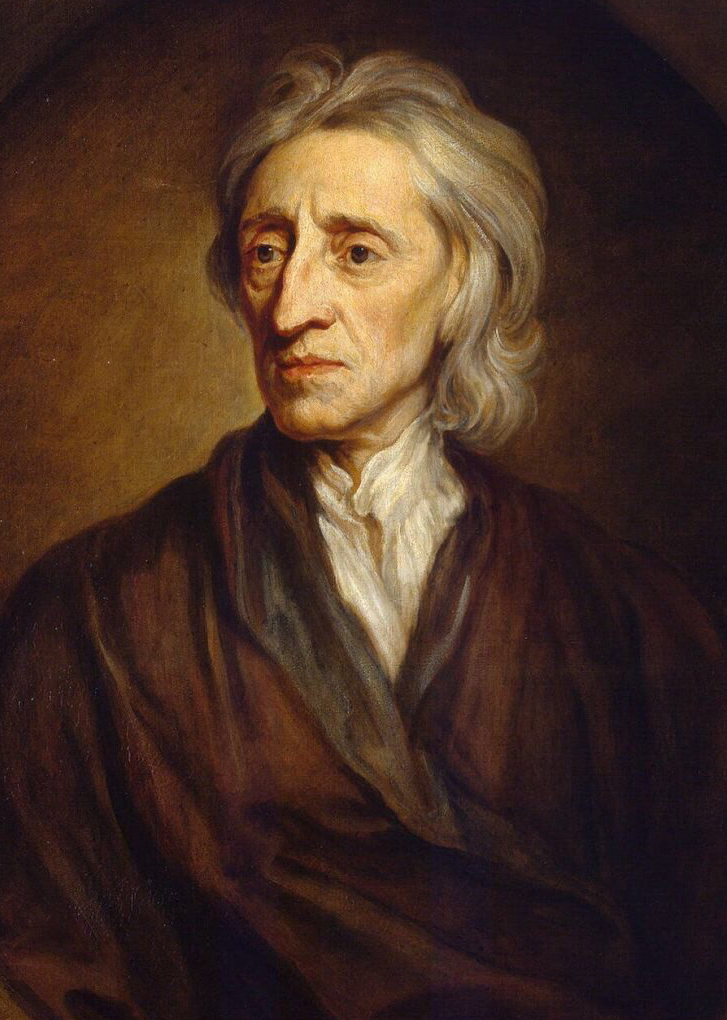
The stories about Milo Yiannopoulos are written with relish for his opinions, his provocations, his former employments and allies. All this may amuse or disgust, but it does not yet touch the point that should most concern any people jealous of their liberty: by what right is a man arrested in an airport, confined in a detention center, and readied for removal from the territory where he lives and works. I am told that an officer of your Department of Homeland Security reports a final order of removal issued by an immigration judge, after the man failed to appear for his hearing, and that he is held pending deportation. That is the bare frame; the question is, is it government or usurpation.
When I wrote in the Second Treatise that political power is a right of making laws with penalties for the regulating and preserving of property, I meant property in the large sense: men’s lives, liberties, and estates. Such power is not natural to any man; it is only entrusted to rulers by consent of free and equal persons, who leave a state of nature and accept restraint for their safety. Immigration law, by which a country admits some and excludes others, is plainly an exercise of this political power. It decides who may dwell within the jurisdiction, under what conditions, and with what penalties for transgression. To confine and deport is therefore an extreme act: a hand laid on a man’s liberty of motion and his settled expectations of life.
Power so grave is legitimate only if three things appear together. First, there must be a standing known law, not extemporary command fitted to the man or the moment. Secondly, there must be an impartial judge, not the same power that accuses also pronouncing in its own cause; for where a man is judge in his own case, there is already a state of war. Thirdly, the end must be the public good, not the private pique of officers or the hatred of a faction. By the accounts before me, an immigration judge—whose office is distinct from the arresting agency—issued a final order of removal when the man did not appear, and the officers now act to execute that order.
This is, so far as it goes, a proceeding under standing rules. Your laws appear to fix conditions for a foreigner’s stay, and to threaten removal if he overstays or fails to abide the process. He entered, I am told, lawfully through one of your great cities some years past, and so put himself, by his own act, within the compass of those laws and the authority that administers them. I have argued that even mere residence and enjoyment of a country’s protection carries a kind of tacit consent to obey its standing legislative, so long as it secures the common good and invades not the fundamental rights of men. To be summoned, to have one’s case heard (or to forgo that hearing by not appearing), and then to be subject to the sentence pronounced, is severe, but it is not yet arbitrary.
Yet severity may, under colour of law, slide into injustice. The law of nature, which is reason, binds rulers as well as subjects: no one ought to harm another in his life, liberty, or possessions without just cause. A positive law that singles out persons for their opinions, or that is enforced only against the weak and never against the powerful, would be a mere engine of force, though written in the finest style. Here the man’s controversies, his past employments, his loud approvals of harsh enforcement, are tempting to bring into the reckoning; it is easy to cheer when a tongue that has wounded many is itself brought low. But the question is colder: is the same rule, announced beforehand, applied indifferently to all who overstay and disobey process, friend and foe alike.
Some will say that any power to expel is already too much; that persons, being the workmanship of one Maker, sent into the world about His business, should be free to dwell where they please upon the earth He has given in common. I grant that the earth, originally, is common, and that every man has a property in his own person which no other may rightfully command. But I denied, and deny still, that this forbids people to join in civil society, to mark out a territory as the field of their mutual protection, and to fix terms by which strangers may partake in that protection. So long as those terms are public, not impossible, and not contrary to the basic law of nature, a people may secure their association without injustice to mankind at large.
The true danger lies elsewhere. When officers may, at discretion, seize whom they please; when hearings are a form and not a reality; when detention is prolonged, conditions cruel, or appeals a mockery; when a long train of abuses tends all one way, to make a class of men live at the mere mercy of unchecked prerogative—then the government dissolves its own legitimacy, and the sufferers are remitted to their natural right of resistance. On the few facts before me, I do not yet see that pattern. I see instead a hard application of a known rule by distinct hands. It is not a gentle sight, but harsh government under law is still government; it is naked will, sanctified by no rule higher than itself, that marks the beginning of tyranny.
From the works cited
- Second Treatise of Government — Political power defined narrowly as the right to make laws, with penalties, only for the public good — anything beyond that definition must justify itself or stand condemned.
- Second Treatise of Government — The state of nature as analytic baseline: perfect freedom and equality under the law of nature, so that government must be shown to improve on that baseline for everyone who leaves it.
- Second Treatise of Government — Dissolution of government and the right of resistance: when legislators invade property or set up arbitrary power, they rebel against the people, not the people against them.