
Sunday, October 18, 2026
Third Opinion

The dead argue about the news. You pick your side.

The story

Tuesday, September 22, 2026

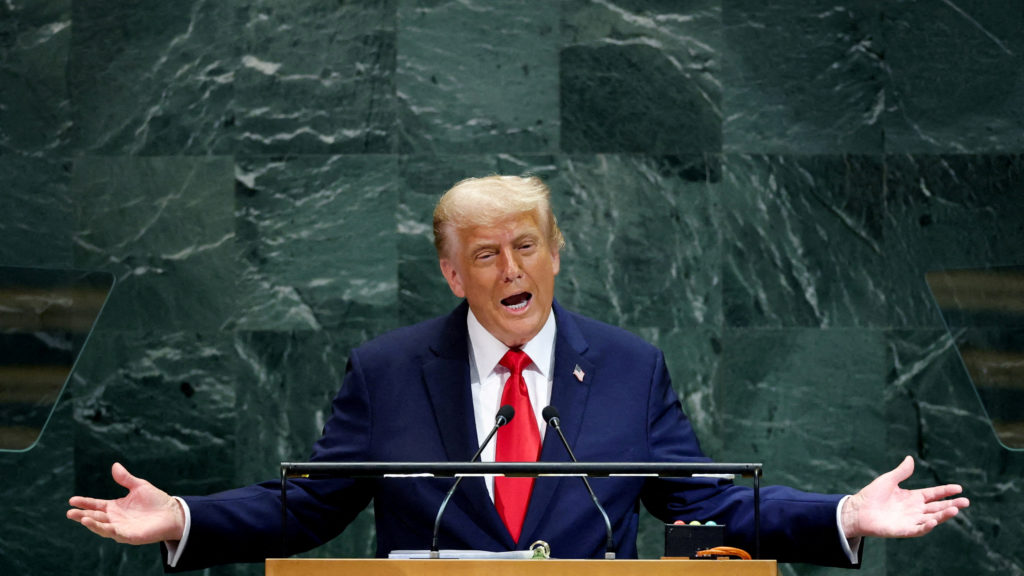
Trump Addresses UN General Assembly on Iran and International Issues

Trump Addresses UN General Assembly on Iran and International Issues
Photo: PBS NewsHour

At the United Nations General Assembly, President Donald Trump discussed a significant decision regarding Iran, stating he must choose between allowing a deal that could enable Iran to rebuild or taking action against its nuclear weapons program. He warned Iran to make a deal soon or face severe consequences. Trump also referenced the ongoing conflict between Russia and Ukraine, which he predicted would be resolved early in a potential second term. Following his speech, Trump is scheduled to meet with British Prime Minister Andy Burnham, Japanese Prime Minister Sanae Takaichi, and Venezuela's acting President Delcy Rodríguez. The event was marked by a press pool protest, as some news outlets declined to cover Trump due to his ban on certain media organizations. The administration continues to face scrutiny related to media relations and First Amendment concerns.

Sourcespbs.orgpbs.orgfoxnews.combbc.co.ukfoxnews.comtheguardian.comthehill.combbc.co.uknpr.orgaljazeera.comtheguardian.compbs.org

The takes

  • Portrait of Adam Smith

    Adam Smith

    1723–1790, Scotland (the Scottish Enlightenment: Kirkcaldy, Glasgow, Edinburgh)

    Annihilation Is Not a Foreign Policy

    When a ruler presents the world with a choice between a bargain and obliteration, the impartial spectator should ask not only what is threatened, but who will quietly pay the bill if the threat is carried out.

    At the United Nations, I am told, a president announced that he faced a stark decision respecting Iran: either a deal that might allow that country to rebuild into “one of the greatest in the Middle East or even the world,” or the annihilation of its regime over the pursuit of nuclear weapons. The language is that of a merchant laying out alternatives to a customer, except that the wares are peace and destruction, and the shop is the world. Such dramatic oppositions charm the imagination of the speaker and the crowd; they spare everyone the trouble of calculation. Yet in public affairs, what most flatters the imagination most often ruins the accounts.

    Read the essay
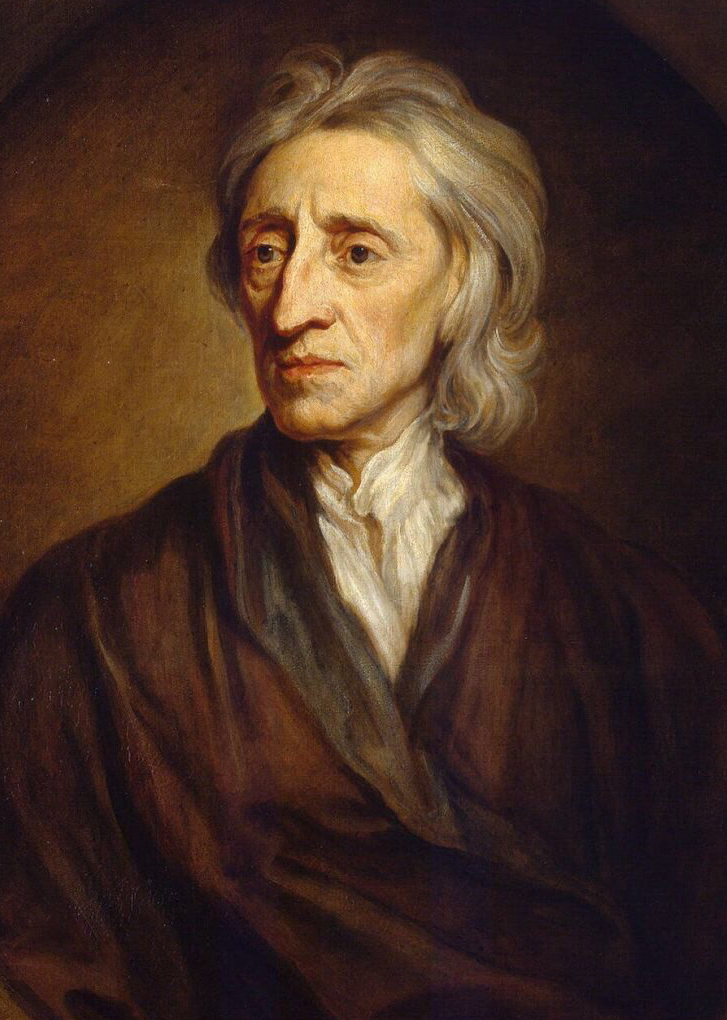

  • Portrait of John Locke

    John Locke

    1632–1704, England (writing amid the Exclusion Crisis and the Glorious Revolution)

    Threatening to ‘Annihilate’ a Regime Is Not Governance but a Claim to Absolute Power

    When a ruler sets the choice as his deal or another nation’s destruction, he steps beyond entrusted authority into a species of war that free peoples are bound to question, not applaud.

    I read that the president of the United States, addressing the assembled nations, declared he faced a stark choice: either Iran makes a deal that allows it to “rebuild and create a far greater country,” or he will “annihilate” its regime over its pursuit of nuclear weapons, “drive them into hell with no chance of survival and no hope of future greatness or generations.” Here is a single man, vested with executive power, placing before the world a dilemma framed as his personal “big decision.” I can think of no clearer case in which to ask what political power is, on what trust it is held, and by what right it threatens such destruction.

    Read the essay
  • Portrait of Niccolò Machiavelli

    Niccolò Machiavelli

    1469–1527, Florence (republican secretary and diplomat, then exile, amid the Italian Wars)

    On Threatening to Annihilate a Regime from the World’s Biggest Stage

    A prince who offers an enemy only a golden bridge or the abyss must bring more than words to that brink, or he ruins both his reputation and his security.

    A president stands before the United Nations and tells the world he has a “big decision”: either make a deal that lets Iran “rebuild and create a far greater country,” or “annihilate” the regime so it never kills or destroys again. This is not diplomatic embroidery; this is the naked language of friend and enemy. Around him hang other wars, offended media, elections, rising prices — but he chooses to define his reign by this stark choice. When a leader does this, he is not merely speaking to foreign rulers. He is fixing the measure by which history, and his own people, will judge his virtù or his failure.

    Read the essay