Trump Addresses UN General Assembly on Iran and International Issues
Threatening to ‘Annihilate’ a Regime Is Not Governance but a Claim to Absolute Power
When a ruler sets the choice as his deal or another nation’s destruction, he steps beyond entrusted authority into a species of war that free peoples are bound to question, not applaud.
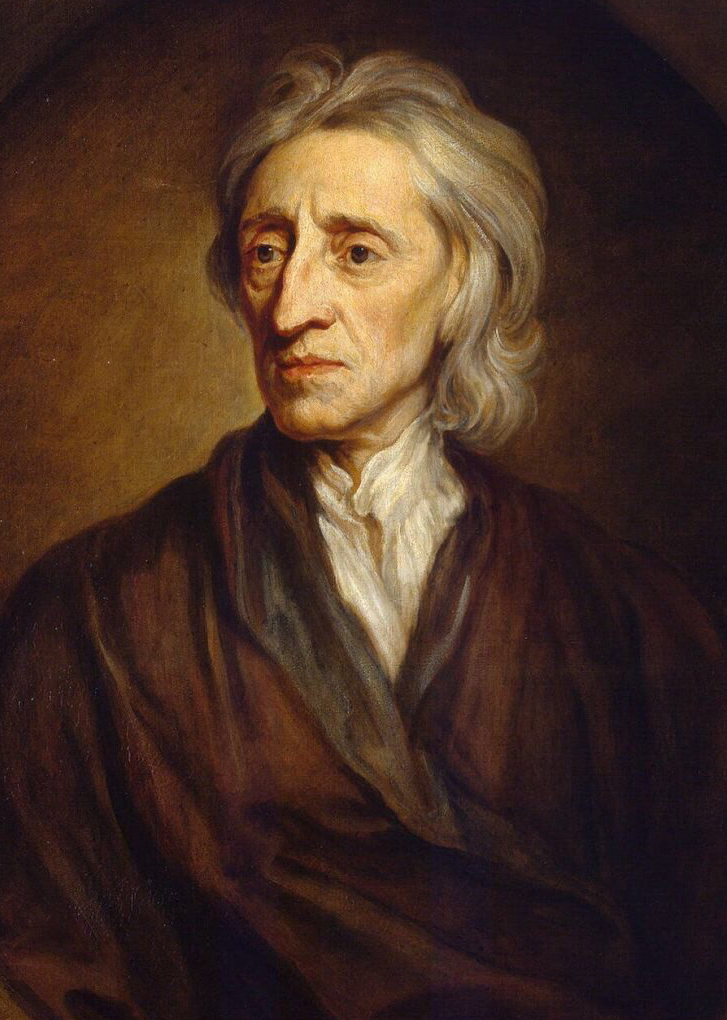
I read that the president of the United States, addressing the assembled nations, declared he faced a stark choice: either Iran makes a deal that allows it to “rebuild and create a far greater country,” or he will “annihilate” its regime over its pursuit of nuclear weapons, “drive them into hell with no chance of survival and no hope of future greatness or generations.” Here is a single man, vested with executive power, placing before the world a dilemma framed as his personal “big decision.” I can think of no clearer case in which to ask what political power is, on what trust it is held, and by what right it threatens such destruction.
When I wrote in the Second Treatise that political power is a right of making laws with penalties for the regulating and preserving of property, I meant property in the broad sense: the lives, liberties, and estates of the people. Power is given by free and equal persons, not for the magnifying of one ruler, nor for the settling of “unfinished business” abroad, but for their own safety and quiet. When an executive claims authority to extinguish an entire regime—and with it, we must presume, many lives that are the workmanship of one Maker—he must show, first, that the law has put such a sword into his hand, and secondly, that the use of it is truly necessary to secure his people’s preservation, not his own will.
Here the president speaks of “severe consequences” and of annihilation if a deal is not made soon. I do not deny that another nation’s pursuit of terrible weapons is a grave matter. But the law of nature, which is reason, binds rulers as much as subjects: no one ought to harm another in his life or health unless it be to repel force already begun or so manifestly preparing that waiting would be self-destruction. To threaten to “drive” a whole polity “into hell” is to speak not of measured self-defence under known rules, but of a discretionary ruin, to be unleashed if others do not yield to his demanded terms. That sounds less like law, and more like fear used as an instrument.
I have always allowed that there is in governors a certain prerogative, that is, a power to act for the public good without a prescribed law, or even contrary to the letter of it, when sudden occasions require and the legislative cannot be consulted. Yet, as I argued in the Second Treatise, such prerogative is held only so long as it plainly serves the people and remains revocable; the moment it is used to establish a constant superiority of will, it turns into arbitrary power. Here, the president appears before foreign princes, not his own legislative, and presents war or peace as resting on his solitary decision and his interpretation of a “deal.” This is prerogative stretched to the point of claiming that he alone will decide whether another nation shall continue to exist.
Some will reply that nuclear arms admit of no delay, that the peril is so great that ordinary forms must bend, and that if annihilation be threatened, it is only to deter a worse destruction later. I understand the force of this plea; emergencies are the common excuse of power. But in my Essay Concerning Human Understanding I insisted that wise men proportion their assent to the evidence. If a ruler bids his people believe that nothing but his threatened devastation can secure them, he owes them reasons, not merely vehemence. Where are the open proofs that no other means—negotiation, inspection, collective security—offer “enough, and as good” safety without resort to such extremity? To ask for that accounting is not weakness; it is the very duty of a free people.
The reports I have seen speak also of scrutiny from the press and from those concerned for liberty of expression, even as some journalists protest restrictions on their access. I cannot judge all these particulars. Yet I note with concern any pattern in which an executive both claims extraordinary discretion over war and narrows the circle of those who may question him before his own people. When the same hand both holds the sword abroad and shapes the information at home, that hand becomes, in effect, judge in its own case. A long train of such practices, should it appear, would show that the commonwealth is sliding from government by settled laws toward rule by one man’s declared necessities.
I do not say that any single speech dissolves a government, nor that every rash word about “annihilation” licenses resistance. People are bound to endure much, so long as their fundamental safety and liberty are not systematically invaded. But I do say this: no executive on earth may justly wage or even brandish war of this scale without clear, known authorization from the legislative that represents the community, and without a candid demonstration that the course taken is truly for the preservation of their lives, liberties, and estates. Until such consent and such proof are given, a threat to annihilate another regime is not an act of rightful government, but a claim of absolute power that free peoples must meet, not with applause, but with jealous, public questioning.
From the works cited
- Second Treatise of Government — Political power defined narrowly as the right to make laws, with penalties, only for the public good — anything beyond that definition must justify itself or stand condemned.
- Second Treatise of Government — Prerogative as revocable emergency discretion — legitimate exactly as long as the public visibly benefits and no longer.
- An Essay Concerning Human Understanding — Assent must be proportioned to the evidence; believing beyond one's proofs is a failure of duty, not a mark of faith.