Tennessee's Execution of Christa Pike Fails After Two Lethal Doses
A State That Cannot Kill Cleanly Should Not Kill at All
When a sovereign twice attempts an execution and the condemned lives, the body that really lies exposed on the table is the state’s own authority.
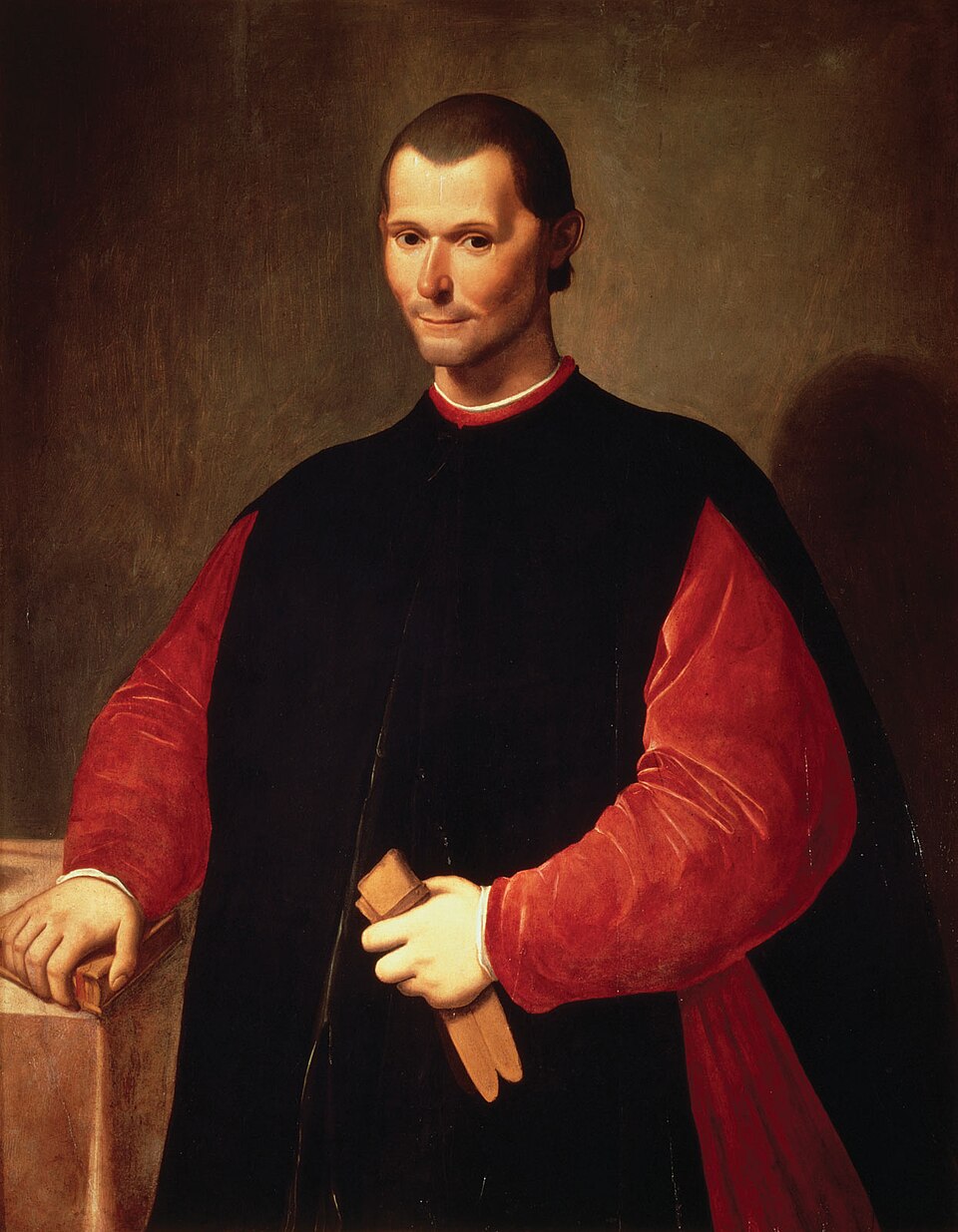
The scene in Tennessee is clear enough. The sovereign prepares its gravest spectacle of justice, straps a woman to the gurney, and sends death through the veins—once, then again—according to its own protocol. Yet she lives, breathing and audibly so, while officials consult a rulebook that, remarkably, does not say what to do if the second killing fails. There you have the naked thing: not cruelty, which is old, nor the death penalty itself, which every age has argued, but a power that has promised the ultimate punishment and then shows it cannot deliver it cleanly. When the executioner misses, it is the executioner who is judged.
When I wrote in The Prince, as translated by W. K. Marriott, that one must follow the real truth of a matter rather than the imagination of it, I had in mind exactly this kind of pageant. In imagination, lethal injection is modern, clinical, almost administrative; in effectual truth, it is often “botched,” and now, in this case, survivable. The state does not mean to torture, yet produces a scene that many will name torture. It means to close a story, yet leaves it violently open. Intention is for sermons. Power is judged by outcomes. Here, the outcome is impotence wrapped in latex gloves.
A sovereign has one primordial interest: to maintain the state, which for a republic means to maintain order through laws that still command respect. If it chooses capital punishment as one instrument, then it must wield that instrument with certainty. The terror of the gallows, or of the needle, lies not in elaborate rituals but in the quiet knowledge that once the sentence is pronounced, there is no escaping its execution. When, instead, the condemned survives two doses and emerges as a living witness to the state’s failure, the lesson shifts. The punishment no longer teaches fear of the law; it teaches doubt about its force.
You moderns understand very well that appearances are a form of currency. I wrote that most men judge more by the eye than by the hand, and this business proves it. Few citizens will study pharmacology; many will see only that the sovereign promised death and delivered a gruesome confusion. In The Prince I compared fortune to a river that floods where no dykes have been built; Tennessee has built an execution protocol with no barrier for the obvious contingency—what if the second dose fails?—and now fortuna rages through that gap, carrying away the show of competence that sustains fear and obedience.
Some will say this failure strengthens the argument against the death penalty, and indeed we see that the attempt has “reignited furious debate.” Here the republican in me listens closely. In the Discourses I praised the people’s judgment when they are allowed to see and speak; public horror at clumsy cruelty can be a healthy tumult, recalling a republic to better laws. But the danger, if the matter is handled without prudence, is that you get the worst of all worlds: a state that continues to claim the right to kill, yet proves unable to do so without scandal, and then hesitates, litigates, and improvises in full view of friend and enemy.
That, to my eye, is the infamous middle course. Severity without success, mercy without intention. The woman does not die, so the claimed deterrent and retribution are not achieved. Yet she does not simply return to a cell as if nothing happened; instead, she becomes the center of lawsuits, interviews, arguments—an emblem of state incompetence. The sovereign has paid all the costs of severity in spectacle and outrage, and all the costs of mercy in leaving an enemy alive, but purchased neither the calm that comes from decisive punishment nor the esteem that follows deliberate clemency. This is not wickedness; it is bad statecraft.
If a republic insists on wielding death, then, it must perfect its arms as carefully as any prince drilling infantry. No mercenary pharmacology, no vague protocols that fail precisely at the critical moment, no ceremonies whose outcome depends on luck. Either raise dykes against fortuna by making the process certain and swift, or abandon this weapon and say openly that the community will protect itself by other means. To go on like this—killing badly, living with the failures, arguing in circles—is to accustom the people to a spectacle of flailing authority. And nothing corrupts obedience faster than the habit of watching the state miss its own mark.
From the works cited
- The Prince — Virtù versus fortuna — the raging-river figure: preparation in fair weather is the whole difference between the drowned and the dry.
- The Prince — The economy of violence and the feared/loved calculus: better feared than loved if one must choose, but never hated — fear rests on the prince's will.
- The Prince — Arms of one's own versus mercenaries and auxiliaries: power borrowed is power owed, and it will be collected at the worst moment.