Henry McMaster to Appoint Darline Graham Nordone as Lindsey Graham's Senate Replacement
Sanctions, Patronage, and the Hidden Payers of Policy
A bipartisan sanctions bill and a family appointment show, in miniature, how power cloaks its interests in virtue while sending the bill to quieter pockets.
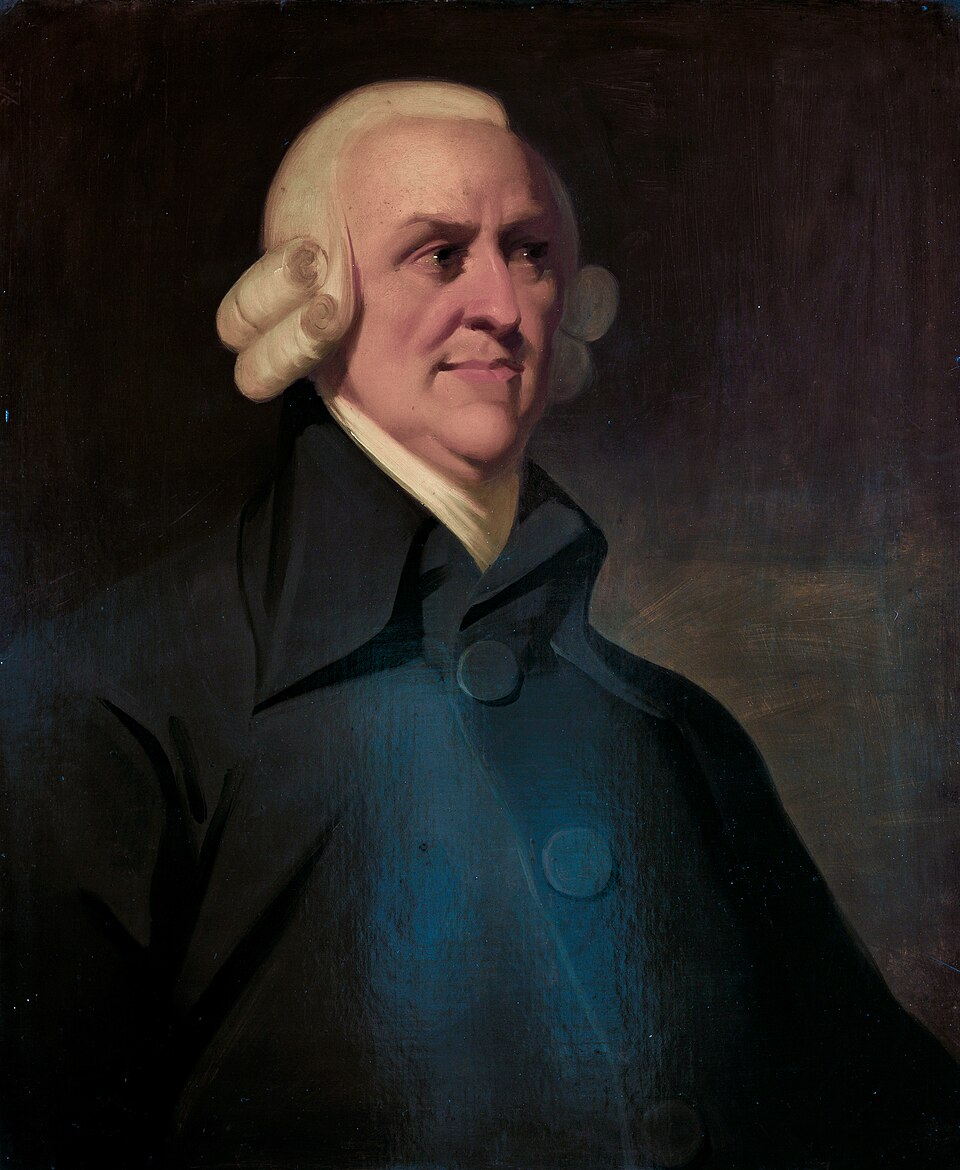
The death of a seasoned senator, followed at once by reports of a bipartisan sanctions bill against Russia and the appointment of his sister as his short‑term replacement, offers in a few days’ news what a philosopher of society usually extracts from a generation. On the one hand, the executive and legislators agree upon a measure presented as firmness in foreign affairs; on the other, the vacant seat is filled, not by a contest of talents and opinions, but by a relative of the departed. Each event is defensible, each clothed in the language of necessity or continuity; yet each demands that we ask, not whose virtue is praised, but who is quietly made to pay.
When I wrote of the wealth of nations, I urged that every regulation of commerce be traced to the price it alters and the pocket it lightens. Sanctions are no exception. They are usually announced as blows struck at a foreign government, but they first strike domestic buyers and sellers who find some goods dearer, some markets narrower, some employments less secure. The benefit is visible and concentrated—a posture of strength for statesmen, occasional windfalls for favoured industries—while the cost is diffuse, scattered in small inconveniences, thinner wages, and lost opportunities among people who will never appear in the speeches. Nothing is easier than to be generous with other people’s money when the deduction is hidden in the price of their daily bread.
None of this proves that sanctions are always unwise. In the book where I described the sovereign’s duties, I placed defence first, for without security there can be neither justice nor industry. If prudent measures against a foreign power truly lessen the chance of war and preserve the wide market on which the division of labour rests, temporary burdens at home may be the cheapest insurance a people can buy. But the impartial spectator, whose judgment I trust more than that of any party, will demand evidence of this connection. He will ask whether the measure is narrowly tailored to its defensive end, or whether, under the cloak of patriotism, it also serves those merchants and interests who “seldom meet together” without contriving some advantage against the public.
The alliance of political leaders around the bill is therefore as instructive as its text, which the public cannot examine in every detail. Statesmen are not angels; like the butcher and the brewer, they act from self‑love, only their coin is not profit but power, reputation, and the applause of their faction. To support a severe posture abroad may purchase the praise of being strong, even if the strength is theatrical; to oppose it may incur the blame of being weak, even when the objection is merely frugal. A policy that grants visible glory to its authors, while spreading invisible costs through the price system, will be far more attractive in the council chamber than to a disinterested observer placed, in imagination, among the labouring poor.
The swift appointment of the late senator’s sister to his seat illustrates a related tendency. Nothing in human nature makes it strange that office should be kept within a family; affection and loyalty are strong motives, and continuity of views may sometimes be convenient. Yet when public stations become, even for a little while, a species of inheritance, competition is narrowed, and the great chess‑board of human society is rearranged for the comfort of the few, not the service of the many. In employment and in commerce we rightly mistrust any scheme that reserves advantage to a clan; in government, the same pattern should awaken the same suspicion. The impartial spectator will ask whether this appointment chiefly secures the public business, or chiefly preserves a local power structure in its accustomed hands.
There will be those who reply that in extraordinary times, when foreign dangers loom, unity at home and continuity in office are priceless; that to question sanctions is to undermine resolve, and to question appointments is to insult the departed. Such arguments trade on the very deception I described in moral sentiments: the overvaluation of rank, dignity, and the splendour of authority. They bid us admire the drama of high politics and neglect the sober arithmetic of who gains and who pays. A policy may indeed be necessary for defence, and a temporary appointment may in fact be harmless; but necessity is not proved by volume, nor harmlessness by sentiment. If these measures truly serve the safety and opulence of the whole, they can endure the cool, penetrating gaze of a public that insists on seeing the account rendered in full, not merely the flattering entries.
The circumstance that I cannot see every clause of the sanctions bill, nor every motive in the appointing mind, leaves me in doubt as to their particular wisdom; but I am in no doubt at all that only a vigilant public can keep such measures from degenerating into mere theatre at its expense.
From the works cited
- An Inquiry into the Nature and Causes of the Wealth of Nations — The critique of mercantilism: wealth is not money; policies rigged by merchants and manufacturers sacrifice the consumer to the producer.
- An Inquiry into the Nature and Causes of the Wealth of Nations — The sovereign's three duties (defence, justice, public works and institutions, including education for the common people) and the four maxims of taxation: equality, certainty, convenience, economy.
- The Theory of Moral Sentiments — Judge conduct by the impartial spectator: what would a well-informed, disinterested observer feel about this action? Praise-worthiness matters more than praise; to be loved without being lovely is worth nothing, and to be blamed unjustly stings less than to deserve blame.