South Carolina Governor Appoints New Senator to Succeed Lindsey Graham
How to Judge a Long Political Career Without Joining the Faction
When a statesman spends thirty years at the centre of power, the real question is not his loyalty to leaders or parties, but whether his self-interest, disciplined by justice, quietly served the many or noisily the few.
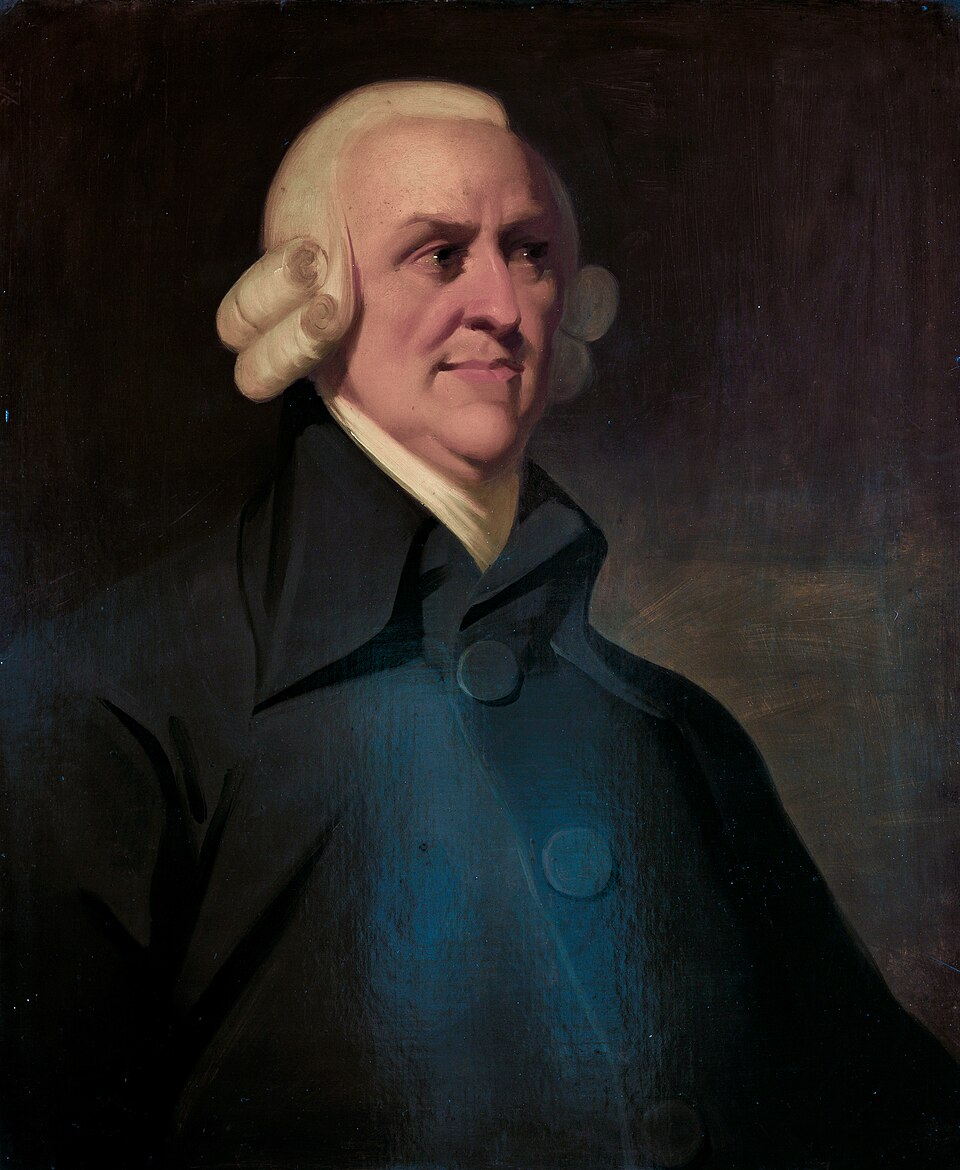
A statesman who spends more than thirty years in the legislature of a great commercial republic, becoming a prominent voice on war and peace and later a trusted ally of a powerful executive, presents the public with an awkward puzzle. His defenders speak of experience, steadiness, and national service; his detractors of opportunism, inconsistency, and devotion to party. Both sides, however, begin from their own faction, and each sees in the same actions either firmness or servility. If we are to judge such a career in a manner that would satisfy a well-informed and impartial spectator, we must step back from the party shout, and examine the incentives under which he acted and the interests to which he habitually inclined.
When I wrote of the butcher, the brewer, and the baker in my inquiry into the causes of national wealth, I meant to show that we live by one another’s self-love, not by expecting constant benevolence. Politicians are not exempt from this common lot. A man who rises from local office to Congress, serves decade after decade, manages a president’s trial in one year and defends that president’s antagonist in another, and finally becomes a conspicuous ally of a later executive, does not cease to be moved by his own interest when he enters the chamber. He seeks reputation, influence, and the continuance of his employment; he must court his constituents, respect his party, and anticipate his rivals. The question is not whether he is self-interested, but whether his interest is bounded by justice and harnessed to the public good.
Foreign policy offers the most flattering theatre for such ambition. To be one of the nation’s most prominent voices on the affairs of Iraq and of other distant regions is to speak in the name of security, honour, and humanity, while distributing the costs among soldiers, taxpayers, and future generations who have no lobby at court. In domestic quarrels, the injured often appear in person; in foreign adventures, the labouring poor who will pay in blood and taxes are silent. Here the temptation is strong to confuse the grandeur of the stage with the wisdom of the play. A legislature may be lavish with other people’s money and other people’s lives, while praising itself as the stern guardian of national greatness.
In my moral work, I argued that we judge ourselves, if we are wise, by imagining the eyes of an impartial spectator who is well informed yet indifferent to our petty honours. Let us lend that spectator to the statesman who fiercely defends a judicial nominee against grave accusations, or who manages the impeachment trial of an earlier president with sharp, plainspoken zeal. The spectator would ask less whether the speeches pleased one’s party, and more whether they upheld the calm administration of justice: were the weak protected against the strong, were accusations weighed without terror or favour, were institutions strengthened rather than bent to a passing necessity? Praise shouted in a partisan hall is a poor substitute for praise-worthiness in that quieter tribunal.
I learned to look with the most suspicious attention upon meetings of merchants, who seldom gather without contriving some advantage to themselves at the public’s expense. Legislators and party strategists, when they meet to plan the succession to an aged office-holder or to ensure that a governor’s appointment will “continue the work” of a departed senator, are not of a different species. Their bias is likewise structural rather than diabolical: they naturally prefer incumbency to competition, continuity to accountability, the ease of dealing with a known ally to the risk of a truly independent mind. When the same circle arranges trials, nominations, and successions, the impartial spectator must ask whether the public interest is being served, or whether we witness only a more decorous conspiracy against the public.
Yet we must acknowledge that the state has duties which cannot be left to private adventurers. The defence of the country, the exact administration of justice, and certain great works of legislation—such as the ordering of the courts or the general framework of foreign alliances—require settled institutions and experienced hands. A long-serving legislator who labours, with some constancy, to render these functions more predictable, less arbitrary, and more intelligible to the common citizen, performs a real service. The same tenure, however, when used to entrench a narrow faction, to shield mistakes in war from scrutiny, or to turn judicial appointments into mere spoils of victory, becomes an instrument by which the few write their preferences into the lives of the many without bearing the cost.
From the few particulars before us, we cannot trace every line of benefit or mischief in such a career; we see the visible honours, not the counterfactual errors avoided or the quieter injustices permitted. What we can say is that the true measure of any statesman is found neither in loyalty to successive leaders, nor in the volume of his televised indignation, but in how far his self-interest, operating within the rules of justice, has increased the security, the freedom, and the annual produce of the land and labour of the whole people, and especially of the labouring poor who seldom appear in the broadcast. By that standard, every long career in high office is a question still put to the conscience of its author.
From the works cited
- An Inquiry into the Nature and Causes of the Wealth of Nations — Exchange driven by self-love, not benevolence, coordinates millions of strangers without central direction — the invisible-hand result, stated once and without mysticism.
- The Theory of Moral Sentiments — The impartial spectator internalized: we judge ourselves by imagining how a fair observer would see us, and self-command is the discipline of living under that gaze.