Trump Meets Zelensky and Netanyahu Ahead of Senator Lindsey Graham's Funeral
Shielding Power from Judgment Is Not Diplomacy but Usurpation
When a ruler promises that an ally under international warrant will “not be arrested, in any way, shape, or form,” he does not practice statecraft; he suspends the very law on which just government rests.
That a funeral should be the stage for such weighty dealings is itself instructive. In Washington, as leaders gather to honour a senator celebrated for his zeal in foreign wars, the sitting president meets first with Ukraine’s Zelensky, then with Israel’s Netanyahu, before proceeding to the ceremony. Around them lies an ongoing war with Iran that began in February, fresh tensions with that state, continuing conflict between Israel and Lebanon, and attacks by Ukraine on a Russian vessel aiding Iran. This is not mere condolence traffic. It is the concentrated exercise of power touching many nations’ lives, liberties, and estates, under the colour of friendship and mourning, yet aimed squarely at war and peace.
I am told further that an international court has issued a warrant for Mr. Netanyahu’s arrest, that a city official has publicly called him a war criminal, and that this official acknowledges he lacks the authority to detain him, though he says federal officers possess it. Into this already tangled web, the president has written that Netanyahu will “not be arrested, in any way, shape, or form, while in the United States of America,” adding praise of him as a fighter against Iran. Here, then, we have not only councils of war and intelligence-sharing about Tehran’s nuclear designs, but an express promise that one man shall be beyond arrest within this territory, whatever standing legal process elsewhere may say.
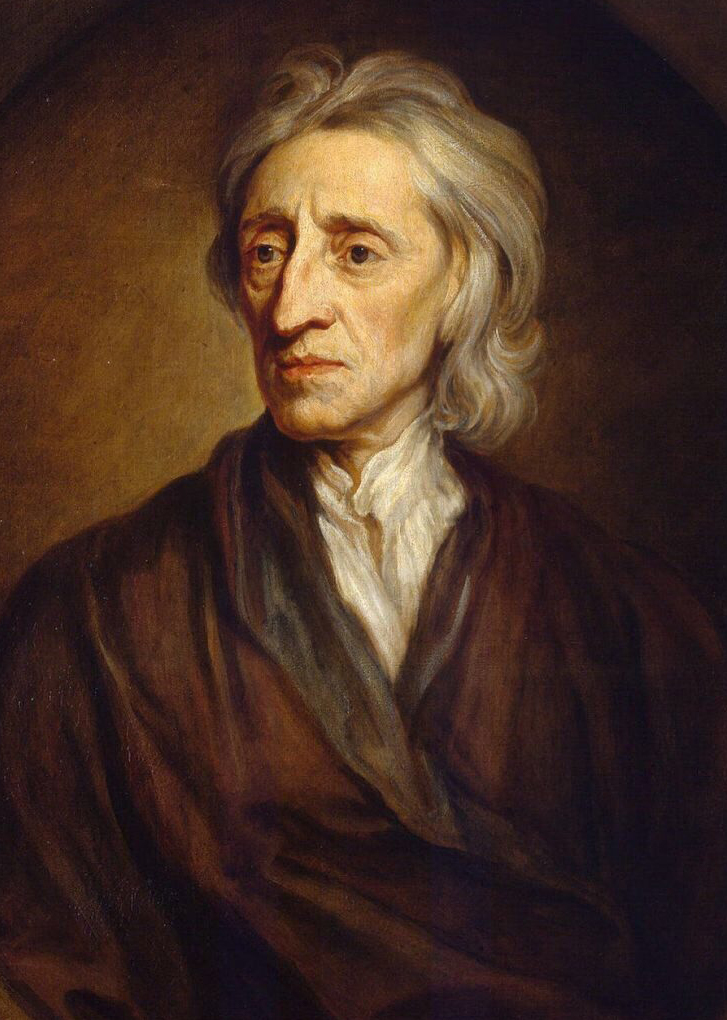
When I defined political power in the Second Treatise as the right of making laws, with penalties, only for the public good, I meant to distinguish such limited authority from any claim to rule by mere will. Government, if it is to be more than banded robbers, must proceed by known standing rules, applied by an impartial judge, not by sudden decrees that particular persons shall be touched or spared. Prerogative, I allowed, is a kind of discretionary power to act without, or even against, the letter of the law where the public good requires it and the law has not foreseen the case. But prerogative is held on trust, and remains legitimate only while the people may reasonably see that it is employed for their safety, and may revoke it when it ceases so to be.
In the act of promising that a specific ally “will not be arrested… in any way, shape, or form,” I see not ordinary execution of law, but something closer to that dangerous prerogative. The president sets himself, in effect, as judge in his own case: his judgment of Netanyahu’s cause and usefulness in the Iran war is made the measure of whether an international warrant shall bite within his jurisdiction. Perhaps the court abroad errs; perhaps the facts on which it proceeds are incomplete; perhaps the laws binding it are themselves unjust. All this may be debated. But to resolve the question, not by reasoned contestation before an impartial tribunal, but by a blanket assurance that no arrest will occur for reasons of favour and alliance, is to move from government by law toward government by personal will.
I do not deny that war with Iran, rockets across borders, and drones over cities create hard cases. States must sometimes keep dangerous men in office to restrain worse dangers; they must traffic with those whose hands are not clean; they must, on occasion, risk the niceties of procedure to preserve the lives of millions. I wrote, when I first discussed prerogative, that such power is most necessary where the law is silent and sudden peril presses. Yet necessity has ever been the plea of those who would enlarge their discretion without limit. The question is not whether leaders may depart from ordinary forms in extremity, but whether such departures are plainly aimed at the safety of all subject peoples, or at the convenience and impunity of a few.
In this Washington meeting I see two tracks. On the one hand, there are talks of missile defences for Ukraine, intelligence on Iran’s nuclear designs, and further arrangements with Lebanon. If these measures truly lessen the chance that men, women, and children—God’s workmanship, sent into the world about His business—will be slaughtered or enslaved, then, though I may question this or that stratagem, I recognise here the proper business of magistrates entrusted to secure their people in their civil interests. On the other hand, there is the promise that a man under judicial accusation shall walk secure from arrest because he is needed in these very counsels. That second track does not protect the innocent; it protects power from judgment.
When legislators or executives “endeavour to take away, and destroy the property of the people, or to reduce them to slavery under arbitrary power,” I argued in the Second Treatise, they thereby put themselves in a state of war with the people and dissolve the government’s authority in conscience, though its forms may linger. I do not say that one promise regarding one man amounts yet to such a long train of abuses. But it tends the same way: it teaches subjects that some stand above law when they are deemed useful; it instructs victims of war that their cries are less weighty than the convenience of great men; it habituates a nation to the notion that security requires shielding allies from any impartial judge. That is the seed of tyranny, and people would do well to mark where it is being planted.
uncertainty_note":"I write without the full evidence that any competent tribunal ought to have, and so I do not judge the guilt or innocence of the persons named, but only the dangerous principle that some may be promised impunity for the sake of power."}```
From the works cited
- Second Treatise of Government — Political power defined narrowly as the right to make laws, with penalties, only for the public good — anything beyond that definition must justify itself or stand condemned.
- Second Treatise of Government — Prerogative as revocable emergency discretion — legitimate exactly as long as the public visibly benefits and no longer.
- Second Treatise of Government — The dissolution of government and the right of resistance: when legislators invade property or set up arbitrary power, they rebel against the people, not the people against them.