Trump Calls Off Iran Attack, Urges Last Chance for Deal Amid Strait of Hormuz Tensions
Gunboats at the Bottleneck of the World’s Oil
When the Strait of Hormuz becomes a chessboard for reputations, the labouring poor pay in dearer fuel for games they did not choose to play.
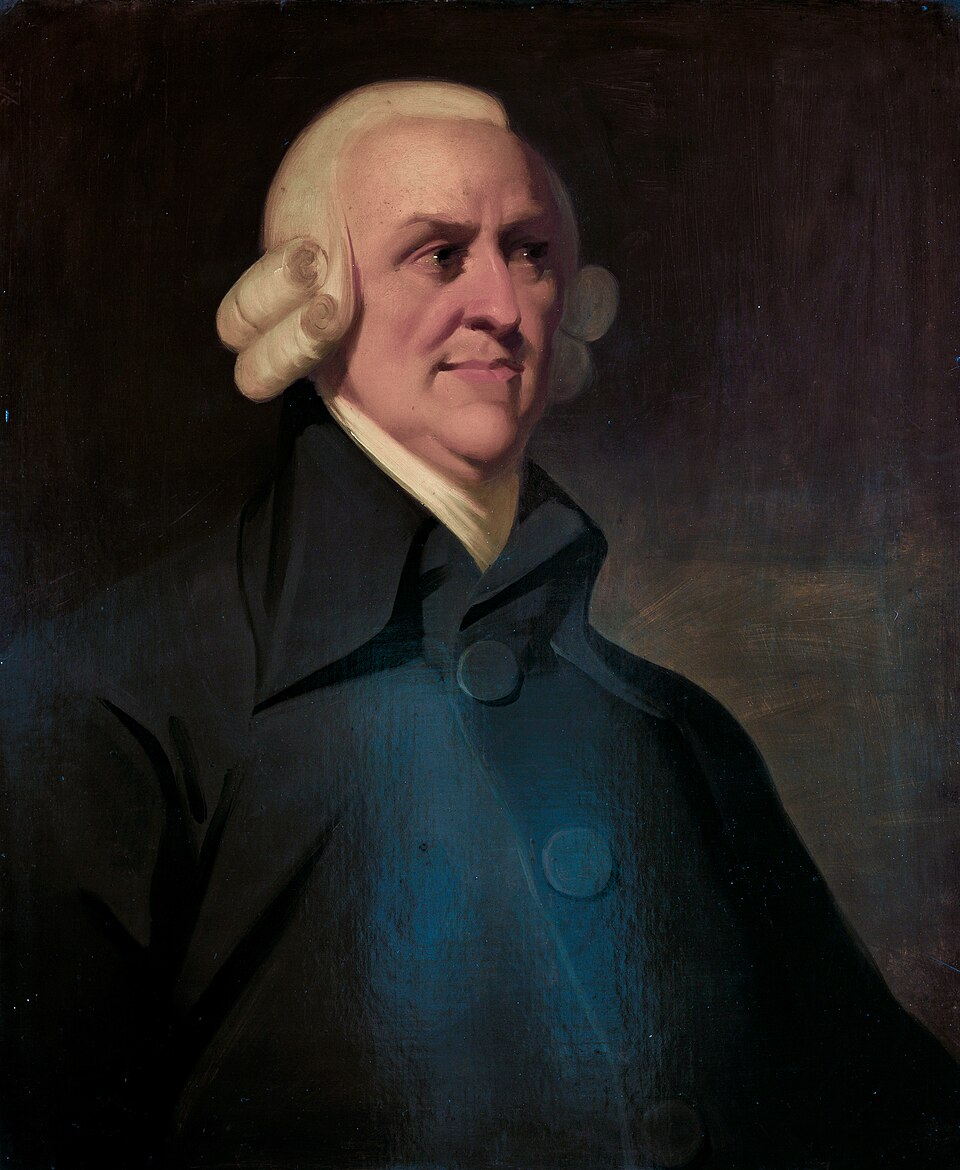
A single narrow strait now bears a burden once carried by many scattered markets. We are told that through this pass, in times of peace, goes about a fifth of the world’s oil. Over it, fleets manoeuvre, cargo ships report mysterious blows, and presidents speak of “walls of steel,” of “last chances,” and of attacks that would have been the greatest since the last great war. One government proclaims that it defends its borders but seeks not to widen the war; another calls off a vast assault and immediately names the reprieve a decapitation deferred. The theatre is grand, the language sanguinary, yet the persons most concerned are the least mentioned: those whose wages will buy less when the oil is dear.
When I wrote in "The Wealth of Nations" that the division of labour is limited by the extent of the market, I did not foresee oil-tankers, but I did understand straits and caravans. Where goods pass easily, occupations multiply, skill refines, and the natural progress of opulence extends to the lowest ranks. Where a pass is blocked, or even thought insecure, markets shrink into fearful fragments. The Strait of Hormuz is such a pass raised to the scale of the globe. To convert it from a highway into a contested toll-gate, fortified by blockades and counter-threats, is not merely a diplomatic adventure; it is an assault upon the intricate division of labour that feeds and warms the whole earth.
In every such quarrel the gains are concentrated and visible, while the losses are diffused and silent. A blockade, a threat to close the strait, or the credible fear of a colossal attack will raise the expected cost of every barrel that ventures through. Insurance, freight, delay—each adds a small, almost invisible increment. The beneficiaries are few: certain producers who enjoy higher prices; certain contractors who furnish the means of coercion; certain rulers who hope that martial posture will purchase them domestic applause. The paymasters are many: every artisan who must heat his dwelling, every carrier who must fuel his lorry, every consumer whose scanty wages stretch less far. It is other people’s money that lubricates these displays of resolution.
In my time I warned that people of the same trade seldom meet without the conversation ending in some contrivance to raise prices. Here the trades are more exalted, but the principle is not altered. When strategists and interested merchants consider a “new deal” that would, as we are told, lock in one power’s leverage over the strait, when another power mantles its blockade in the language of security, we ought to regard the whole with the most suspicious attention. Each party represents its own project as necessary to safety or honour; each neglects to mention that reduced competition over a chokepoint is, in effect, a conspiracy against the public, exacted in the coin of higher prices and narrower markets.
Yet I am no enemy to defence. In "The Wealth of Nations" I allowed that the first duty of the sovereign is to protect the society from violence and invasion. A state that faces attack upon its ports may justly arm; a state whose shipping is struck by unknown projectiles may justly guard its convoys. But between defence and dominion there lies a wide field of temptation. To transform a right of self-preservation into a claim to regulate every passage through a shared sea, or to treat a momentary advantage as a title to permanent control, is to pass from justice to what I once called the vile maxim of the masters of mankind—all for ourselves, and nothing for other people.
Viewed from the perspective of the impartial spectator, the tone of this crisis is as troubling as its substance. One leader speaks of giving an adversary “every last chance before decapitation”; another insists it will not widen the war while retaining leverage over the channel on which others depend. The language is that of gamblers and stage-players, not of trustees of great peoples. In "The Theory of Moral Sentiments" I observed how ambition deceives us, persuading us that the possession of power and pre-eminence will bring a felicity it rarely bestows. The spectacle of statesmen threatening ruin to gain a more agreeable bargain over a strait is only the old poor man’s son writ large: toiling all his life for a splendid toy that, once attained, brings more anxiety than content.
It may be counted a blessing that seven billion dollars, which might have been consumed in a single enormous blow, are for the moment unspent. To leave resources in the hands of taxpayers and traders is often wiser than to throw them away in fireworks over distant harbours. But parsimony in bombs is not enough. What is required is a resolute abandonment of the man-of-system’s dream that the great chess-board of human society can be arranged by fleets and ultimatums. The strait will be truly secure, not when one power commands it by blockade, nor when another claims it by right of neighbourhood, but when all who trade through it are bound, by mutual interest and regular justice, to let the invisible hand of commerce, rather than the visible fist of war, direct its use.
In these matters what remains most uncertain to me is how far the declared aim of defence masks, or yields to, the quieter interests of those who profit from scarcity and fear.
From the works cited
- An Inquiry into the Nature and Causes of the Wealth of Nations — The division of labour limited by the extent of the market: peace and open trade deepen specialization and enrich; fragmentation impoverishes.
- An Inquiry into the Nature and Causes of the Wealth of Nations — Trace every policy to its effect on prices and identify the unseen cost-bearers; suspect merchant petitions that narrow competition or impose costs on consumers.
- The Theory of Moral Sentiments — Judge conduct by the impartial spectator; ambition deceives and can drive industry but rarely delivers contentment; beware the man of system who ignores the independent motion of social pieces.