New Mexico Court Orders Meta to Pay $567 Million Over Youth Harms
Meta’s Power Over Children Is Not Commerce. It Is Usurpation.
When a company designs its platforms so that harm to children is no accident but a feature, it ceases to trade under law and begins to rule without consent — and must be resisted as such.
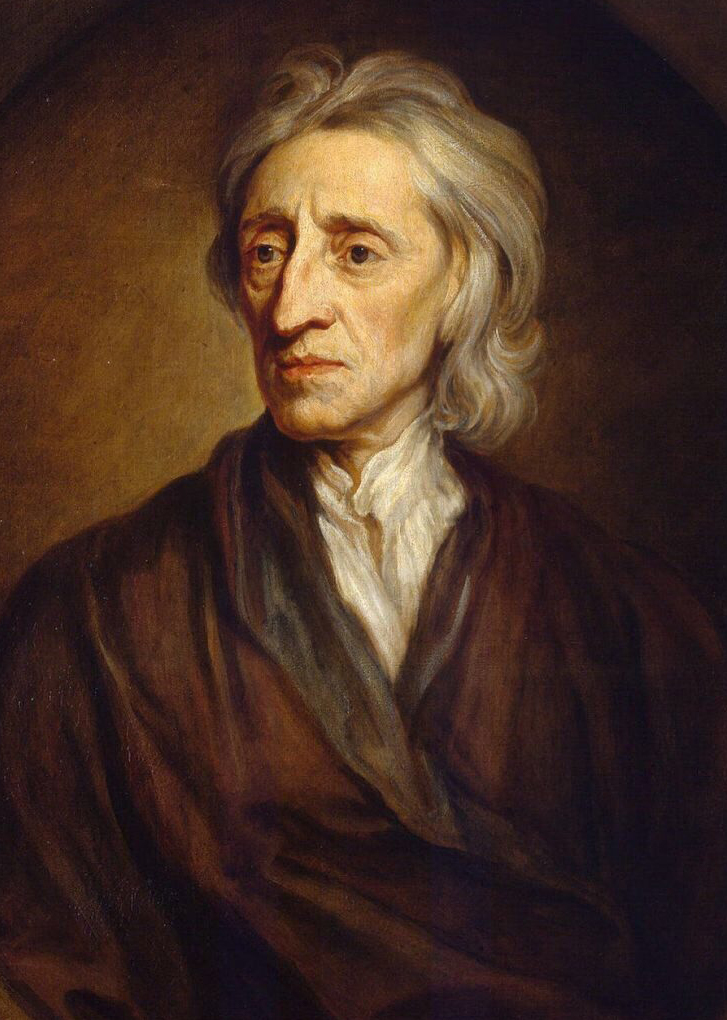
A judge in New Mexico has called Meta’s social media platforms a “public nuisance” akin to air pollution, and ordered the company to pay $567 million, most of it to treat harms already suffered by young people and to reduce future harms. The state’s attorney general declares that this sends a message: companies will be held accountable when their product designs knowingly put children at risk. Meta, for its part, protests confidence in its record of protecting teens and promises to defend itself against claims that, it says, misrepresent the facts. I do not sit to weigh the evidence in that particular trial. I ask a prior question: what kind of power over children is this, and on what terms can it ever be rightful?
When I wrote the *Second Treatise of Government*, I defined political power, in paraphrase, as the right to make laws with penalties of death and less, only for the public good. Men leave the state of nature and consent to such power, not to be more exposed, but to have their lives, liberties, and estates the better secured. If a power, though clothed as private and commercial, in truth orders men’s conduct, shapes their attention, and touches their health, then in substance it is political. It must justify itself by consent and by fidelity to that end of preservation, or stand condemned as usurpation, whether it be wielded by a prince, a senate, or a corporation.
Here, by the court’s finding as reported, Meta’s platforms have contributed to a youth mental health crisis by designs that addict children, and have thereby caused harms serious enough to require hundreds of millions for treatment. The judge likens this to poisoned air; the attorney general speaks of knowingly putting children at risk. Now the law of nature, which is no more than reason rightly considered, teaches that no one ought to harm another in his life, health, liberty, or possessions. Children, as the workmanship of one Maker, are under a special protection; they have not yet that full use of reason by which they can bargain for themselves. To make their weakness an instrument of gain is not clever commerce. It is a direct violation of that law.
I know it will be said that no one forced these young people to use the platforms; that their parents could have intervened; that messages and images are not shackles and chains. Yet in every age those who exercise power have wrapped it in the language of choice. A man who must accept corrupt money or starve is, in one sense, free, yet his need is used against him. So with children formed in a world where social connection, amusement, and esteem are channeled through a few vast platforms that study their every motion. When design aims at addiction, the talk of mere option rings hollow. Such power comes close to making itself judge in its own case: it plans the snare, declares it harmless, and grows rich on the caught.
Nor is there, within such a company, any true standing law or impartial judge for those it harms. Its rules are devised, interpreted, and altered by itself, according to reasons that need never be plainly given to those who suffer under them. This is that absolute, arbitrary power which, as I argued long ago, is worse than the state of nature it pretends to civilize. In the state of nature a man at least knows he must trust his own virtue and his neighbors’ fear of retaliation. Here, children face a hidden art of persuasion, without knowledge, without real consent, and without a tribunal of their own choosing. Where law ends, I wrote, tyranny begins; so too where code and secret design rule without appeal.
Against such power the intervention of a court, if truly directed to the public good, is no usurpation but the exercise of a trust. The judge has ordered that $420 million be devoted to treatment services and that funds be set aside to lessen future harms; he has branded the conduct a public nuisance. This bears some likeness to what I once called prerogative: acting where the law is silent or defective for the safety of the people. Yet prerogative is tolerable only while it is plainly for that safety and remains answerable and revocable. If such judgments harden into a settled system where governments merely tax corporate harms and grow dependent on the revenue, without changing the practices that poison minds, then the remedy itself may decay into complicity.
The deeper point is this: Meta’s authority over young users has not been conferred by free and equal persons for their preservation, but, on the allegations credited in this case, has been used to expose and exploit them. That is not power held on trust; it is, in the strict sense, usurpation. The first right of a people so treated is resistance by lawful means: suit in the courts, laws that restrain design that preys upon the weak, and a vigilant refusal to accept as inevitable that a handful of private actors should shape the inner lives of children. When such resistance is steady and principled, the appeal to heaven may yet be postponed.
From the works cited
- Second Treatise of Government — Political power defined narrowly as the right to make laws, with penalties, only for the public good — anything beyond that definition must justify itself or stand condemned.
- Second Treatise of Government — The law of nature — reason — binds everyone, rulers included: no one ought to harm another in his life, health, liberty, or possessions.
- Second Treatise of Government — Absolute arbitrary power is worse than the state of nature it claims to cure. Judge any concentration of discretion — executive, corporate, algorithmic — by whether it leaves those subject to it a known standing law and an impartial judge, or makes the powerful judge in their own case.