Iran and Oman Near Agreement on Strait of Hormuz Route Amid U.S. Demands
No State May Hold the Strait of Hormuz Hostage
When a single power conditions the world’s passage on obedience to its demands, it ceases to govern and begins to usurp, and those who depend on that passage are entitled to seek a new authority by consent.
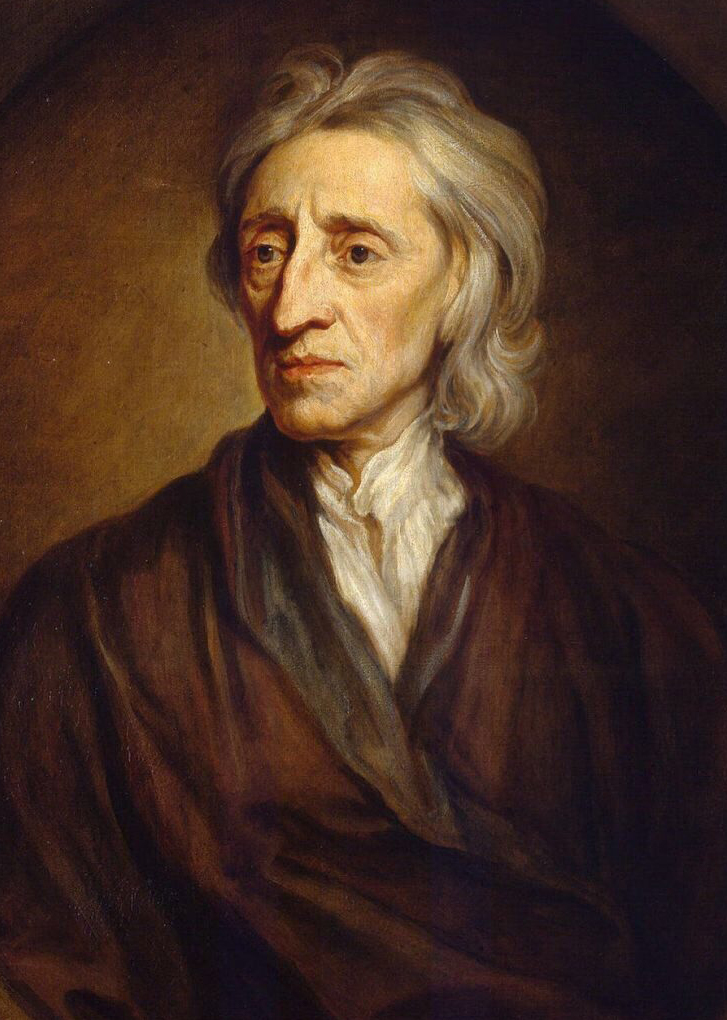
I read that the Strait of Hormuz, through which a great part of the world’s oil must pass, stands partially shut, not by storm or shipwreck, but by design. Iran, through its Supreme National Security Council and ministers, declares that the strait will not open until the United States “corrects its behavior,” and has published a list of demands as the price of renewed passage. At the same time, Iran and Oman labor toward a temporary arrangement, by which ships might enter by a lane near Iran and depart by one near Oman, an agreement said to be endorsed by neighboring states, by the United States, and even by a body of the United Nations concerned with maritime affairs. Men everywhere wait upon these conditions for their trade, their employment, and thus their very subsistence.
Here is power in its clearest form: not only over ships and cargoes, but over the lives, liberties, and estates of multitudes who will never see those waters. When I wrote the Second Treatise of Government, I defined political power, in paraphrase, as the right to make laws with penalties only for the public good. The first question, therefore, is simple: is this closure, and the conditional reopening, exercised for the public good of all who have a stake in that passage, or is it a means of bending one rival to the will of another? For the earth and the seas, though divided by jurisdiction, are given in common for the support of all God’s workmanship; no people may treat a vital passage as a private snare. Trade is not a favor one gives an enemy, but a natural means by which men preserve one another.
The present arrangement is described as temporary, with routes close to Iran and Oman, and with a joint announcement expected from several regional states, from the United States, and from an international maritime institution. This wears at first the face of consent and common counsel. Yet we are also told that reopening remains “subject to other conditions,” conveyed through intermediaries, and that Iran’s security council warns the strait will stay closed until its demands upon the United States are satisfied. Fees have been publicly discussed; other requirements have been sketched only in cursory appraisal. If power over the strait is exercised by clear, known rules, framed for safe passage and equal access, applied by an impartial judge, then it resembles a lawful government of that waterway. If, instead, each opening and closure turns upon contested political behavior elsewhere, adjudged by one party in its own cause, then it is not government but leverage.
Such leverage is a species of prerogative. In the Treatise I allowed that an executive might sometimes act without, and even against, the letter of standing law where sudden necessity required it and the public manifestly benefited, provided always that this discretionary power remain answerable to the community and revocable at their pleasure. I see here the language of emergency: talks in their final stages, tankers earlier attacked, ships lately struck by unknown projectiles, Omani warnings against further assaults, even a claimed strike by Yemen’s Houthis on facilities in Saudi Arabia. Where commerce sails under threat of force, some special ordering may indeed be needful. Yet prerogative that grows habitual, that ties every future voyage to the satisfaction of changing political demands, ceases to be a medicine and becomes a chronic disease. The question is not whether discretion is used, but whether those who suffer under it can see plainly that its aim is their safety, not their subjection.
I note with concern that the conditions laid upon reopening seem chiefly directed at one state, while the burdens of closure fall upon many who neither armed nor provoked. When a state says, in effect, that a great artery of the world’s trade will be pinched until its adversary “corrects its behavior,” it claims to sit as judge in its own case, and to make strangers pay the costs of its sentence. This would be dangerous enough, were the only harm delay and dearer freight; but where hostilities already burn in the region, where tankers are reportedly attacked and oil facilities struck by allied forces elsewhere, a long train of abuses and retaliations grows, in which each side pleads prior injury and no impartial tribunal appears. Here the law of nature, which commands that no man “ought to harm another in his life, health, liberty, or possessions” (as I there argued), is daily put at hazard.
What, then, may those do who are neither Iran nor the United States, yet depend upon that passage for their daily bread? I do not say that every closure of a strait justifies resistance; men must bear many inconveniences before they appeal to heaven. But when a critical passage, by which innumerable innocents sustain themselves, is made an instrument in disputes that are not theirs, and when the rules of use shift with the temper and advantage of one or a few powers, the authority so exercised loses the character of a trust and approaches usurpation. The dissolution of a particular arrangement for governing the strait would not dissolve human society in those regions; merchants and states could, and should, combine to erect some new fiduciary authority, limited to securing navigation and collecting only such moderate and transparent dues as are necessary for that end.
In all this, I am less concerned with the names of the present actors than with the maxim their conduct, if indulged, would establish for future ages. If one side may shut the door of a common sea until its antagonist has “corrected” itself to the victor’s liking, then every narrow waterway in the world becomes a hostage, and every coastal people a potential jailer. Better, I think, that states now agree in plain terms that such straits are to be governed as a kind of shared trust, by rules consented to by all whose trade passes there, than that they should, by silence, assent to a precedent that makes arbitrary power more tolerable than the state of nature itself. A world that accepts hostages at sea will soon find itself learning to live without law on land.
From the works cited
- Second Treatise of Government — Political power defined narrowly as the right to make laws, with penalties, only for the public good — anything beyond that definition must justify itself or stand condemned.
- Second Treatise of Government — The state of nature as analytic baseline: perfect freedom and equality under the law of nature, so that government must be shown to improve on that baseline for everyone who leaves it.
- Second Treatise of Government — Prerogative as revocable emergency discretion — legitimate exactly as long as the public visibly benefits and no longer.