Iran Sets Conditions for Reopening Strait of Hormuz Amid Ceasefire Talks
Closing the Strait, Taxing the World
When a single waterway becomes hostage to maximal demands and punitive sanctions, the price is paid not by statesmen at the table but by the labouring poor far from it.
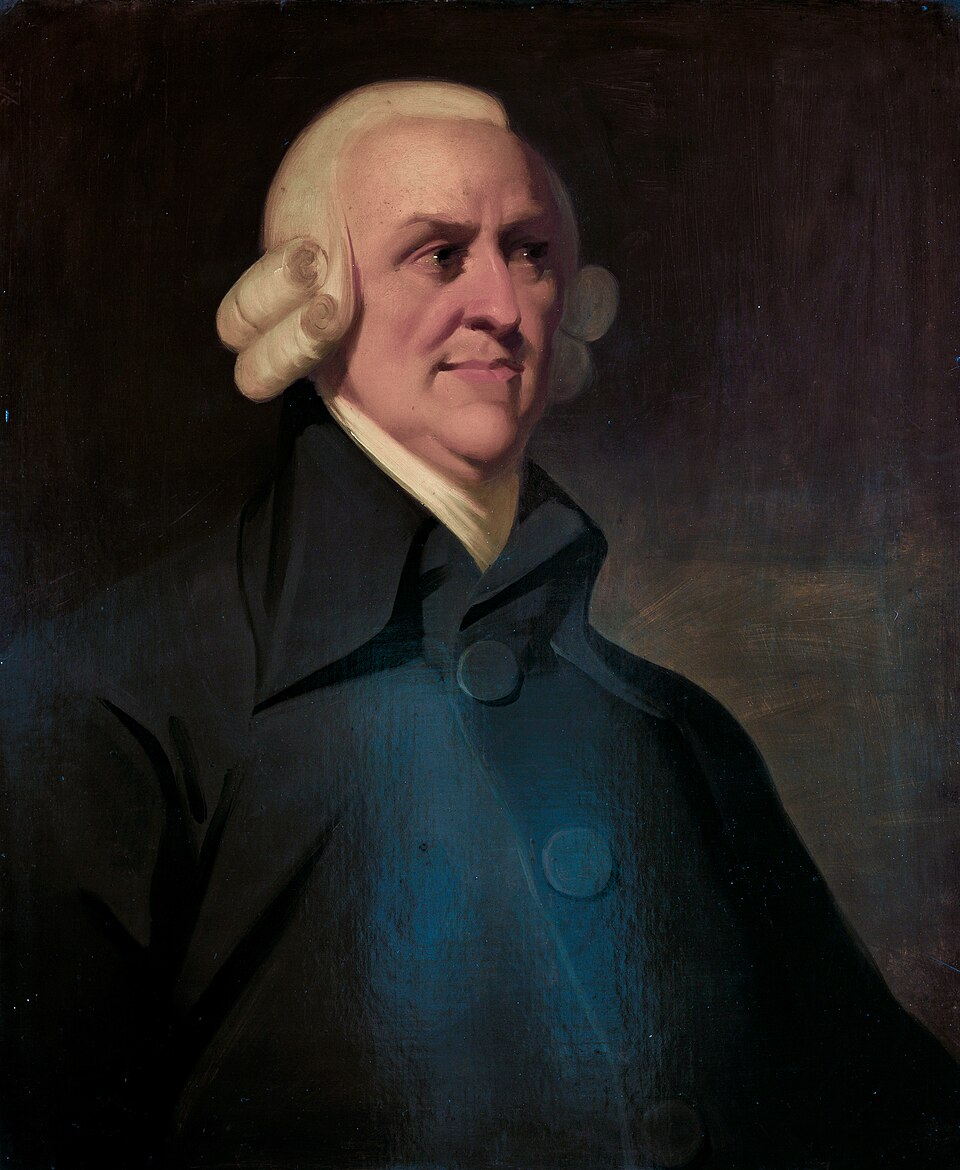
We are told that the reopening of the Strait of Hormuz, a principal passage for the world’s oil, is made contingent on a catalogue of conditions. The government of the United States is asked to compensate for alleged violations of an interim memorandum, to lift sanctions and a naval blockade, to “completely compensate” war damages, to release frozen assets without condition, and to cease all attacks on Iran’s allies. At the same time, that government has bound its own hands, declaring that sanctions will only disappear upon a broader agreement touching nuclear designs. Each party thus piles preconditions upon preconditions, and the Strait remains shut while the negotiators perfect their virtue.
In my Inquiry into the Nature and Causes of the Wealth of Nations, I urged that we trace every regulation to its effect upon prices, and then ask who bears the burden that is never mentioned in the proclamation. Here the burden of sanctions and blockades falls, in the first instance, on ordinary Iranians and on distant consumers who find fuel dearer, transport costlier, and employment less secure. The political benefit, by contrast, is concentrated in a few hands: officials who enjoy the credit of firmness, factions that thrive upon foreign enmity, commercial interests elsewhere that profit from constrained supply. To dress such measures in the language of security or justice, while their true operation is to tax the many for the theatre of the few, is a familiar hypocrisy.
Yet those now demanding the Strait’s reopening on their own terms are not exempt from similar scrutiny. When leaders insist on total compensation, unconditional unfreezing of assets, and a complete end to attacks on all their allies before a vital waterway may again carry trade, we must again ask: who truly benefits from the continued closure? Some among the governing and military classes may find their authority burnished by defiance; some domestic producers may enjoy high protected prices while imports are choked off. In Wealth of Nations I remarked that people of the same trade seldom meet without contriving some advantage against the public. The same unlovely maxim operates when men of power on each side treat the Strait as a bargaining chip rather than a common highway of mankind.
The economic mischief is not a matter of curiosity but of principle. The division of labour, as I once illustrated by the humble pin‑factory, is limited by the extent of the market. To interrupt, even temporarily, a key passage through which energy is conveyed to many nations is to shrink that market, to tear up the delicate threads that connect distant industries, and to lower the productive powers of labour everywhere. Ships idle, refineries slow, carriers raise their charges; and, in time, wages feel the chill, not in councils of state but in workshops and kitchens. The natural progress of opulence, which depends on secure, cheap, and predictable carriage, cannot but be thrown backwards by the deliberate strangling of a strait.
Nor should we flatter ourselves that this unhappy stand‑off can be ended by mere exhortation to virtue. In The Theory of Moral Sentiments I argued that men are not devils, but they are not angels either; self‑love must be guided, not abolished. A settlement that supposes either government will sacrifice what it counts as security, honour, or domestic credit, out of pure benevolence, will never emerge from paper. The wiser course is to align interest with justice: to reopen the Strait swiftly under arrangements that credibly protect each side from immediate injury, while leaving the larger catalogue of claims—compensation, assets, alliances—to slower negotiation. When self‑interest operates within decent rules, it can be led, like an invisible hand, to secure the peace of merchants and the bread of labourers.
Over all this the impartial spectator—the well‑informed but disinterested observer I described in my moral work—would pass a sober judgment. He would acknowledge that injuries have been given and received, that states have duties of defence and cannot be summoned to bare‑headed trust. Yet he would also see that to condition the daily livelihoods of millions upon the perfection of a comprehensive settlement is to sacrifice the innocent to the quarrels of the great. The man of system imagines he can remake the politics of an entire region through a grand design of sanctions, blockades, and total demands; he forgets that each people moves by its own principles, and that peace more often proceeds from modest, well‑timed concessions than from theatrical ultimatums. When a strait is closed for want of such modesty, the world is made poorer, and no nation is truly made great.
From the works cited
- An Inquiry into the Nature and Causes of the Wealth of Nations — The division of labour (the pin factory) as the engine of opulence, limited by the extent of the market.
- An Inquiry into the Nature and Causes of the Wealth of Nations — Trace every policy to its effect on the price system and ask who bears the unseen cost: benefits are visible and concentrated, costs are diffuse and quiet.
- The Theory of Moral Sentiments — Judge conduct by the impartial spectator: what would a well-informed, disinterested observer feel about this action? Praise-worthiness matters more than praise; to be loved without being lovely is worth nothing, and to be blamed unjustly stings less than to deserve blame.