Nevada judge dismisses criminal case against 2020 election 'fake electors'
Why Acquitting the ‘Fake Electors’ May Still Protect Your Liberty
When evidence fails, disappointment is no argument for turning criminal law into a weapon of politics.
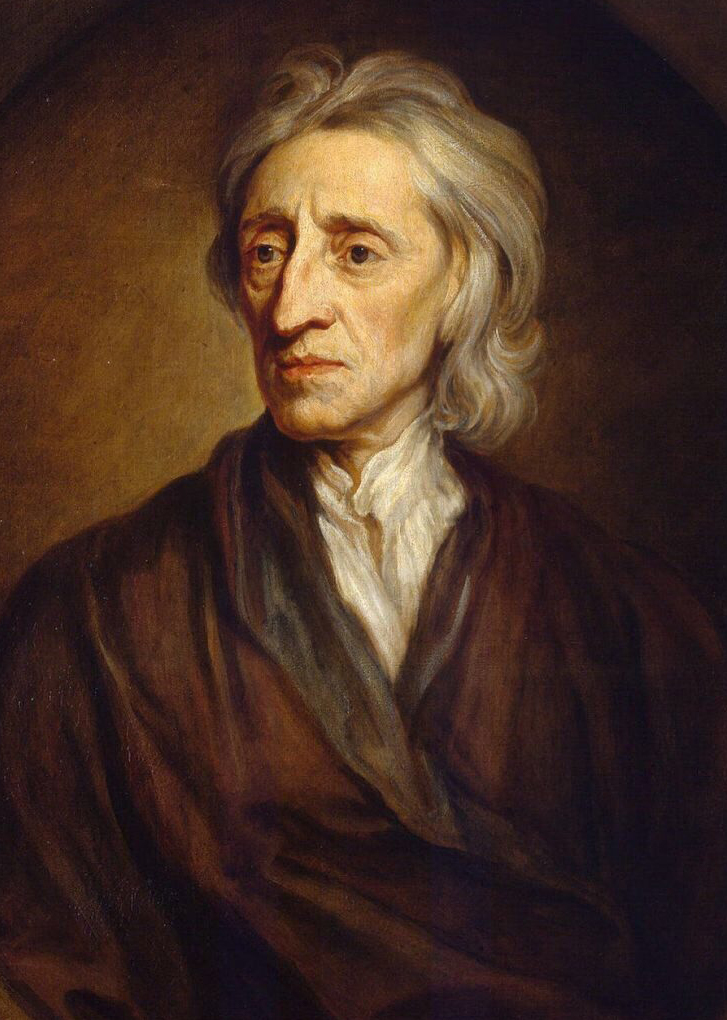
I begin from what is public and undisputed. In Nevada, six persons, described as Republican electors, gathered outside the legislature after the 2020 election and signed a certificate purporting to give that state’s electoral votes to one candidate, though another had prevailed there by more than thirty thousand votes. The magistrate, Judge Mary Kay Holthus, has now dismissed the criminal charges against them, affirming that the evidence did not suffice to prove the offences alleged. Similar cases in other states, I am told, have likewise been dismissed. Many take these acquittals as an outrage, others as a vindication. I see in them, first and chiefly, a test of what we mean by government under law.
When I wrote the “Second Treatise of Government,” I defined political power as the right to make laws with penalties, only for the public good, and only by consent. That definition still serves. Men are naturally free and equal; any claim to rule them is a claim to bind their lives, liberties, and estates. Such a claim must be justified, or it is mere force. Now the whole contrivance of electors, certificates, and the like is adopted to make the public will knowable and settled, so that no man need live under the private will of another. To falsify that process, if such falsification be proved, is therefore no small matter; it tends to subject the people to a power they did not choose.
Here, however, the judge’s ruling did not pronounce the act just; it pronounced the proof insufficient. That distinction is the hinge of the question. In my “Essay Concerning Human Understanding” I urged that assent ought to be proportioned to the evidence, and that believing beyond one’s proofs is a failure of intellectual duty. The same holds for punishing. To inflict criminal penalties is to touch men in their property in the broad sense: their bodies, reputations, and fortunes. Such power, being the most terrible edge of the law, is held on the strictest trust. It may be exercised only when a known law, clearly applied to clear facts, leaves an impartial judge no reasonable doubt.
Some will say that where an election has been openly won by one person, and others yet sign a contrary certificate, the harm is manifest and the malice plain. If so, they ask, why should a want of technical sufficiency in the evidence protect the offenders? The question has force, but it conceals a danger. For if we once allow the magistrate to punish where the public anger is strong but the proofs are weak, we invite that magistrate to become a judge in his own case, and in the case of his friends. Today he punishes those who sign a false certificate; tomorrow he may punish those who merely question the certificate he prefers. The same looseness of proof that secures your vengeance this year may secure your subjection the next.
I would have it clearly understood: I do not here defend the wisdom or integrity of the electors’ conduct; I know too little of their motives and of the surrounding circumstances to judge their hearts. I judge only the relation between their acts, as described, and the legitimate reach of criminal law. If there was a statute plainly forbidding such a certificate on pain of punishment, and facts plainly establishing that offence, then to decline punishment out of favour to the persons would be corruption and a breach of trust. But where an impartial judge, applying the standing law, finds the proof wanting, to insist that she must punish still is to demand that she exercise arbitrary power, and that is more dangerous to the people than the unpunished folly of six men.
Nor do I deny that a pattern of efforts to overturn declared election results may, if long pursued and everywhere successful, amount to a “long train of abuses” tending to subvert the very form of government. If those in possession of power should continually corrupt the electoral process, installing themselves without real consent, they would thereby, as I argued in the “Second Treatise,” rebel against the people, dissolve the government in effect, and forfeit their claim to obedience. But that grave conclusion belongs to cases where the evidence of design and repetition is strong, not to every disputed episode, and still less to prosecutions that cannot meet their own standard of proof.
The fear that acquittals such as this will embolden future mischief is understandable, but fear of disorder is no warrant for abandoning the safeguards that distinguish law from force. The dissolution of a particular prosecution is not the dissolution of society. A people remains at liberty to clarify its statutes, to tighten its electoral procedures, to secure its future against confusion, provided it does so without invading the natural rights of any man. What it must not do is reward its present alarm by teaching its rulers that suspicion is enough. From such lessons, history shows, republics do not easily recover.
From the works cited
- Second Treatise of Government — Political power defined narrowly as the right to make laws, with penalties, only for the public good — anything beyond that definition must justify itself or stand condemned.
- Second Treatise of Government — The dissolution of government and the right of resistance: when legislators invade property or set up arbitrary power, they rebel against the people, not the people against them.
- An Essay Concerning Human Understanding — Assent must be proportioned to the evidence; believing beyond one's proofs is a failure of duty, not a mark of faith.