Moroccan Police Detain Over 100 Migrants Near Ceuta Amid Heightened Border Security
Ceuta’s Hill of Tears: What a Border Crackdown Conceals
The arrests outside Ceuta show not a simple triumph of order over disorder, but a deeper failure to guide the motions of men whose labour could enrich the very societies that now turn them back with gas and batons.
On a hill a few kilometres from Ceuta, more than a hundred people gathered and were met, not by employers or customers, but by teargas. Moroccan police detained 111 persons near the town of Fnideq, most of them from sub‑Saharan Africa, while Spain, on its side, deployed some 1,500 officers and strengthened security, we are told, tenfold at the breakwater. Social media messages had called for a mass crossing on a particular day; the authorities, forewarned, announced prosecutions for organisers and participants alike. Here the spectacle is clear enough: a mass of poor strangers pushing towards a rich frontier, and two states answering, in concert, with a wall of disciplined force.
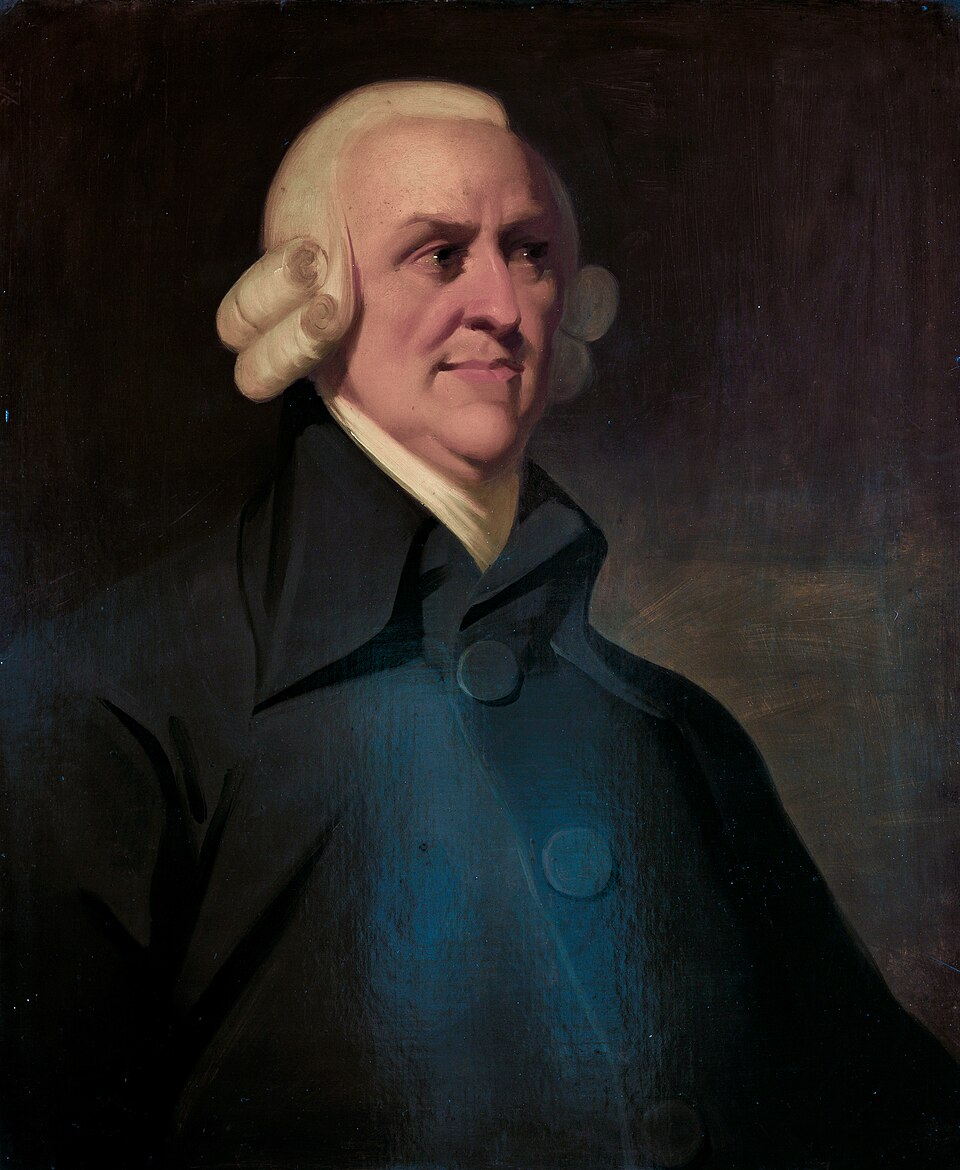
In The Theory of Moral Sentiments I described the poor man’s son, dazzled by visions of rank and opulence, who toils all his life for a happiness that forever recedes. These travellers from the south enact that parable with their feet. They cross deserts, pay smugglers, risk prison, for a life they imagine on the European shore; a life, perhaps, no more content than the peasant’s plot they abandoned, but brighter in its trappings. Their conduct is not mysterious: it is self‑interest under the most ordinary illusions, seeking higher wages, more security, and that false splendour which keeps the great machine of industry in motion.
The states on either side are also acting from interest, though of a cooler kind. When I wrote of the sovereign’s duties in The Wealth of Nations, I began with defence and the exact administration of justice. A border is, among other things, a line where these duties are exercised most visibly. To admit all comers without rule would be negligence; to maintain no barrier would be to abandon any distinct community at all. Spain and Morocco, in tightening security, do therefore something that belongs to government, and not, as some would have it, to mere caprice or cruelty.
Yet every such exertion of authority has its unseen payers. The cost to the detained is open enough: they lose liberty, suffer fear, perhaps bear the marks of gas and batons. But there is also a quieter cost to the societies that exclude them. In The Wealth of Nations I argued that the division of labour is limited by the extent of the market. Labourers who would gladly exchange their industry for European wages are instead left idle or underemployed elsewhere; employers who might have hired them must make do with fewer hands. The annual produce of the land and labour is thereby less than it might have been, though no ledger records the loss.
I am accustomed to suspect any regulation that serves as a merchant’s barrier against competition; but here the protection sought is not avowedly for a guild, a company, or a cartel. The language is of order, security, and the integrity of rules. Still, men of business are rarely slow to discover how such rules may profit them. If a tightened frontier keeps desperate workers from offering their labour, the effect may be to sustain higher wages for some, higher profits for others, and higher prices for all. A policy justified by fears of disorder may, in practice, resemble those conspiracies against the public which people of the same trade so often contrive.
The impartial spectator within us, if he attends carefully, feels a double movement here. He sympathises with the household in Ceuta that fears sudden crowds at its door, with the magistrate sworn to prevent another chaotic crossing, with the officer anxious to avoid deaths on the breakwater. But he cannot withhold fellow‑feeling from the migrant who has staked all he possesses on a chance of work, and finds instead a cell or a bus back inland. Praise‑worthiness lies not in embracing one party and execrating the other, but in seeking arrangements by which the natural desire of the poor to better their condition is rendered compatible with the natural desire of communities for safety and order.
What would such arrangements resemble? Not the grand plan of a man of system, who imagines he can fix, by proclamation, how many may move, where they shall work, and what passions they ought to feel. Rather, gradual reforms that widen the legal channels for labour to follow wages, that clarify who may enter and on what terms, and that strengthen those public works and institutions which help strangers become neighbours instead of permanent outsiders. When markets for labour are entirely shut, men do not cease to move; they merely move in the dark, where smugglers profit and tragedies multiply. It is a hard lesson of politics that exclusion seldom restores order for long.
This episode at Ceuta, then, is not merely a skirmish at a fence; it is a symptom of a wider disorder in the great commerce of nations. Large numbers of industrious people judge, rightly or wrongly, that their prospects are better elsewhere, while the societies they would join have not yet found institutions capable of admitting many without frightening many more. Until that labour can be drawn, by regular channels, into the service of increasing the annual produce of all, we shall see again the same melancholy procession: hope climbing the hill, and authority driving it back down with gas and shields.
From the works cited
- An Inquiry into the Nature and Causes of the Wealth of Nations — The division of labour is limited by the extent of the market: whatever widens the market — roads, ports, peace, cheap carriage, open trade — deepens specialization and enriches; whatever fragments it impoverishes.
- An Inquiry into the Nature and Causes of the Wealth of Nations — The sovereign's three duties (defence, justice, public works and institutions, including education for the common people) and the four maxims of taxation: equality, certainty, convenience, economy.
- The Theory of Moral Sentiments — The deception of ambition (the poor man's son): imagined happiness of the great drives industry while rarely delivering contentment — useful to nations, costly to souls.