Moroccan Police Detain Over 100 Migrants Near Ceuta Amid Heightened Border Security
Teargas at the Border Is Not a Substitute for Law
When 111 people are arrested and driven back from Ceuta under clouds of gas and ranks of officers, the question is not first what a border permits, but what free and equal persons can ever have consented to suffer there.
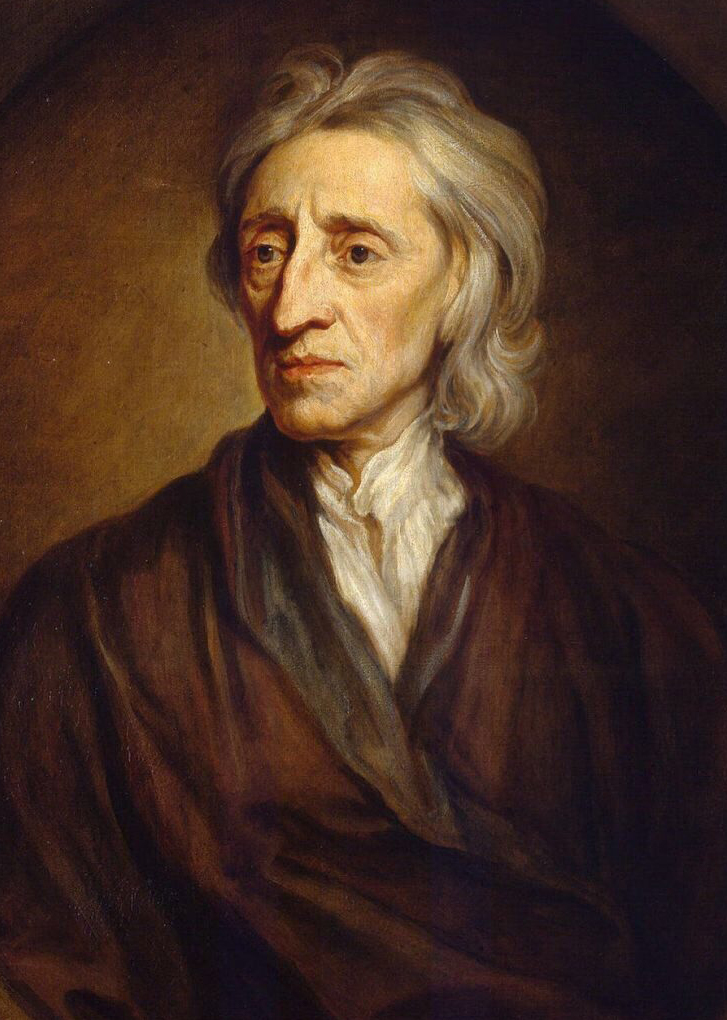
I begin from the only firm ground I know: every man and woman in this story, whether wearing a uniform in Ceuta or walking on the hills above Fnideq, is by nature free, equal, and independent. As I wrote in the Second Treatise, the state of nature is a condition of perfect freedom under a common law of reason. No one is born marked to command, none branded to obey. Whoever therefore claims a right to stop another, to bind his hands, to disperse him with teargas, or to confine him in detention, must show by what title this power was acquired, and that it is exercised only for the preservation of their lives, liberties, and estates.
In this affair, two authorities present themselves as bearers of such power. Moroccan police, acting around the town of Fnideq some three kilometres from the border, have arrested 111 persons, most of them from sub-Saharan Africa, and used teargas to disperse groups gathered on nearby hills. Spain, on its side, has reportedly deployed more than 1,500 officers to patrol the approaches to Ceuta, with security at a key entrance said to be “ten times stronger” than the previous day. Both kingdoms have tightened control after social media messages, of uncertain origin, called for a mass crossing on a fixed date. We are told as well that Morocco threatens to prosecute both organisers and participants.
I do not deny that political communities may mark out territories and regulate entry. Men leave the state of nature and join societies, as I argued when I wrote the Second Treatise, that they may enjoy their property in peace under settled rules and an impartial judge. Borders, like other civil contrivances, are defensible where they serve that end. But the same law of nature that allows a people to fence their fields forbids them to treat those outside the fence as if they had no rights at all. The migrant on the hillside, who has yet to set foot in Ceuta, has not thereby forfeited his life, his liberty of movement, or his few possessions. He is not cattle to be driven, but workmanship of the same Maker as any citizen.
We must therefore ask, first, by what known standing law these arrests and dispersals are governed; secondly, whether those laws aim at the public good of all concerned, including the vulnerable strangers whose bodies receive the gas; and, thirdly, whether impartial judges stand ready to hear their claims. On these heads the public reports are notably thin. We are told of tightened security, of increased numbers, of the intention of Spain’s interior authorities to deploy whatever personnel are needed to “restore normality”; we are told that Morocco will prosecute; yet we are not told what offences are charged, what procedures are followed, or how those detained may contest the force used upon them. To exercise coercion first and explain its rule and measure after is to invert the order of justification.
Some will answer that such rigour cannot be afforded at a border suddenly pressed by coordinated crossings, stirred up by anonymous messages. I do not make light of that difficulty. There is in every government a power, sometimes called prerogative, to act swiftly for the public safety where the law is silent, or even to strain the letter of the law in evident emergencies. But prerogative is a power held on trust. It is tolerable only while it demonstrably serves the public, remains open to review, and can be revoked. When authorities surround a frontier with a wall of men, tenfold strengthened from one day to the next, when they cast gas on crowds at a distance from the barrier and seize more than a hundred persons in a sweep, they approach that line where discretion ceases to be a remedy and becomes itself the danger.
I do not say from these scant reports that Morocco or Spain have yet dissolved their governments, or that a right of rebellion is here made out. For that I have always required a long train of abuses, a settled design to reduce a people to arbitrary power. We lack any such full history. It is possible that fair laws exist, proportionate to real threats; that magistrates on both sides try in good faith to keep order and protect lives. Yet the very obscurity is itself a warning sign. Where men are bound, gassed, or turned back in great numbers, and where almost nothing is said of warrants, hearings, or the particular dangers averted, power begins to look less like law and more like force.
My judgement, then, is cautious but plain. The migrants near Ceuta stand before Moroccan and Spanish authority not as invaders outside all moral consideration, but as persons whose natural rights travel with them. Any arrest, any cloud of teargas, any numerical show of strength “ten times” greater than the day before, must be justified to reason as truly necessary for the preservation of lives, liberties, and estates on all sides. Until the governments concerned can show that their measures rest on known laws, proportionate to proved dangers, administered by impartial judges rather than officers judging in their own case, their conduct at this border remains suspect, and its victims bear not the stain of illegality, but the marks of power too sure of itself.
From the works cited
- Second Treatise of Government — Political power defined narrowly as the right to make laws, with penalties, only for the public good — anything beyond that definition must justify itself or stand condemned.
- Second Treatise of Government — The state of nature as analytic baseline: perfect freedom and equality under the law of nature, so that government must be shown to improve on that baseline for everyone who leaves it.
- Second Treatise of Government — Absolute arbitrary power is worse than the state of nature it claims to cure. Judge any concentration of discretion — executive, corporate, algorithmic — by whether it leaves those subject to it a known standing law and an impartial judge, or makes the powerful judge in their own case.