UK Cancels September 2026 Military Exercise in Kenya Over Defence Agreement Disputes
When Soldiers Meet Sovereignty: Lessons from a Cancelled Exercise in Kenya
The suspension of British training in Kenya is not a diplomatic mishap but a market correction in the trade of power, law and respect.
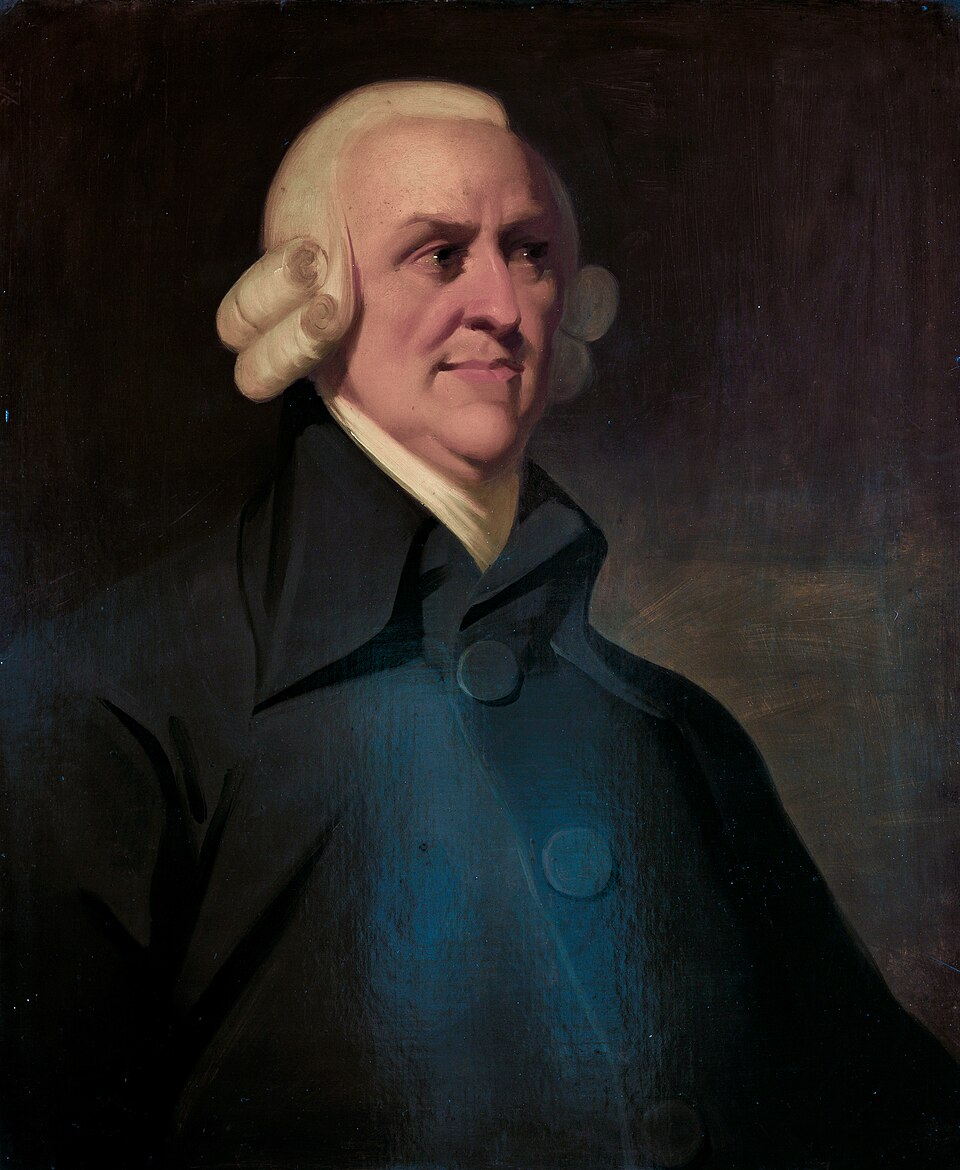
The cancellation of a British army exercise in Kenya, we are told, followed the failure to obtain the requisite approvals and rests upon disagreements about jurisdiction and money. On one level this is a narrowly professional dispute: whose courts shall try which soldiers, and what price shall be paid for the use of Kenyan soil. On another level, it is a revealing experiment in political economy. Here we see two states bargaining, not for cloth or corn, but for the terms on which armed men may act within a poorer country’s borders. The higgling of this particular market exposes what is usually concealed: that legal privilege, like any other favour, has a price, and that the buyer is no longer assured of a discount.
Both governments speak of mutual benefit, of security cooperation, of shared training. This is the visible side of the ledger, the part every statesman is eager to display. Yet, as I argued in my Inquiry into the Wealth of Nations, we must trace every policy to its effect upon the whole system of prices and incentives, and ask who bears the unseen cost. Here the unseen charges have been human: local resentment, allegations of human rights abuses, and a sense that foreign soldiers enjoy a species of extraterritorial impunity. The British ministry itself now “deeply regrets” the challenges that have arisen from its presence. When regret is this carefully phrased, the impartial spectator is entitled to suspect that the bill, long running, has finally fallen due.
In my Theory of Moral Sentiments I remarked that justice is the main pillar that upholds the whole edifice of society. If the host country’s parliament declares itself “uncomfortable with human rights abuses”, it signals not a delicate sentiment, but a perception that this pillar has been shaken. A legal arrangement by which some crimes are sheltered from local jurisdiction may be defended as necessary to discipline the troops, yet it is perceived, and understandably so, as a hierarchy of lives. The British authority insists it values respect and cooperation; the Kenyan legislators insist that respect must include the power to prosecute. Each appeals to justice; only one currently holds the key to the training ground.
Those who design such defence agreements are often tempted to play the man of system. They imagine that two governments may, by a comprehensive paper arrangement, fix for years the motion of thousands of soldiers, villagers, police, and lawyers; that training will proceed, money will flow, and any unfortunate incident will be smoothed over by a well-drafted clause. But, as I once wrote, the pieces upon the great chess-board of human society have a principle of motion of their own. Kenyan citizens have brought cases, local representatives have taken alarm, and the political price of a too-generous agreement has risen. The cancelled exercise is not a caprice; it is the recoil of injured parties whose motions were not accounted for in the plan.
There is, too, a plainer economic aspect. Military cooperation enlarges the market for both parties: one sells terrain and services, the other purchases realistic training and regional influence. According to the principle I set out when discussing the division of labour, whatever widens the market tends to enrich, whatever narrows it tends to impoverish. The British ministry openly laments the loss of local economic activity; labourers and small traders near the camp will feel this most keenly. Yet to buy opulence at the price of unequal justice is to trade present wages for future rancour. The natural progress of opulence cannot rest securely upon a foundation of grievances; the cheapest bargain today may be the dearest when the reckoning comes.
We should beware, in such matters, both the merchants of security and the merchants of indignation. When military establishments press for far-reaching immunities and favourable financial terms, they resemble the traders of my old acquaintance, whose meetings so often end in a conspiracy against the public. When politicians discover, rather late, a profitable rhetoric in denouncing abuses to which they had long consented, they too must be watched with the most suspicious attention. Yet there is a difference. To insist that foreign soldiers be answerable, at least in serious cases, to local law is not a monopoly privilege but a restraint upon it. If self-interest is to perform its coordinating office, it must operate under rules that the impartial spectator can recognise as minimally fair.
In Wealth of Nations I assigned to the sovereign three duties: defence, justice, and certain public works. Both countries here are attempting the first and rediscovering the second. Britain seeks to train its troops; Kenya seeks to ensure that those troops, when they err, do not stand above its citizens. The cancellation of one exercise is, in this light, a justified pause rather than a rupture. It is the system correcting an overconfident arrangement, a reminder that power rented is still power foreign, and that no partnership can be truly secure while one party doubts that its people will receive justice when wronged by the other’s armed men.
If this episode ends with a clearer allocation of jurisdiction, a fairer division of the economic gains, and a visible respect for Kenyan sovereignty, both nations will have lost a manoeuvre and gained a constitution. If it ends instead in petulance, with one side brandishing security and the other brandishing outrage, the real losers will be the labouring poor whose livelihoods and safety depend upon steady trade and honest law. The impartial spectator, looking on, would prefer fewer grand declarations of mutual esteem, and more contracts that can be read with a quiet conscience.
From the works cited
- An Inquiry into the Nature and Causes of the Wealth of Nations — The sovereign's three duties (defence, justice, public works and institutions) and the four maxims of taxation: equality, certainty, convenience, economy.
- An Inquiry into the Nature and Causes of the Wealth of Nations — The division of labour is limited by the extent of the market: whatever widens the market deepens specialization and enriches; whatever fragments it impoverishes.
- The Theory of Moral Sentiments — Judge conduct by the impartial spectator: what would a well-informed, disinterested observer feel about this action? Praise-worthiness matters more than praise; to be loved without being lovely is worth nothing, and to be blamed unjustly stings less than to deserve blame.