UK Cancels September 2026 Military Exercise in Kenya Over Defence Agreement Disputes
Britain’s Soldiers in Kenya, and the Limits of Borrowed Power
When foreign troops stand on another people’s soil under disputed laws and contested courts, the name for it is not partnership but usurpation, however politely framed.
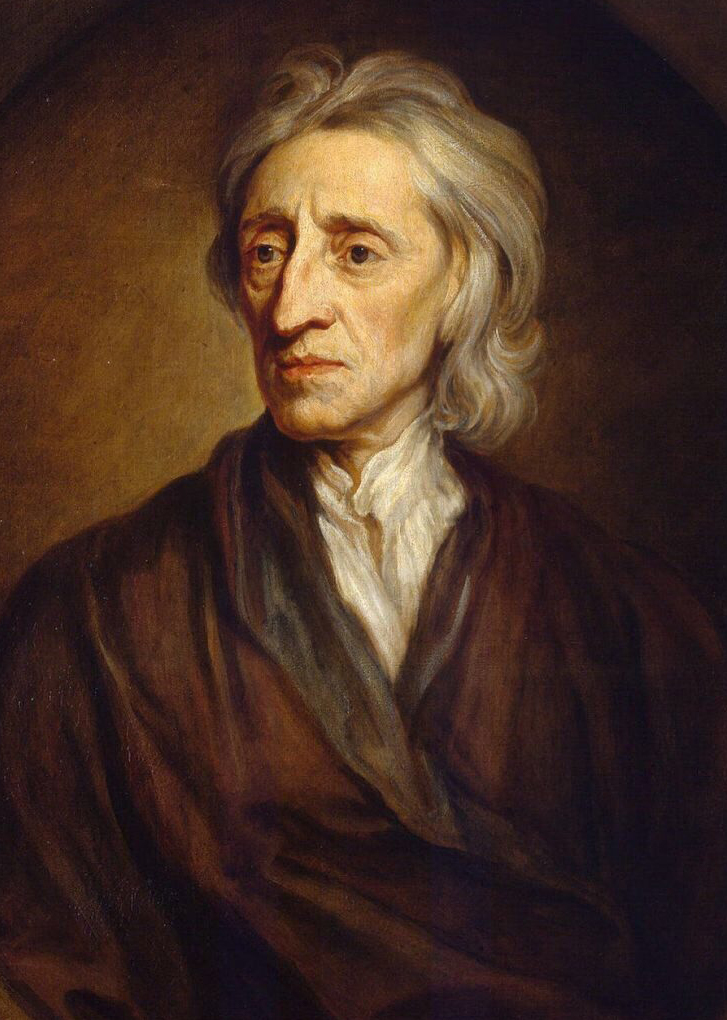
The cancelled training of British troops in Kenya, we are told, follows the Kenyan government’s refusal to ratify a defence agreement that would govern such exercises. At the heart of the quarrel lie funding and, more gravely, the question who shall have jurisdiction over criminal offences by British soldiers on Kenyan soil, with human rights abuses cited as a cause of public unease. Both governments profess mutual benefit, respect, and cooperation, and continue to “engage” about these outstanding issues. Yet the thing to be understood is simpler: when armed men are present in a country, under colour of law that its own representatives will not approve, political power has outrun consent, and trust is already broken.
When I wrote in the Second Treatise that men are by nature free, equal, and independent, I meant that no one is born subject to another’s will, but may only be bound by his own consent for the protection of his life, liberty, and estate. Civil power, I there argued, is nothing but the right to make laws, with penalties, for the public good; and anything that pretends to bind men beyond that end is no rightful government. Here the first inquiry is therefore not what sum of money is paid, nor what strategic advantage obtained, but whether the Kenyan people, by their own legislative organs, have placed such power in foreign hands for their safety, or whether it is assumed in spite of their scruples.
We hear that the Kenyan national assembly’s defence committee had reservations about the British presence, especially where “as a society, we are uncomfortable with human rights abuses.” We hear also that jurisdiction over offences is contested, and that in the absence of ratification, a scheduled exercise has been cancelled. This cancellation is not a minor inconvenience to trade, but the outward sign of an inward judgment: that the terms on which British soldiers would act and be judged in Kenya are not yet acceptable to those whose country it is. Where the legislative withholds assent, continued insistence on old arrangements ceases to be cooperation and becomes, in effect, a claim of right without consent.
In every society, the people’s great security lies in having a known standing law and an impartial judge, so that no man is a judge in his own case. I argued in the Second Treatise that where discretion is gathered up into hands not answerable to those who suffer under it, men are worse off than in the state of nature they left. A defence agreement that leaves Kenyans unsure whether serious wrongs by foreign soldiers will be tried by their own courts, under their own laws, or diverted elsewhere, does not give them a known standing law. It offers instead a patchwork of exceptions, in which the strong may appear to answer chiefly to themselves.
Some will reply that shared security requires such prerogatives, that foreign forces are there for joint training and regional stability, and that without indulgence over jurisdiction these goods may be lost. I grant that in emergencies, rulers must sometimes act with a latitude I have elsewhere called prerogative, even beyond the letter of the law, provided it is plainly for the public good and remains revocable. But wherever that prerogative entrenches itself, and asks a people to bear abuses in silence for fear of losing protection, it ceases to be a trust and becomes arbitrary power. Protection purchased by the surrender of the right to an impartial judge is a dear and dangerous bargain.
It is said that both sides desire to maintain their defence partnership, and that talks continue. This is well, so far as it goes. Yet the form of those talks matters. If the British side approaches them as a negotiation over price and convenience, rather than as an occasion to prove that every Kenyan, even when wronged by a foreign soldier, shall find justice at home under his own laws, then they mistake the very nature of political obligation. The burden of proof sits always on power, never on liberty. It is for those who wish to station troops in another’s territory, and to shield them from that people’s courts, to show that such an arrangement improves the condition of those who must live under it.
Where a government, foreign or domestic, cannot or will not give that assurance, and where a representative body, speaking for the people, withholds its ratification, the continued assertion of such powers is usurpation. The Kenyan authorities, by refusing approval and thereby halting the exercise, have not dissolved society nor courted anarchy; they have merely recalled a trust which, in their judgment, has not been faithfully managed. So long as questions of human rights abuses and contested jurisdiction remain unresolved, any British military presence in Kenya that presumes the old terms is power without right. And power without right always tends, sooner or later, to a long train of abuses.
From the works cited
- Second Treatise of Government — Political power defined narrowly as the right to make laws, with penalties, only for the public good — anything beyond that definition must justify itself or stand condemned.
- Second Treatise of Government — The state of nature as analytic baseline: perfect freedom and equality under the law of nature, so that government must be shown to improve on that baseline for everyone who leaves it.
- Second Treatise of Government — Absolute arbitrary power is worse than the state of nature it claims to cure; judge any concentration of discretion by whether it leaves those subject to it a known standing law and an impartial judge.