Senate Republican Cautions Trump on Delaying Todd Blanche Nomination
The Attorney General as Chess Piece
When rulers threaten to delay justice for tactical advantage, they treat a great office as a bargaining counter, and discover too late that the other pieces move of themselves.
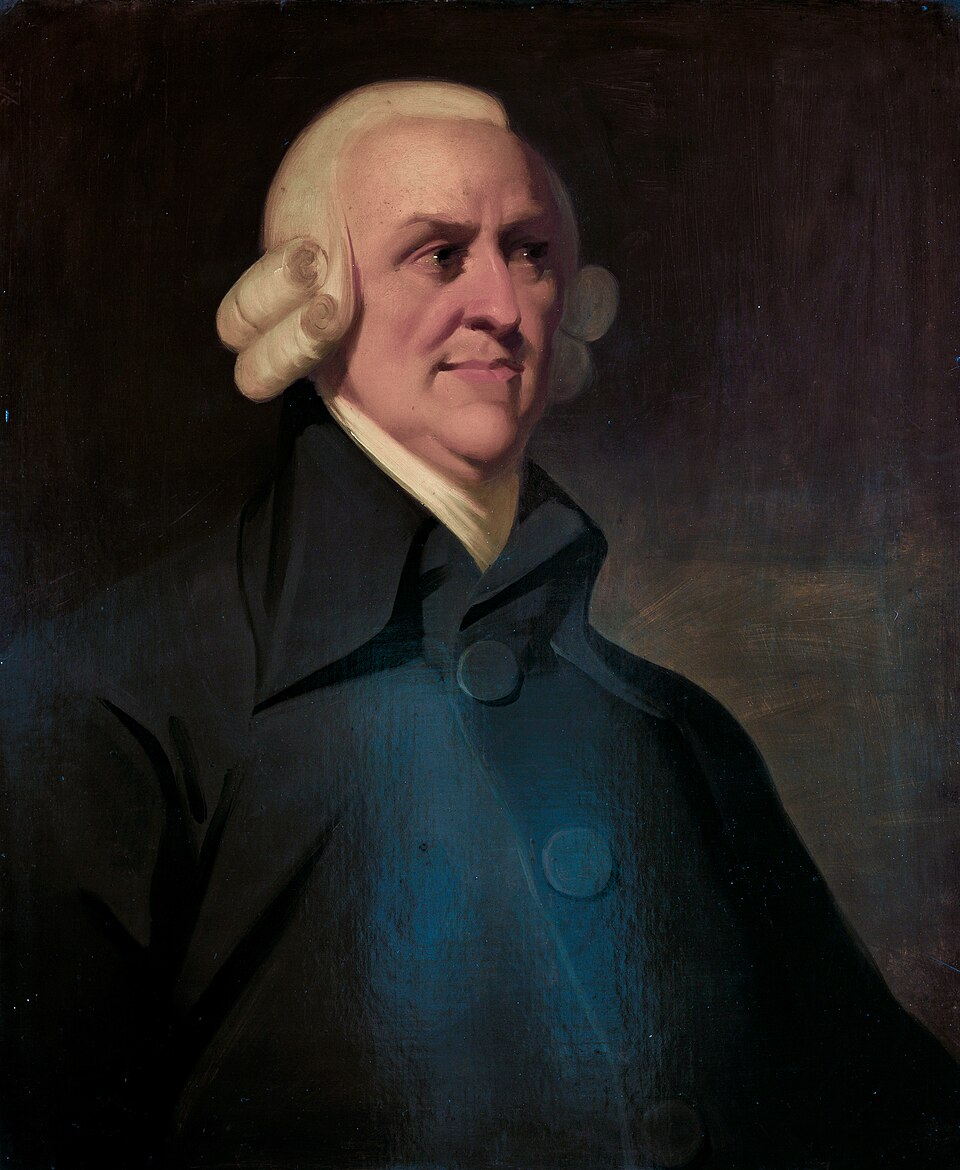
The episode is easily told. A president, facing resistance within his own political allies to his chosen attorney general, muses aloud that he might withdraw the nomination and present it again in a later year, when those troublesome critics may be gone and the chamber more compliant. A senior senator, no enemy but an ally, gently reminds him that an election lies between now and then, and that “this place could be very different” when the time comes. One man plays at postponement; another points to uncertainty. Between them, though they do not name it, stands the whole public interest in the steady administration of justice.
When I wrote of the employment of capital in my Inquiry into the Nature and Causes of the Wealth of Nations, I urged that we trace every regulation to its real effect upon prices, profits, and wages, and ask who bears the unseen cost. Something similar ought to be done with the traffic in high offices. The visible benefit of such manoeuvring is highly concentrated: an embarrassed leader gains time; a nominee escapes an unpleasant hearing; party managers preserve their temporary harmony. The cost is dispersed and therefore mute: a great department is left in uncertainty, authority is weakened, and the general expectation that offices are filled for public service, not for factional convenience, is a little more impaired.
In The Theory of Moral Sentiments I described how men commonly seek not only to be praised, but to be truly praise-worthy. Yet in politics, as in commerce, they are powerfully tempted to consult appearance rather than desert. A leader threatened with a defeat in the chamber is invited by his flatterers to believe that, by some dexterous delay, he can have his officer and his victory too. He is told that the rules of the game permit such postponements, that other princes have done the like, that only a fool accepts a bad vote when he may await a better. What he is not told is that every such artifice teaches spectators to discount his professions of public spirit, and to interpret his appointments as moves in a game which they do not play but must dearly pay for.
I have always maintained that we ought never to expect from men a degree of virtue beyond the ordinary pitch. Self-interest, under known and steady rules of justice, is not a vice but the main spring by which society is held together. It is therefore no surprise if a ruler, allowed the discretion to time his nominations, consults his own advantage in choosing the hour. The fault does not lie solely in the man, but in the system that makes it profitable to sacrifice the present efficiency of a great office to the prospect of easier confirmation later. Where institutions reward the contrivances of faction more surely than the faithful dispatch of business, we shall have no lack of ingenious contrivers and a constant scarcity of faithful dispatchers.
Yet even the shrewdest contriver is still a man of system when he imagines that the great chess-board of human society will submit itself to his plan. When I wrote of that man who arranges citizens as if they were wooden pieces, I had chiefly in view the rash legislator and the projector; but the description suits also the party strategist who delays an appointment in the confident belief that the Senate of a future year will exactly resemble the Senate of his fancy. He forgets, as the warning senator obscurely hints, that every elector, every candidate, every unforeseen event has a principle of motion of its own. To rest the security of justice upon the imagined docility of a future chamber is to build a court of law upon a cloud.
We do well, in commercial matters, to suspect the petition of merchants who come to the legislature with schemes for regulation that promise general benefit but certainly yield private advantage. In like manner we should regard with the most suspicious attention those politicians who urge delay in the filling of high offices on the pretext of prudence or party unity. They are not, for the most part, monsters of ambition; they are simply men who find their own power more interesting than the invisible sufferings which a weakened ministry of justice inflicts upon the labouring poor, the obscure litigant, the citizen who never reads the news but feels the weight of disorder in his daily life.
What then would the impartial spectator, that imagined but exacting judge of our conduct, make of the threatened withdrawal and postponement of this nomination? He would, I think, distinguish between a temporary delay honestly meant to secure better information, and a calculated deferral intended chiefly to obtain a more obedient Senate. The former may be painful but is reconcilable with praise-worthiness; the latter treats the rule of law as an instrument of party and not its master. Even where the gamble succeeds, it leaves behind a public more cynical, institutions more pliant, and rulers more confirmed in the conceit that they may safely play at chess with living men. That is a game which, in the long run, no society can afford to let them win.
From the works cited
- An Inquiry into the Nature and Causes of the Wealth of Nations — Trace every policy to its effect on the price system and ask who bears the unseen cost: benefits are visible and concentrated, costs are diffuse and quiet.
- The Theory of Moral Sentiments — Judge conduct by the impartial spectator: what would a well-informed, disinterested observer feel about this action? Praise-worthiness matters more than praise; to be loved without being lovely is worth nothing, and to be blamed unjustly stings less than to deserve blame.
- The Theory of Moral Sentiments — Beware the man of system: society is not a chessboard; every piece has a principle of motion of its own. Grand plans that ignore this collapse into disorder — but gradual, humane reform that works with people's own motion can succeed.