Senate Republican Cautions Trump on Delaying Todd Blanche Nomination
When a President Turns Confirmation Into a Threat
A ruler who wields nomination as a weapon against the legislative forgets that all his power is held only on trust, and begins to walk the road from government toward usurpation.
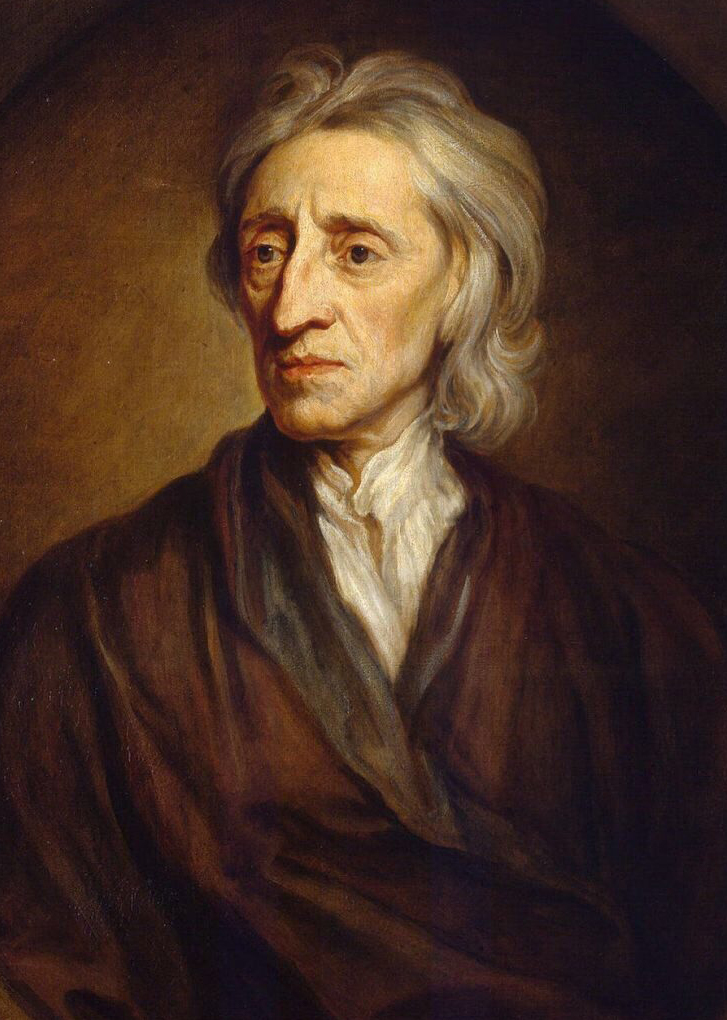
The report that a president, displeased with critics in the Senate, threatens to withdraw his nominee for attorney general now and resubmit him years hence, in order to circumvent those critics, may appear to many a familiar bargain of politics; to me it reveals something more serious. Here is not merely the choosing of a fit officer, but the deliberate use of delay and re‑nomination as a rod held over the representatives themselves, backed by the uncertain prospect that “this place could be very different” after an election. Whenever the magistrate turns an ordinary constitutional process into a lever to bend the legislative, we must ask by what right, and for whose good, he does so.
In the Second Treatise of Government, when I defined political power as the right to make laws with penalties only for the public good, I meant to bind not only those who write statutes, but every branch that acts by public authority. The nomination and confirmation of an officer charged with the execution of the laws is plainly an exercise of that power; an attorney general will touch men in their lives, liberties, and estates. Such a choice therefore stands under the same rule: it must be conducted by known procedures, with open reasons, aiming at equal justice, not at the advantage of one man or one faction.
From what is reported, the threatened withdrawal and later resubmission of this nominee is not proposed as a means to secure a more capable guardian of the law, or to avert some sudden public danger, but as a way to escape present criticism within the Senate. That is a different kind of power. It looks less like the ordinary play of nomination and advice, and more like prerogative: power exercised outside, or even against, the standing course of the constitution. Prerogative, as I argued then, may sometimes be borne with, when strict forms cannot reach an unforeseen necessity and the public benefit is plain. But it is never a right in the ruler; it is a trust, revocable the moment it ceases undeniably to serve the people.
Here I see no such necessity on the face of the accounts, only a contest of wills. To delay a chief officer of justice for years, not because a better can be had, but because present senators are troublesome, is to trade the public’s need for an impartial executor of the laws against the ruler’s impatience with scrutiny. The senator who warns that control of the chamber may change points, perhaps unintentionally, to the deeper mischief: when the executive treats confirmation as a game of who will have more votes tomorrow, rather than as a present search for fitness and consent, the whole design of a stable, known rule is bent toward uncertainty and calculation.
The temptation in such moments is to say that politics is always so, that both sides play hard, and that nothing unlawful has yet been done. But this response mistakes the measure I would apply. I do not ask only, what do written rules literally forbid; I ask, what would free and equal men, consulting their reason under the law of nature, have consented to in forming a government. They would, I think, accept that the executive propose officers and the Senate judge them. They would not so readily consent that either should hold the timing and very existence of essential offices hostage, merely to overawe the other. That begins to make each judge in his own case.
Yet I must add, as I did when writing of the dissolution of governments, that not every irregular or imprudent use of power makes tyranny, nor does every threat of it justify resistance. What chiefly warrants an appeal beyond existing forms is a long train of abuses, all tending one way, to reduce a people under arbitrary power. A single declared intention to delay one nomination, even for unworthy reasons, does not of itself dissolve the bonds of civil society, nor release subjects from obedience in other matters. It deserves watchfulness, censure, and correction by constitutional means, rather than immediate upheaval.
Still, the principle at stake is not small. An attorney general is the officer by whom the sword of the law is directed; if his very accession to office is shaped as an instrument to humble critics and to gamble on future advantage, the people may reasonably fear that prosecutions and forbearances alike will be guided by similar calculations. The president who toys with confirmation in this way owes the country a clear account of the public necessity that requires it, and he must be brought to remember that his discretion is held only on trust, not for himself but for those whose rights he is sworn to secure. A government that forgets this soon finds the name, but not the reality, of law.
From the works cited
- Second Treatise of Government — Prerogative as revocable emergency discretion — legitimate exactly as long as the public visibly benefits and no longer.
- Second Treatise of Government — Political power defined narrowly as the right to make laws, with penalties, only for the public good — anything beyond that definition must justify itself or stand condemned.
- Second Treatise of Government — The dissolution of a government is not the dissolution of society: a people can replace a broken legislative without descending into chaos. Fear of disorder is therefore no argument for enduring tyranny — but revolution answers only to 'a long train of abuses' tending the same way, not to every private grievance.