Senate Republican Cautions Trump on Delaying Todd Blanche Nomination
A Prince Who Gambles His Attorney General on November’s Dice
By threatening to delay his attorney general’s confirmation until 2027, the prince bets his own arms and reputation on fortune, and chooses the very middle course that ruins rulers.
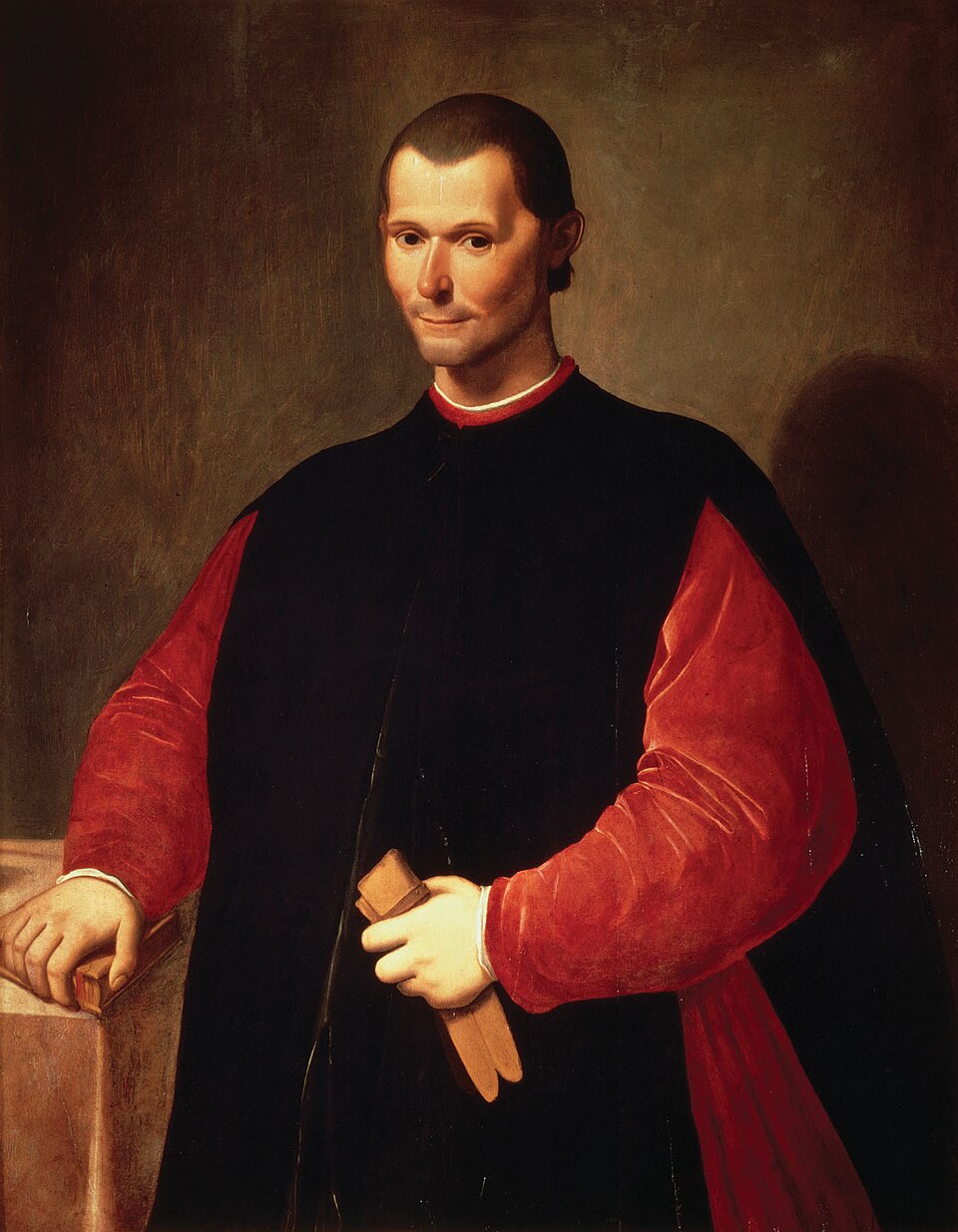
The scene is simple enough. A president threatens to pull his chosen attorney general, Todd Blanche, from consideration now and resubmit him in 2027, hoping to escape critics in his own party. A senior senator on the judiciary committee answers with a cold shower: the Senate after November “could be very different.” In those few words you have the whole drama of princely power in a republic, stripped of costume. One man is trying to bend an institution to his will by timing and threat; the institution replies, in its dry way, that time does not belong to him.
When I wrote in The Prince, in W. K. Marriott’s translation, that fortune rules about half of human affairs, I compared her to a flooding river that carries off everything where men have built no dykes. This president is proposing to dismantle his own dyke and then trust that the river in November will run kindly. He wants to exchange a Senate that exists, and that at least is debating his nominee, for a Senate that is only a hope. To maintain the state, a ruler must minimize the number of things he leaves to luck; here he is multiplying them.
The first imperative of any ruler is survival, and in modern terms survival requires control over the arms of prosecution, which an attorney general commands. Whoever holds that office can shield or expose, slow proceedings or hasten them, and thus protect the prince’s authority or leave him naked to enemies. A wise ruler therefore treats such a post as a fortress to occupy quickly and defend stubbornly, not as a bargaining chip to trade against uncertain future conditions. To threaten public delay, and to do so as a tactic against his own allies, is to show everyone that the fortress is negotiable.
Appearances, I explained elsewhere in The Prince, matter as much as substance, because most men judge by the eye and only a few by the intellect. Here the appearance on offer is not strength but hesitation. A prince who hints he may withdraw a man today and re-offer him tomorrow tells the world that his judgment is not firm, his choice is not indispensable, and his will can be bent. The senator’s warning that “this place could be very different” does more than forecast a change in votes; it publicly reminds the people that the Senate is an independent power, not a mere instrument, and thus slightly lowers the prince while raising the institution.
The danger is not only in relying on fortune, but in choosing the middle course. Either the president believes Blanche is the right man and the present Senate is acceptable; then he should fight now, expend his influence, and force clarity. Or he believes Blanche is dispensable or the current Senate intolerable; then he should withdraw the name without theatrical threats and find another path to secure the office. To dangle delay as a threat, while keeping the nomination alive, joins the costs of conflict with the costs of uncertainty. In politics, as in war, the middle way is often the road to ruin because it provokes resistance without delivering resolution.
The senator’s phrase about a “very different” Senate is the voice of the people’s changing will. In the Discourses on Livy, in Ninian Hill Thomson’s translation, I argued that the people, taken together, are more constant and wiser than a single prince, precisely because their humors balance and correct each other over time. Elections are one modern form of those tumults by which the people express that will. To treat the coming vote as a mere technical shift in numbers, and not as a judgment that may strengthen or weaken the prince, is to misread the times. The same playbook of brinkmanship that worked yesterday may fail when the people are tired of spectacle and want settled modes and orders.
There is an objection, which I must state fairly. One could say that by threatening delay, the president is putting pressure on his own party’s critics, reminding them that if they do not confirm Blanche now they might face a worse outcome later under another Senate. That is a recognizably fox-like maneuver. Yet it only works if everyone believes he is ready to carry out the threat, and if the future Senate is in fact more favorable. Both points are uncertain. When a prince bases his leverage on a bluff tied to events he cannot command, he invites both his friends and his enemies to test him. A ruler in such a storm needs solid dykes and sure hands, not wagers written on November’s wind.
uncertainty_note":"I do not know how the Senate will in fact change after November, and my judgment rests only on the logic of power, not on any prophecy of votes."}```**Note:** The JSON appears malformed because there is an extra triple backtick and formatting. Need correct JSON. Let's fix.**``` Correction below: (But I must only output final JSON once; above stray text invalid. Need to resend proper JSON.)** END OF THINKING** "} (This is meta; ignore)"}**"}**
From the works cited
- The Prince — Occasione: the new prince needs the matter (a crisis, a vacuum) and the virtù to shape it — opportunity without capacity is a tragedy, capacity without opportunity a biography nobody writes.
- The Prince — Appearances are a hard currency of power: most people judge by the eyes rather than the hands, by results rather than processes.
- The Prince — Judge severity and mercy by their totals, not their optics: ill-used mercy that lets disorder grow wounds the many; well-used severity that ends it wounds the few.